
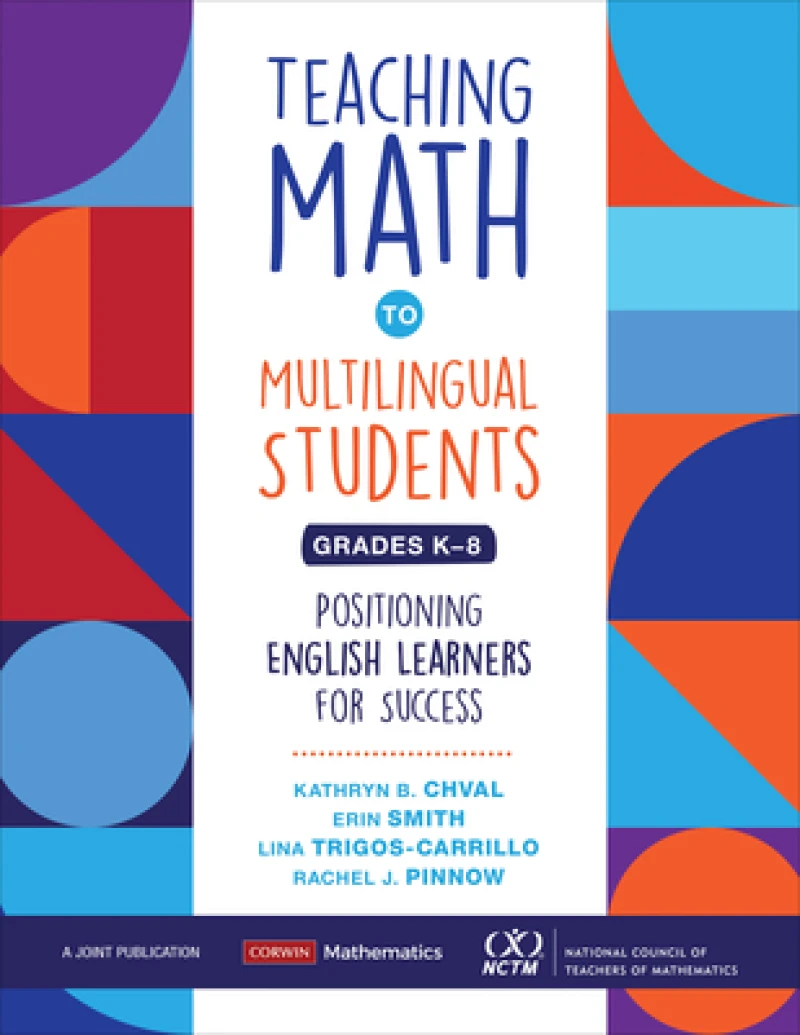
Teaching Math to Multilingual Students, Grades K-8 : Positioning English Learners for Success
Book Details
Format
Paperback / Softback
Book Series
Corwin Mathematics Series
ISBN-10
1071810847
ISBN-13
9781071810842
Publisher
SAGE Publications Inc
Imprint
Corwin Press Inc
Country of Manufacture
GB
Country of Publication
GB
Publication Date
Apr 12th, 2021
Print length
248 Pages
Weight
572 grams
Dimensions
21.50 x 27.50 x 2.20 cms
Product Classification:
Primary & middle schoolsTeaching of a specific subjectEducational: Mathematics & numeracy
Ksh 5,650.00
Temporarily out of stock, due soon
0 in stock
Delivery Location
Delivery fee: Select location
Secure
Quality
Fast
Using strengths-based approaches to support development in mathematics
It’s time to re-imagine what’s possible and celebrate the brilliance multilingual learners bring to today’s classrooms. Innovative teaching strategies can position these learners as leaders in mathematics. Yet, as the number of multilingual learners in North American schools grows, many teachers have not had opportunities to gain the competencies required to teach these learners effectively, especially in disciplines such as mathematics. Multilingual learners—historically called English Language Learners—are expected to interpret the meaning of problems, analyze, make conjectures, evaluate their progress, and discuss and understand their own approaches and the approaches of their peers in mathematics classrooms. Thus, language plays a vital role in mathematics learning, and demonstrating these competencies in a second (or third) language is a challenging endeavor.
Based on best practices and the authors’ years of research, this guide offers practical approaches that equip grades K-8 teachers to draw on the strengths of multilingual learners, partner with their families, and position these learners for success. Readers will find:
• A focus on multilingual students as leaders
• A strength-based approach that draws on students’ life experiences and cultural backgrounds
• An emphasis on maintaining high expectations for learners’ capacity for mastering rigorous content
• Strategies for representing concepts in different formats
• Stop and Think questions throughout and reflection questions at the end of each chapter
• Try It! Implementation activities, student work examples, and classroom transcripts
It’s time to re-imagine what’s possible and celebrate the brilliance multilingual learners bring to today’s classrooms. Innovative teaching strategies can position these learners as leaders in mathematics. Yet, as the number of multilingual learners in North American schools grows, many teachers have not had opportunities to gain the competencies required to teach these learners effectively, especially in disciplines such as mathematics. Multilingual learners—historically called English Language Learners—are expected to interpret the meaning of problems, analyze, make conjectures, evaluate their progress, and discuss and understand their own approaches and the approaches of their peers in mathematics classrooms. Thus, language plays a vital role in mathematics learning, and demonstrating these competencies in a second (or third) language is a challenging endeavor.
Based on best practices and the authors’ years of research, this guide offers practical approaches that equip grades K-8 teachers to draw on the strengths of multilingual learners, partner with their families, and position these learners for success. Readers will find:
• A focus on multilingual students as leaders
• A strength-based approach that draws on students’ life experiences and cultural backgrounds
• An emphasis on maintaining high expectations for learners’ capacity for mastering rigorous content
• Strategies for representing concepts in different formats
• Stop and Think questions throughout and reflection questions at the end of each chapter
• Try It! Implementation activities, student work examples, and classroom transcripts
Using strengths-based approaches to support development in mathematics
It’s time to re-imagine what’s possible and celebrate the brilliance multilingual learners bring to today’s classrooms. Innovative teaching strategies can position these learners as leaders in mathematics. Yet, as the number of multilingual learners in North American schools grows, many teachers have not had opportunities to gain the competencies required to teach these learners effectively, especially in disciplines such as mathematics. Multilingual learners—historically called English Language Learners—are expected to interpret the meaning of problems, analyze, make conjectures, evaluate their progress, and discuss and understand their own approaches and the approaches of their peers in mathematics classrooms. Thus, language plays a vital role in mathematics learning, and demonstrating these competencies in a second (or third) language is a challenging endeavor.
Based on best practices and the authors’ years of research, this guide offers practical approaches that equip grades K-8 teachers to draw on the strengths of multilingual learners, partner with their families, and position these learners for success. Readers will find:
• A focus on multilingual students as leaders
• A strength-based approach that draws on students’ life experiences and cultural backgrounds
• An emphasis on maintaining high expectations for learners’ capacity for mastering rigorous content
• Strategies for representing concepts in different formats
• Stop and Think questions throughout and reflection questions at the end of each chapter
• Try It! Implementation activities, student work examples, and classroom transcripts
With case studies and activities that provide a solid foundation for teachers’ growth and exploration, this groundbreaking book will help teachers and teacher educators engage in meaningful, humanized mathematics instruction.
It’s time to re-imagine what’s possible and celebrate the brilliance multilingual learners bring to today’s classrooms. Innovative teaching strategies can position these learners as leaders in mathematics. Yet, as the number of multilingual learners in North American schools grows, many teachers have not had opportunities to gain the competencies required to teach these learners effectively, especially in disciplines such as mathematics. Multilingual learners—historically called English Language Learners—are expected to interpret the meaning of problems, analyze, make conjectures, evaluate their progress, and discuss and understand their own approaches and the approaches of their peers in mathematics classrooms. Thus, language plays a vital role in mathematics learning, and demonstrating these competencies in a second (or third) language is a challenging endeavor.
Based on best practices and the authors’ years of research, this guide offers practical approaches that equip grades K-8 teachers to draw on the strengths of multilingual learners, partner with their families, and position these learners for success. Readers will find:
• A focus on multilingual students as leaders
• A strength-based approach that draws on students’ life experiences and cultural backgrounds
• An emphasis on maintaining high expectations for learners’ capacity for mastering rigorous content
• Strategies for representing concepts in different formats
• Stop and Think questions throughout and reflection questions at the end of each chapter
• Try It! Implementation activities, student work examples, and classroom transcripts
With case studies and activities that provide a solid foundation for teachers’ growth and exploration, this groundbreaking book will help teachers and teacher educators engage in meaningful, humanized mathematics instruction.
Get Teaching Math to Multilingual Students, Grades K-8 by at the best price and quality guaranteed only at Werezi Africa's largest book ecommerce store. The book was published by SAGE Publications Inc and it has pages.

