
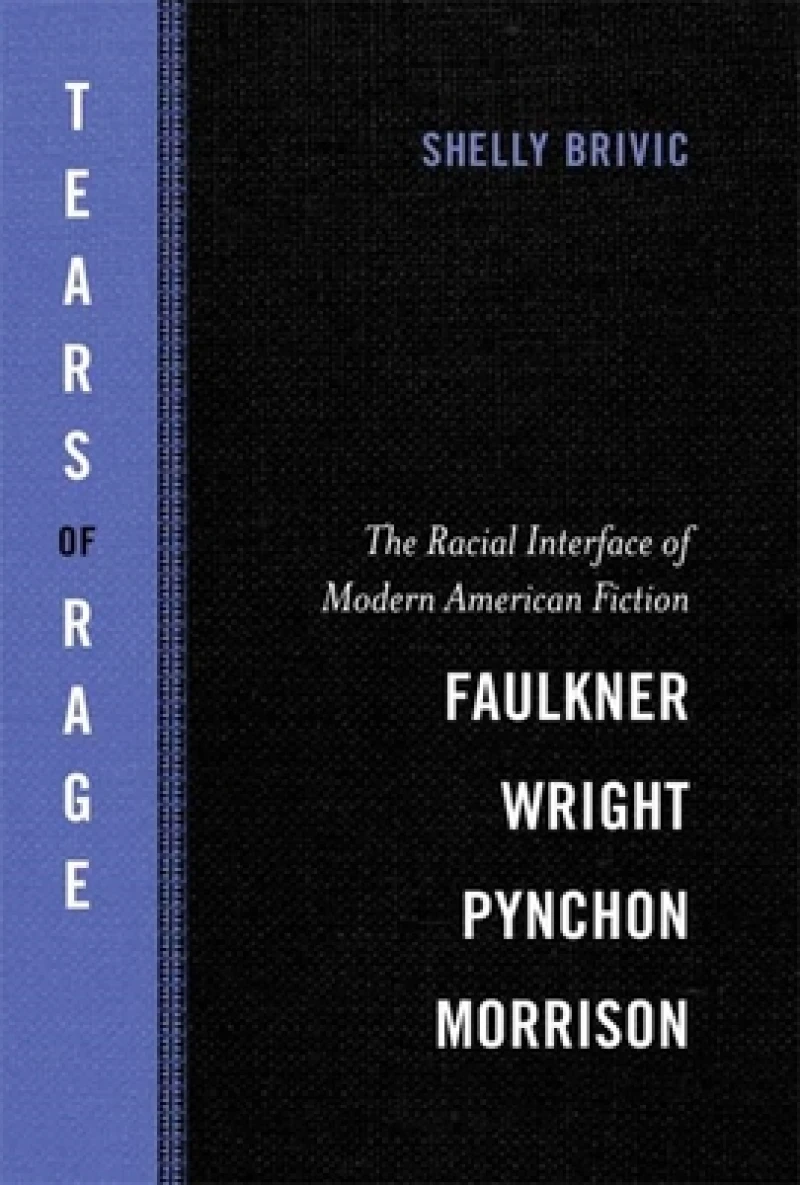
Tears of Rage : The Racial Interface of Modern American Fiction-Faulkner, Wright, Pynchon, Morrison
Book Details
Format
Paperback / Softback
Book Series
Southern Literary Studies
ISBN-10
0807162280
ISBN-13
9780807162286
Publisher
Louisiana State University Press
Imprint
Louisiana State University Press
Country of Manufacture
US
Country of Publication
GB
Publication Date
Oct 12th, 2015
Print length
272 Pages
Weight
333 grams
Dimensions
22.90 x 15.10 x 1.50 cms
Product Classification:
Literature: history & criticismLiterature: history and criticismLiterary studies: general
Ksh 6,300.00
Werezi Extended Catalogue
0 in stock
Delivery Location
Delivery fee: Select location
Secure
Quality
Fast
Presents the history of the twentieth-century American novel as a continuous narrative dialogue between white and black voices. Shelly Brivic traces how four of the most renowned works written between 1930 and 1990 progress through the interaction of white and black perspectives toward confronting the calamity of slavery and its continuing legacy.
In this provocative study, Shelly Brivic presents the history of the twentieth-century American novel as a continuous narrative dialogue between white and black voices. Exploring four of the most renowned and challenging works written between 1930 and 1990 - William Faulkner's Absalom, Absalom!, Richard Wright's Native Son, Thomas Pynchon's V., and Toni Morrison's Beloved - Brivic traces how these works progress through the interaction of white and black perspectives toward confronting the calamity of slavery and its reverberating aftermath and continuing legacy.
Brivic shows how one novel leads ineluctably to the next and how the four works in a sense form one continuous narrative: with Faulkner's attack on the racial system in Absalom, Absalom! in the 1930s, a literary space opened for Wright's devastating novel of protest. Through the character of Bigger Thomas, Wright's Native Son exposes a virtually incurable division in American ideologies, which leads to the multiplying perspectives of postmodernism in Pynchon's V. Arriving at the crest of the civil rights movement, V. questions Western systems of control, laying a foundation for a world outside the white one, and so providing a basis for the African view of reality presented in Morrison's Beloved.
The emergence of African consciousness in American literature exemplified across these works has had, and continues to have, Brivic concludes, the potential not only to redress ongoing injustices but to bring about a new conception of the American universe and its laws of reality.
Striking in both the selection of novels and the connections Brivic draws among them, Tears of Rage advances understanding of the destructive nature of racism and the possibilities for overcoming its effects through literature.
Brivic shows how one novel leads ineluctably to the next and how the four works in a sense form one continuous narrative: with Faulkner's attack on the racial system in Absalom, Absalom! in the 1930s, a literary space opened for Wright's devastating novel of protest. Through the character of Bigger Thomas, Wright's Native Son exposes a virtually incurable division in American ideologies, which leads to the multiplying perspectives of postmodernism in Pynchon's V. Arriving at the crest of the civil rights movement, V. questions Western systems of control, laying a foundation for a world outside the white one, and so providing a basis for the African view of reality presented in Morrison's Beloved.
The emergence of African consciousness in American literature exemplified across these works has had, and continues to have, Brivic concludes, the potential not only to redress ongoing injustices but to bring about a new conception of the American universe and its laws of reality.
Striking in both the selection of novels and the connections Brivic draws among them, Tears of Rage advances understanding of the destructive nature of racism and the possibilities for overcoming its effects through literature.
Get Tears of Rage by at the best price and quality guaranteed only at Werezi Africa's largest book ecommerce store. The book was published by Louisiana State University Press and it has pages.

