
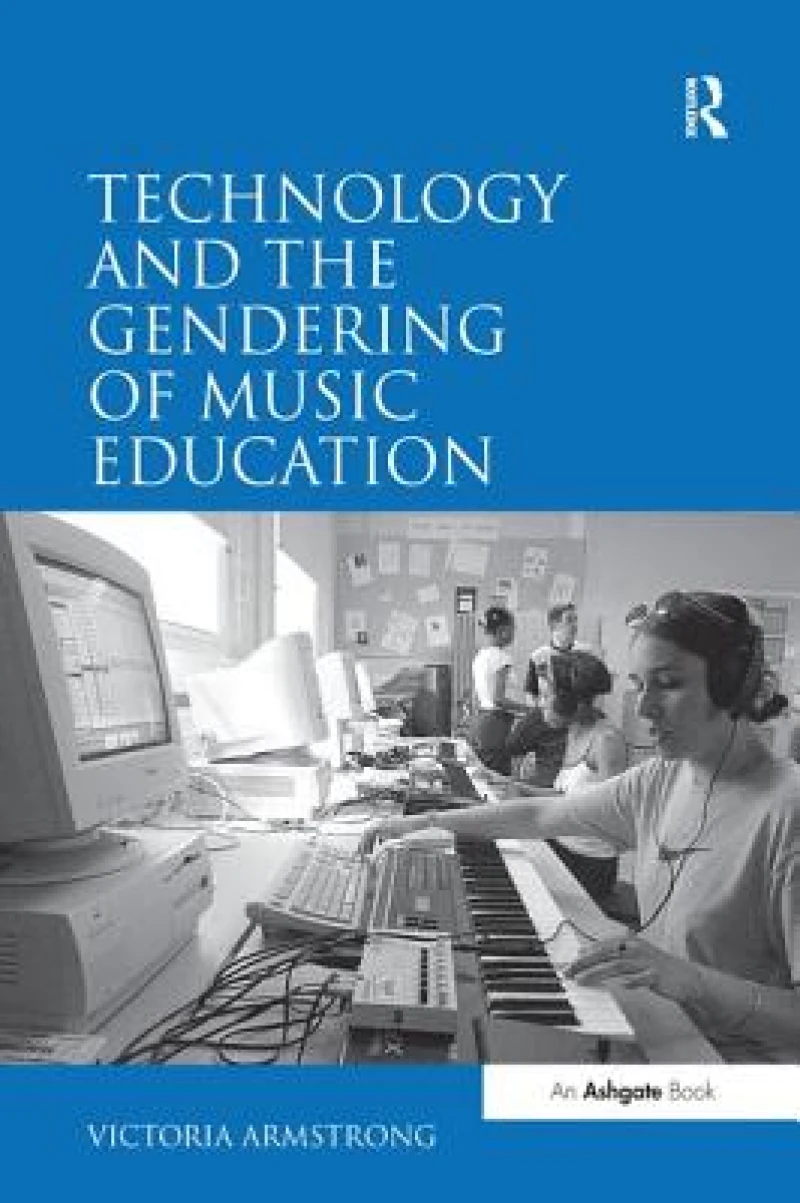
Technology and the Gendering of Music Education
Book Details
Format
Paperback / Softback
ISBN-10
1138274577
ISBN-13
9781138274570
Publisher
Taylor & Francis Ltd
Imprint
Routledge
Country of Manufacture
GB
Country of Publication
GB
Publication Date
Oct 19th, 2016
Print length
168 Pages
Weight
453 grams
Product Classification:
Electronic musicEducationDigital music: consumer/user guides
Ksh 10,100.00
Werezi Extended Catalogue
0 in stock
Delivery Location
Delivery fee: Select location
Secure
Quality
Fast
The use of computers and associated compositional software in music education is frequently decontextualized from cultural and social relationships, thereby ignoring the fact that new technologies are used and developed within existing social spaces that are always already delineated along gender lines. Armstrong suggests these gender-technology relations have a profound effect on the ways adolescents compose music as well as how gendered identities in the technologized music classroom are constructed.
Critical of technologically determinist assumptions underpinning current educational policy, Victoria Armstrong argues that this growing technicism has grave implications for the music classroom where composition is often synonymous with the music technology suite. The use of computers and associated compositional software in music education is frequently decontextualized from cultural and social relationships, thereby ignoring the fact that new technologies are used and developed within existing social spaces that are always already delineated along gender lines. Armstrong suggests these gender-technology relations have a profound effect on the ways adolescents compose music as well as how gendered identities in the technologized music classroom are constructed. Drawing together perspectives from the sociology of science and technology studies (STS) and the sociology of music, Armstrong examines the gendered processes and practices that contribute to how students learn about technology, the repertoire of teacher and student talk, its effect on student confidence and the issue of male control of technological knowledge. Even though girls and female teachers have technological knowledge and skill, the continuing material and symbolic associations of technology with men and masculinity contribute to the perception of women as less able and less interested in all things technological. In light of the fact that music technology is now central to many music-making practices across all sectors of education from primary, secondary through to higher education, this book provides a timely critical analysis that powerfully demonstrates why the relationship between gender and music technology should remain an important empirical consideration.
Get Technology and the Gendering of Music Education by at the best price and quality guaranteed only at Werezi Africa's largest book ecommerce store. The book was published by Taylor & Francis Ltd and it has pages.

