
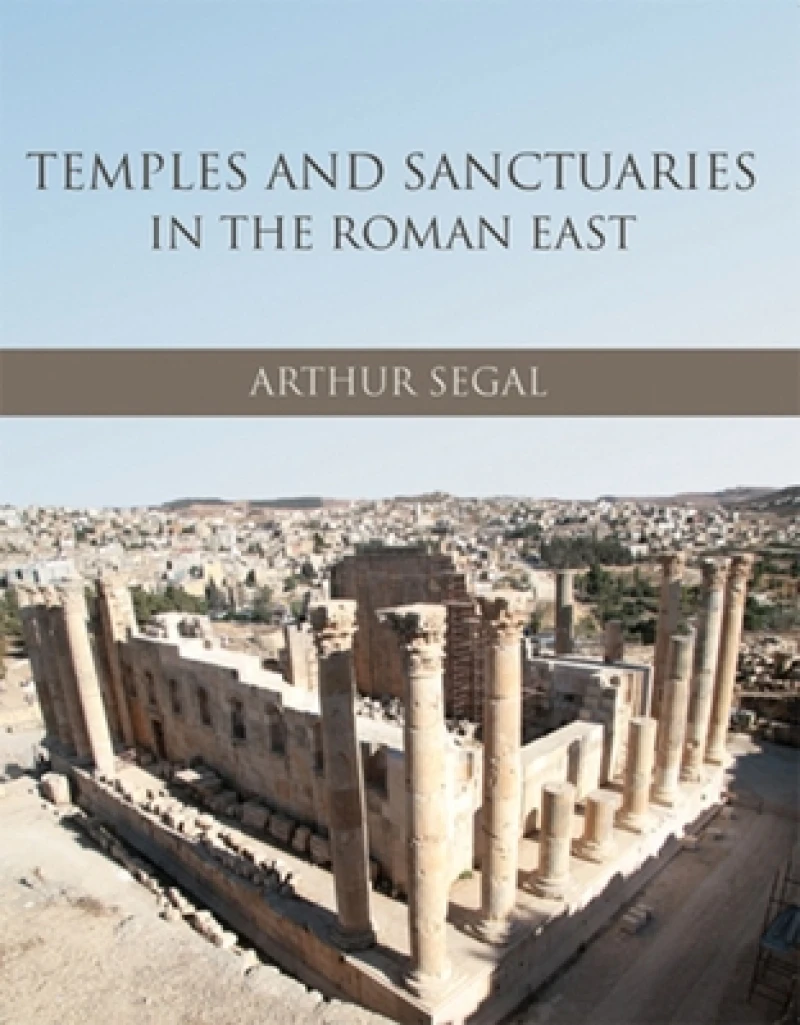
Temples and Sanctuaries in the Roman East : Religious Architecture in Syria, Iudaea/Palaestina and Provincia Arabia
by
Arthur Segal
Book Details
Format
Paperback / Softback
ISBN-10
1789258804
ISBN-13
9781789258806
Publisher
Oxbow Books
Imprint
Oxbow Books
Country of Manufacture
GB
Country of Publication
GB
Publication Date
Sep 15th, 2022
Print length
392 Pages
Weight
1,430 grams
Dimensions
21.70 x 27.80 x 2.70 cms
Product Classification:
Religious buildingsClassical Greek & Roman archaeology
Ksh 8,150.00
Werezi Extended Catalogue
Delivery in 14 days
2 copies in stock
Delivery Location
Delivery fee: Select location
Delivery in 14 days
Secure
Quality
Fast
A comprehensive architectural study of 87 individual temples and sanctuaries built in the Roman East between the end of the 1st century BCE and the end of the 3rd century CE.
This lavishly illustrated volume presents a comprehensive architectural study of 87 individual temples and sanctuaries built in the Roman East between the end of the 1st century BCE and the end of the 3rd century CE, within a broad region encompassing the modern states of Syria, Lebanon, Israel and Jordan. Religious architecture gave faithful expression to the complexity of the Roman East and to its multiplicity of traditions pertaining to ethnic and religious aspects as well as to the powerful influence of Imperial Rome. The source of this power lay in the uniformity of the architectural language, the inventory of forms, the choice of styles and the spatial layout of the buildings. Thus, while temples have an eclectic character, there is an underlying unity of form comprising the podium, the stairway between the terminating walls (antae) and the columns along the entrance front - in other words, the axiality, frontality and symmetry of the temple as viewed from outside.The temples and sanctuaries studied in this volume demonstrate individual nuances of plan, spatial design, location in the sanctuary and interrelations with the immediate vicinity but can be divided into two main categories: Vitruvian temples (derived from Hellenistic-Roman architecture) and Non-Vitruvian temples (those with plans and spatial designs that cannot be analysed according to architectural criteria such as those defined by Vitruvius). The individual descriptions presented focus solely upon the analysis of the external and internal space of the temples of all types and do not involve any cultural or ethnic discussion.
Get Temples and Sanctuaries in the Roman East by at the best price and quality guaranteed only at Werezi Africa's largest book ecommerce store. The book was published by Oxbow Books and it has pages.

