
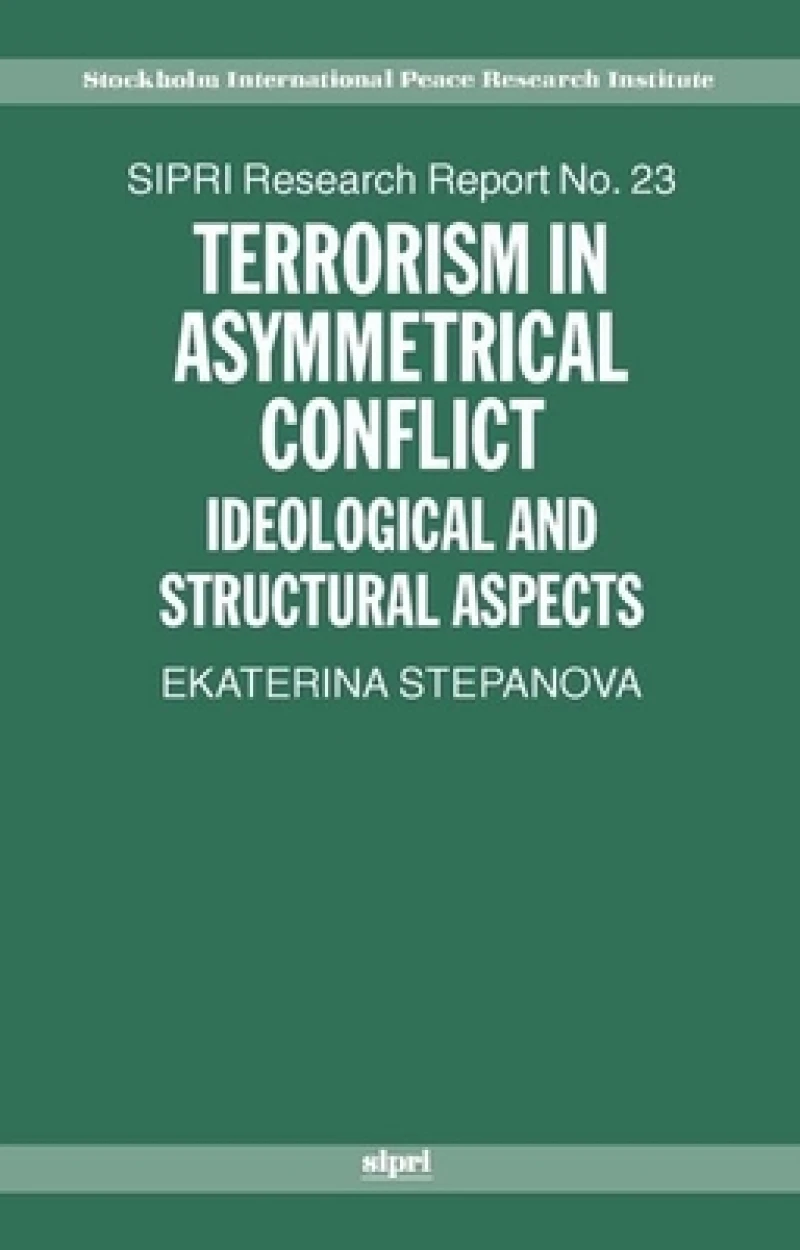
Terrorism in Asymmetrical Conflict : Ideological and Structural Aspects
Book Details
Format
Hardback or Cased Book
Book Series
SIPRI Research Reports
ISBN-10
0199533555
ISBN-13
9780199533558
Publisher
Oxford University Press
Imprint
Oxford University Press
Country of Manufacture
GB
Country of Publication
GB
Publication Date
Mar 13th, 2008
Print length
198 Pages
Weight
369 grams
Dimensions
22.40 x 14.50 x 1.80 cms
Product Classification:
Violence in societyIslamic studiesInternational relationsTerrorism, armed struggle
Ksh 14,050.00
Manufactured on Demand
0 in stock
Delivery Location
Delivery fee: Select location
Secure
Quality
Fast
This volume combines qualitative research with the analysis of available data on trends in modern terrorism and the use of primary sources and writings. It puts forwad an original typology of terrorism based on the overall level of a militant group's goals and the extent to which its terrorist activities are linked to a broader armed conflict.
The book''s main focus is on extremist ideologies and structural capabilities of violent non-state actors that employ terrorist means. Ideologies and organizational patterns are seen as the main comparative advantages of such groups in an asymmetrical confrontation at all levels, from the local to the global. Resolution of the key issues of the armed conflict is seen as essential, but this is not sufficient to undermine the foundations of terrorism generated by that conflict, unless the structural capabilities of militant groups are fully disrupted and the role of extremist ideologies in driving their terrorist activities is neutralized.With its central focus on Islamist terrorism, the book argues that the quasi-religious, supra-national ideology of violent Islamism, especially in its most ambitious transnational forms, cannot be effectively counterbalanced at the ideological level either by Western democratic secularism or by the use of moderate versions of Islam itself. The author concludes that unless transnational violent Islamism is, first, ''nationalized'' and, second, transformed in organizational terms through its being coopted into a more regular political process, it is unlikely to become amenable to persuasion or any external influence, let alone to be destroyed by the repression on which it thrives.The study also proposes an original typology of terrorism based on the overall level of a militant group''s goals and the extent to which its terrorist activities are linked to a broader armed conflict. It combines qualitative research with the analysis of available data on trends in modern terrorism and the use of primary sources and writings.
Get Terrorism in Asymmetrical Conflict by at the best price and quality guaranteed only at Werezi Africa's largest book ecommerce store. The book was published by Oxford University Press and it has pages.

