
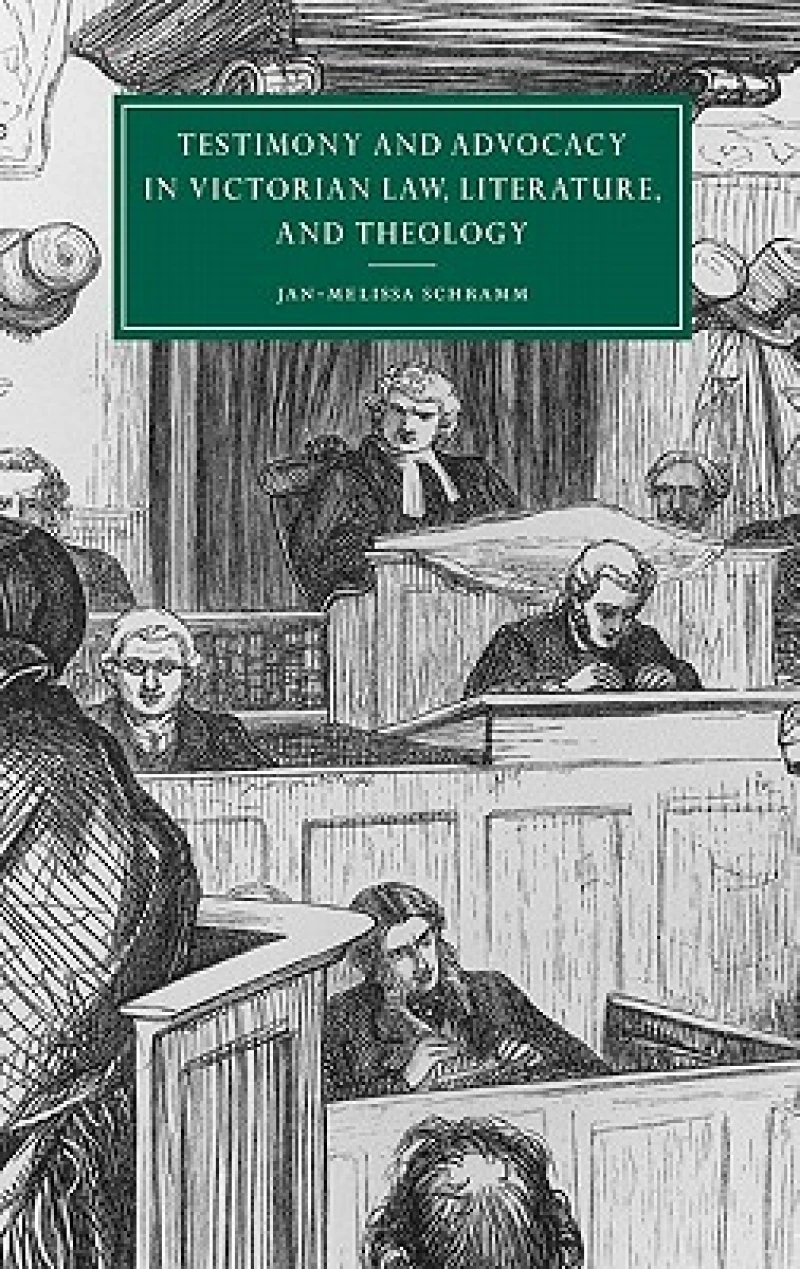
Testimony and Advocacy in Victorian Law, Literature, and Theology
Book Details
Format
Hardback or Cased Book
ISBN-10
0521771234
ISBN-13
9780521771238
Publisher
Cambridge University Press
Imprint
Cambridge University Press
Country of Manufacture
GB
Country of Publication
GB
Publication Date
Apr 20th, 2000
Print length
264 Pages
Weight
495 grams
Dimensions
23.70 x 16.10 x 2.10 cms
Product Classification:
Literary studies: c 1800 to c 1900
Ksh 17,800.00
Manufactured on Demand
0 in stock
Delivery Location
Delivery fee: Select location
Secure
Quality
Fast
This original study examines how the changing nature of evidence in law and theology shaped literary narrative in the nineteenth century. Jan-Melissa Schramm argues that authors of fiction created a style of literary advocacy which both imitated, and reacted against, the example of their storytelling counterparts of the criminal Bar.
The eighteenth-century model of the criminal trial - with its insistence that the defendant and the facts of a case could 'speak for themselves' - was abandoned in 1836, when legislation enabled barristers to address the jury on behalf of prisoners charged with felony. Increasingly, professional acts of interpretation were seen as necessary to achieve a just verdict, thereby silencing the prisoner and affecting the testimony given by eye witnesses at criminal trials. Jan-Melissa Schramm examines the profound impact of the changing nature of evidence in law and theology on literary narrative in the nineteenth century. Already a locus of theological conflict, the idea of testimony became a fiercely contested motif of Victorian debate about the ethics of literary and legal representation. She argues that authors of fiction created a style of literary advocacy which both imitated, and reacted against, the example of their storytelling counterparts at the Bar.
Get Testimony and Advocacy in Victorian Law, Literature, and Theology by at the best price and quality guaranteed only at Werezi Africa's largest book ecommerce store. The book was published by Cambridge University Press and it has pages.

