
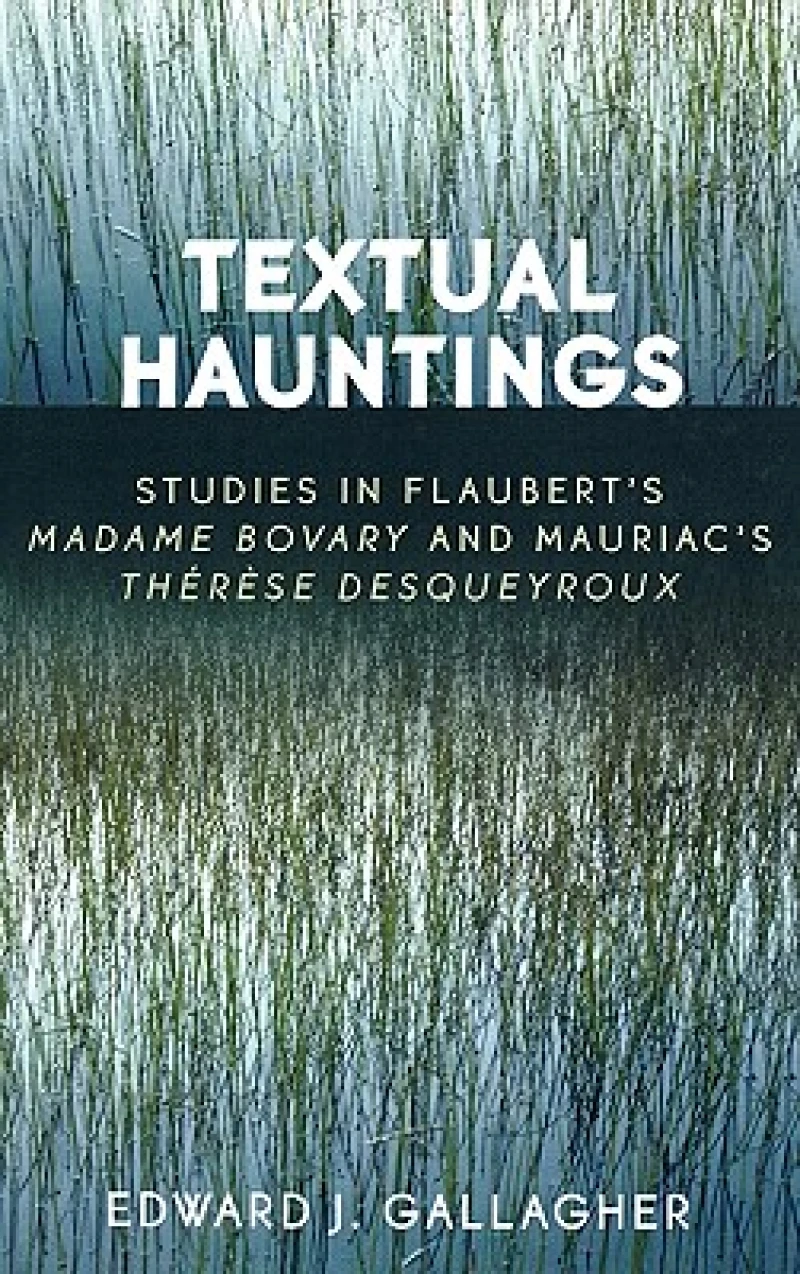
Textual Hauntings : Studies in Flaubert's 'Madame Bovary' and Mauriac's 'Therese Desqueyroux'
Book Details
Format
Hardback or Cased Book
ISBN-10
0761832017
ISBN-13
9780761832010
Publisher
University Press of America
Imprint
University Press of America
Country of Manufacture
GB
Country of Publication
GB
Publication Date
Apr 19th, 2005
Print length
142 Pages
Weight
363 grams
Dimensions
23.50 x 16.70 x 1.80 cms
Product Classification:
Language: reference & general
Ksh 13,550.00
Manufactured on Demand
Delivery in 29 days
Delivery Location
Delivery fee: Select location
Delivery in 29 days
Secure
Quality
Fast
Therese Desqueyroux, Francois Mauriac's stark and introspective 1927 novel, appears to be quite a different tale from Madame Bovary, Gustave Flaubert's succes de scandale published exactly seventy years earlier. Yet upon closer scrutiny, the two novels' similarities become undeniable. The preponderance of parallelisms surely cannot be attributed to happenstance, nor can one agree with the contention that Mauriac must have been inspired, unconsciously and unbeknownst to him, by the literary model of Madame Bovary. Textual Hauntings opens with an overview of the strikingly similar plot, characters, and themes in the best-known novel of each of these important modern authors. Subsequent chapters, noting both differences as well as similarities, look specifically at the issues of gender and sexuality, the uses of religion and the role of the clergy, the function of uncertainty (both as a narrative technique in Flaubert and as a thematic element in Mauriac), the role of minor characters and their relationships to the two eponymous heroines, and finally, the use by each novelist of photographs in order to undercut, rather than to underscore, any affection felt for the person whose image has been preserved. While surely borrowing from his nineteenth-century precursor, Mauriac, like Flaubert, created a remarkably powerful novel. Just as each novelist offers the reader a hauntingly memorable heroine, Flaubert's celebrated masterpiece Madame Bovary haunts the pages of Nobel laureate Mauriac's Therese Desqueyroux. Edward Gallagher's examination and reflections on these two novels in tandem lead to a deeper appreciation and a better understanding of each novel.
Thérèse Desqueyroux, François Mauriac''s stark and introspective 1927 novel, appears to be quite a different tale from Madame Bovary, Gustave Flaubert''s succès de scandale published exactly seventy years earlier. Yet upon closer scrutiny, the two novels'' similarities become undeniable. The preponderance of parallelisms surely cannot be attributed to happenstance, nor can one agree with the contention that Mauriac must have been inspired, unconsciously and unbeknownst to him, by the literary model of Madame Bovary. Textual Hauntings opens with an overview of the strikingly similar plot, characters, and themes in the best-known novel of each of these important modern authors. Subsequent chapters, noting both differences as well as similarities, look specifically at the issues of gender and sexuality, the uses of religion and the role of the clergy, the function of uncertainty (both as a narrative technique in Flaubert and as a thematic element in Mauriac), the role of minor characters and their relationships to the two eponymous heroines, and finally, the use by each novelist of photographs in order to undercut, rather than to underscore, any affection felt for the person whose image has been preserved. While surely borrowing from his nineteenth-century precursor, Mauriac, like Flaubert, created a remarkably powerful novel. Just as each novelist offers the reader a hauntingly memorable heroine, Flaubert''s celebrated masterpiece Madame Bovary haunts the pages of Nobel laureate Mauriac''s Thérèse Desqueyroux. Edward Gallagher''s examination and reflections on these two novels in tandem lead to a deeper appreciation and a better understanding of each novel.
Get Textual Hauntings by at the best price and quality guaranteed only at Werezi Africa's largest book ecommerce store. The book was published by University Press of America and it has pages.

