
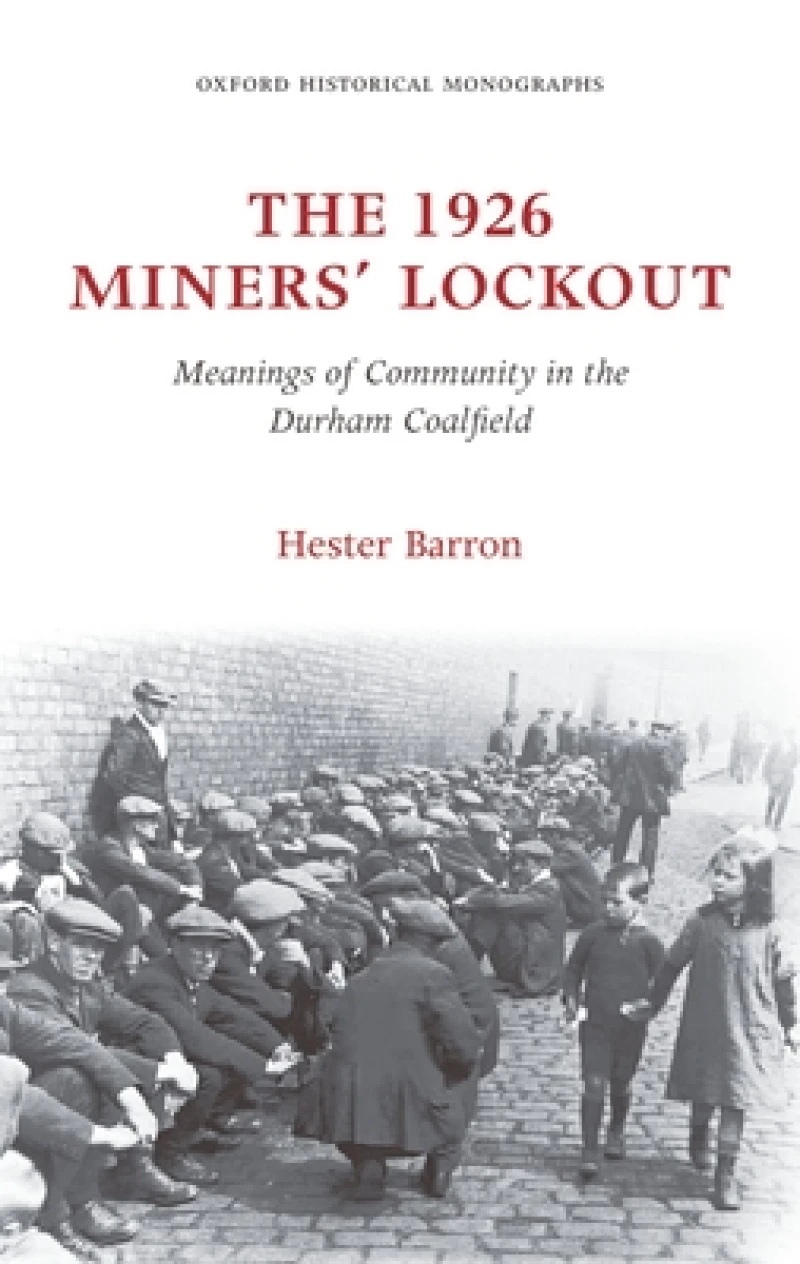
The 1926 Miners' Lockout : Meanings of Community in the Durham Coalfield
Book Details
Format
Hardback or Cased Book
Book Series
Oxford Historical Monographs
ISBN-10
0199575045
ISBN-13
9780199575046
Publisher
Oxford University Press
Imprint
Oxford University Press
Country of Manufacture
GB
Country of Publication
GB
Publication Date
Dec 10th, 2009
Print length
332 Pages
Weight
570 grams
Dimensions
22.30 x 14.40 x 2.30 cms
Ksh 20,400.00
Manufactured on Demand
0 in stock
Delivery Location
Delivery fee: Select location
Secure
Quality
Fast
The miners' lockout of 1926 was a pivotal moment in British twentieth-century history. Investigating issues of collective identity and action, Hester Barron explores the way that the lockout was experienced by Durham's miners and their families, illuminating wider debates about solidarity and fragmentation within working-class communities.
The miners'' lockout of 1926 was a pivotal moment in British twentieth-century history. Opening with the heady days of the general strike, it continued for seven months and affected one million miners. In County Durham, where almost three in every ten adult men worked in the coal industry, its impact was profound. Hester Barron explores the way that the lockout was experienced by Durham''s miners and their families. She investigates collective values and behaviour, focusing particularly on the tensions between identities based around class and occupation, and the rival identities that could cut across the creation of a cohesive community. Highlighting the continuing importance of differences due to gender, age, religion, poverty, and individual hopes and aspirations, she nevertheless finds that in 1926, despite such differences, the Durham coalfield continued to display the solidarity for which miners were famed. In response, Barron argues that the very concept of the ''mining community'' needs to be reassessed. Rather than consisting of an homogeneous occupational identity, she suggests that the essence of community lay in its ability to subsume and integrate other categories of identity. A collective consciousness was further grounded in a shared historical narrative that had to be continually reinforced. It was the strength of such local solidarities that enabled both an exemplary regional response to the strike, and the ability to conceptualise such action within the wider framework of the national union. The 1926 Miners'' Lockout provides crucial insights into issues of collective identity and collective action, illuminating wider debates about solidarity and fragmentation within working-class communities and cultures.
Get The 1926 Miners' Lockout by at the best price and quality guaranteed only at Werezi Africa's largest book ecommerce store. The book was published by Oxford University Press and it has pages.

