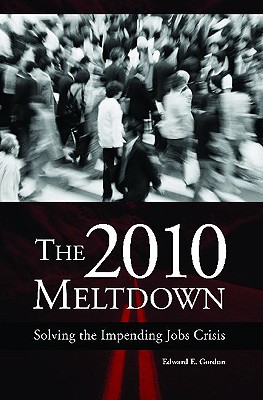
The 2010 Meltdown : Solving the Impending Jobs Crisis
Book Details
Format
Hardback
ISBN-10
0275984362
ISBN-13
9780275984366
Publisher
Bloomsbury Publishing Plc
Imprint
Praeger Publishers Inc
Country of Manufacture
GB
Country of Publication
GB
Publication Date
Sep 30th, 2005
Print length
288 Pages
Weight
572 grams
Dimensions
24.00 x 16.40 x 2.20 cms
Product Classification:
Labour / income economicsLabour economics
KSh 13,500.00
Currently unavailable
0 in stock
Delivery Location
Delivery fee: Select location
Secure
Quality
Fast
Ed Gordon marshals a vast amount of data to illustrate how various trends are converging to create a labor vacuum—with potentially disastrous consequences for economic competitiveness and individual opportunity.
Ed Gordon marshals a vast amount of data to illustrate how various trends are converging to create a labor vacuum—with potentially disastrous consequences for economic competitiveness and individual opportunity. He sounds a wake-up call to business leaders, policymakers, educators, and concerned citizens, employees, and parents—anyone with a stake in our economic future. Moreover, he highlights innovative initiatives in training, education, and community development in the United States and around the world that can serve as models for positive action. Ultimately, The 2010 Meltdown is an optimistic book about social change, setting an agenda for reforms in education, policy, and business investment that will promote economic freedom, renewal, and prosperity. It's the economy, stupid, is a refrain the United States will never live down, and not without reason. The relentless march of technological development and globalization continues to put pressure on all national economies, providing opportunity for some and marginalization for others. Around the world, nations will need to overcome twin economic shocks: a wave of baby boomers will retire and leave the workforce, while too few young, well-educated people will be available to fill a rising tide of high-skill, technology-related jobs. Ed Gordon marshals vast amounts of data to illustrate how these trends are quickly converging, creating a labor vacuum—with potentially disastrous consequences for economic competitiveness and individual opportunity. In the United States, for example, major studies agree that the majority of the jobs now being created require skills possessed by only 20 percent of the current workforce; meanwhile, a large pool of under-trained workers are seeing their jobs exported to developing countries, automated, or outsourced, while millions of high-paying jobs, in such fields as engineering, computing, and health care are going unfilled. In The 2010 Meltdown, Gordon sounds a wake-up call to business leaders, policymakers, educators, and concerned citizens, employees, and parents—anyone with a stake in our economic future. Beyond the demographic issues, he notes that such cultural factors as Wall Street's obsession with short-term results (which favors cost-cutting over long-term training) and neglect of math and science skills at school are contributing to a fundamental mismatch between labor supply and demand. But the news is not all grim. Gordon highlights innovative initiatives in training, education, and community development in the United States and around the world that can serve as models for positive action, and he outlines a plan for reversing the destructive trends before we reach a crucial crossroad by the year 2010. Ultimately, The 2010 Meltdown is an optimistic book about social change, setting an agenda for reforms in education, policy, and business investment that will promote economic freedom, renewal, and prosperity.
Get The 2010 Meltdown by Edward E. Gordon at the best price and quality guaranteed only at Werezi Africa's largest book ecommerce store. The book was published by Bloomsbury Publishing Plc and it has 288 pages.
Customers Who Bought This Also Bought

Chokepoint Capitalism
KSh 2,000.00
Social Security and Retirement around the World
KSh 14,500.00

Social Security Programs and Retirement around the World
KSh 19,800.00

Organised Capital
KSh 6,200.00

The Great Escape
KSh 2,900.00
The Oxford Handbook of Productivity Analysis
KSh 32,100.00
Making Freedom Pay
KSh 5,750.00
The Unemployed People's Movement
KSh 27,550.00

Victory at Home
KSh 6,000.00

Victory at Home
KSh 17,000.00

Deep Exegesis
KSh 6,500.00
Latino Workers in the Contemporary South
KSh 6,000.00