
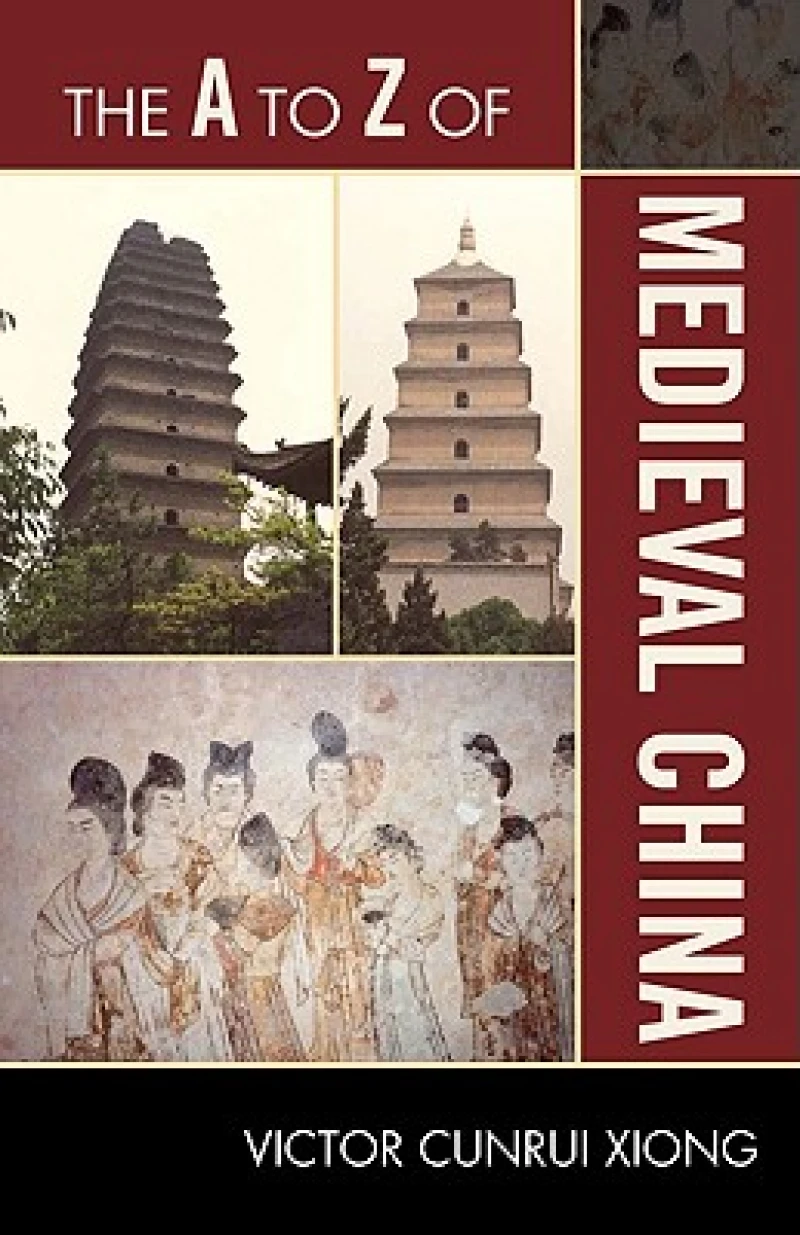
The A to Z of Medieval China
Book Details
Format
Paperback / Softback
Book Series
The A to Z Guide Series
ISBN-10
0810875756
ISBN-13
9780810875753
Publisher
Scarecrow Press
Imprint
Scarecrow Press
Country of Manufacture
GB
Country of Publication
GB
Publication Date
Apr 26th, 2010
Print length
854 Pages
Weight
1,104 grams
Dimensions
14.20 x 21.70 x 5.10 cms
Product Classification:
HistoryGeneral & world historyAsian history
Ksh 10,950.00
Manufactured on Demand
0 in stock
Delivery Location
Delivery fee: Select location
Secure
Quality
Fast
The crucial period of Chinese history, 220-960, falls naturally into contrasting phases. The first phase, also known as that of "early medieval China," is an age of political decentralization. Following the breakup of the Han empire, China was plunged into civil war and fragmentation and stayed divided for nearly four centuries. The second phase started in 589, during the Sui dynasty, when China was once again brought under a single government. Under the Sui, the bureaucracy was revitalized, the military strengthened, and the taxation system reformed. The fall of the Sui in 618 gave way to the even stronger Tang dynasty, which represents an apogee of traditional Chinese civilization. Inheriting all the great institutions developed under the Sui, the Tang made great achievements in poetry, painting, music, and architecture. The An Lushan rebellion, which also took place during Tang rule, brought about far-reaching changes in the socioeconomic, political, and military arenas. What transpired in the second half of the Tang and the ensuing Five Dynasties provided the foundation for the next age of late imperial China. The A to Z of Medieval China fills an urgent need for a standard reference tailored to the interest of Western academics and readers. The history of medieval China is related through the book's introductory essay, maps, a table of Dynastic Periods, a bibliography, and hundreds of cross-referenced dictionary entries on key people, historical geography, arts, institutions, events, and other important terms.
The crucial period of Chinese history, 220-960, falls naturally into contrasting phases. The first phase, also known as that of "early medieval China," is an age of political decentralization. Following the breakup of the Han empire, China was plunged into civil war and fragmentation and stayed divided for nearly four centuries. The second phase started in 589, during the Sui dynasty, when China was once again brought under a single government. Under the Sui, the bureaucracy was revitalized, the military strengthened, and the taxation system reformed. The fall of the Sui in 618 gave way to the even stronger Tang dynasty, which represents an apogee of traditional Chinese civilization. Inheriting all the great institutions developed under the Sui, the Tang made great achievements in poetry, painting, music, and architecture. The An Lushan rebellion, which also took place during Tang rule, brought about far-reaching changes in the socioeconomic, political, and military arenas. What transpired in the second half of the Tang and the ensuing Five Dynasties provided the foundation for the next age of late imperial China. The A to Z of Medieval China fills an urgent need for a standard reference tailored to the interest of Western academics and readers. The history of medieval China is related through the book''s introductory essay, maps, a table of Dynastic Periods, a bibliography, and hundreds of cross-referenced dictionary entries on key people, historical geography, arts, institutions, events, and other important terms.
Get The A to Z of Medieval China by at the best price and quality guaranteed only at Werezi Africa's largest book ecommerce store. The book was published by Scarecrow Press and it has pages.

