
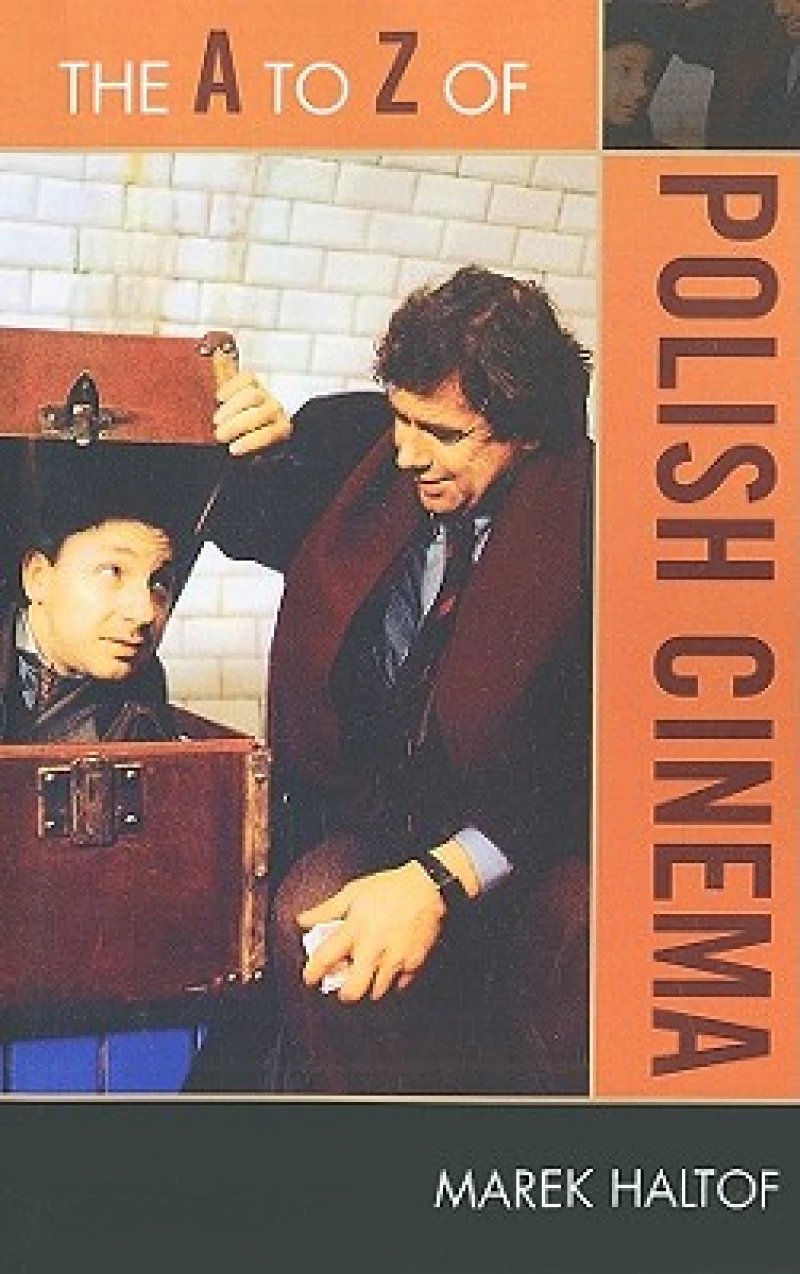
The A to Z of Polish Cinema
by
Marek Haltof
Book Details
Format
Paperback / Softback
Book Series
The A to Z Guide Series
ISBN-10
0810876175
ISBN-13
9780810876170
Publisher
Scarecrow Press
Imprint
Scarecrow Press
Country of Manufacture
GB
Country of Publication
GB
Publication Date
Apr 12th, 2010
Print length
318 Pages
Weight
458 grams
Dimensions
21.50 x 12.90 x 2.10 cms
Product Classification:
Films, cinemaFilm theory & criticismHistory
Ksh 10,000.00
Manufactured on Demand
0 in stock
Delivery Location
Delivery fee: Select location
Secure
Quality
Fast
In 1902, scientist and inventor Kazimierz Proszynski made the first Polish narrative film, The Return of a Merry Fellow (Powrot Birbanta). Since then, the Polish film industry has produced a diverse body of work, ranging from patriotic melodramas and epic adaptations of the national literary canon to Yiddish cinema and films portraying the corrupted side of communism. Poland has produced several internationally known films, including Andrzej Wajda's war trilogy, A Generation (1955), Kanal (1957), and Ashes and Diamonds (1958), Roman Polanski's Knife in the Water (1962), and Andrzej Munk's The Passenger (1963). Often performing specific political and cultural duties for their nation, Polish filmmakers were well aware of their role as educators, entertainers, social activists, and political leaders. The A to Z of Polish Cinema fills the gap in film scholarship, presenting an extensive factual survey of Polish film. Through its chronology, introductory essay, appendixes, bibliography, and cross-referenced dictionary entries on films, directors, actors, producers, and film institutions, a balanced picture of the richness of Polish cinema is presented. Readers with professional interest in cinema will welcome this new work, which would be useful for any senior undergraduate or post-graduate courses in film studies.
In 1902, scientist and inventor Kazimierz Prószynski made the first Polish narrative film, The Return of a Merry Fellow (Powrót Birbanta). Since then, the Polish film industry has produced a diverse body of work, ranging from patriotic melodramas and epic adaptations of the national literary canon to Yiddish cinema and films portraying the corrupted side of communism. Poland has produced several internationally known films, including Andrzej Wajda''s war trilogy, A Generation (1955), Kanal (1957), and Ashes and Diamonds (1958), Roman Polanski''s Knife in the Water (1962), and Andrzej Munk''s The Passenger (1963). Often performing specific political and cultural duties for their nation, Polish filmmakers were well aware of their role as educators, entertainers, social activists, and political leaders. The A to Z of Polish Cinema fills the gap in film scholarship, presenting an extensive factual survey of Polish film. Through its chronology, introductory essay, appendixes, bibliography, and cross-referenced dictionary entries on films, directors, actors, producers, and film institutions, a balanced picture of the richness of Polish cinema is presented. Readers with professional interest in cinema will welcome this new work, which would be useful for any senior undergraduate or post-graduate courses in film studies.
Get The A to Z of Polish Cinema by at the best price and quality guaranteed only at Werezi Africa's largest book ecommerce store. The book was published by Scarecrow Press and it has pages.

