
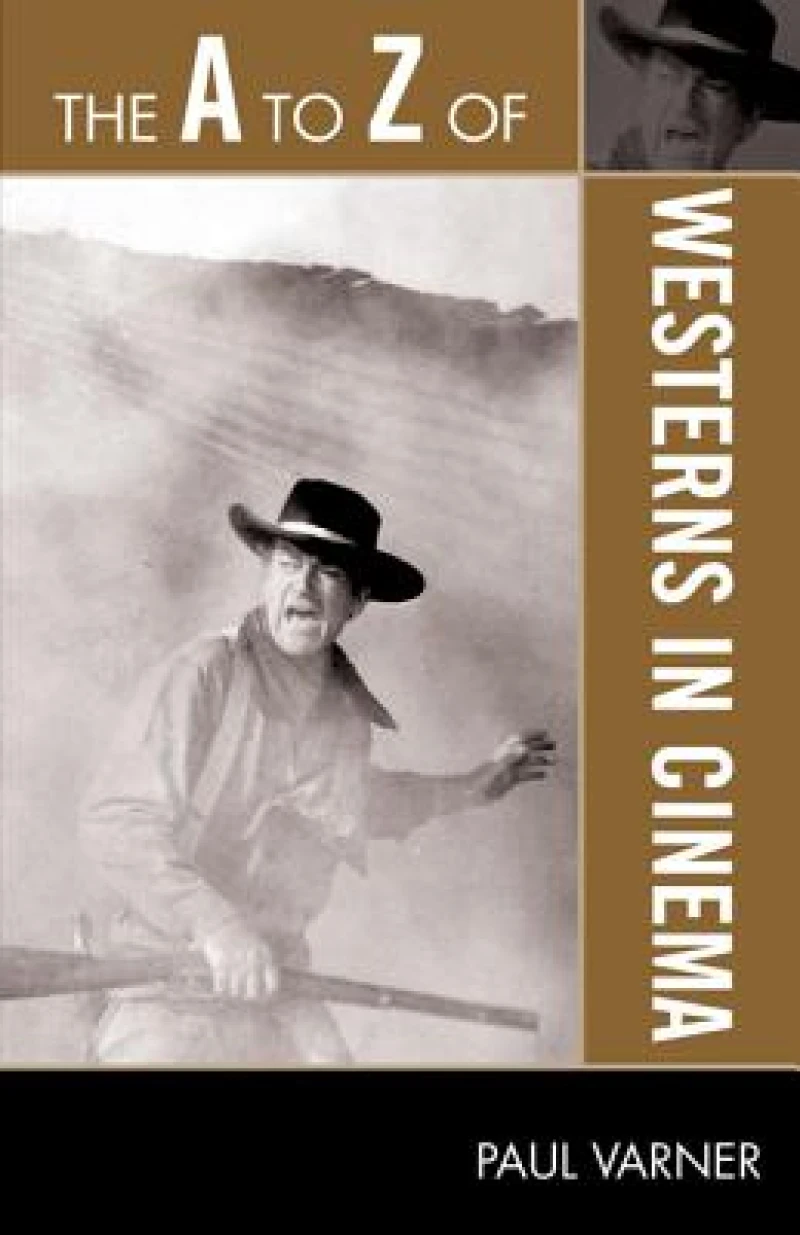
The A to Z of Westerns in Cinema
by
Paul Varner
Book Details
Format
Paperback / Softback
Book Series
The A to Z Guide Series
ISBN-10
0810868881
ISBN-13
9780810868885
Publisher
Scarecrow Press
Imprint
Scarecrow Press
Country of Manufacture
GB
Country of Publication
GB
Publication Date
Sep 28th, 2009
Print length
288 Pages
Weight
410 grams
Dimensions
21.50 x 13.90 x 1.80 cms
Product Classification:
Films, cinemaFilm theory & criticism
Ksh 9,900.00
Manufactured on Demand
0 in stock
Delivery Location
Delivery fee: Select location
Secure
Quality
Fast
When the earliest filmgoers watched The Great Train Robbery in 1903, many of them shrieked in terror at the very last clip when one of the outlaws turns directly toward the camera and fires a gun, seemingly, directly at the audience. The puff of smoke was sudden and it was hand colored so that it looked real. Today, we can look back at that primitive movie and see all the elements of what would evolve into the Western genre. Perhaps it is the Western's early origins—The Great Train Robbery was the first narrative, commercial movie—or its formulaic yet entertaining structure that has made the Western so popular. Whatever the case may be, with the recent success of films like 3:10 to Yuma and The Assassination of Jesse James by the Coward Robert Ford, the Western appears to be in no danger of disappearing. The story of the western is told in The A to Z of Westerns in Cinema through a chronology, a bibliography, and an introductory essay. However, it is the hundreds of cross-referenced dictionary entries on cinematographers; composers; producers; films like Butch Cassidy and the Sundance Kid, Dances With Wolves, The Good, The Bad, and the Ugly, High Noon, The Magnificent Seven, The Searchers, Tombstone, and Unforgiven; such actors as Gene Autry, Kirk Douglas, Clint Eastwood, Henry Fonda, James Stewart, and John Wayne; and directors like John Ford and Sergio Leone that will have you reaching for this book again and again.
When the earliest filmgoers watched The Great Train Robbery in 1903, many of them shrieked in terror at the very last clip when one of the outlaws turns directly toward the camera and fires a gun, seemingly, directly at the audience. The puff of smoke was sudden and it was hand colored so that it looked real. Today, we can look back at that primitive movie and see all the elements of what would evolve into the Western genre. Perhaps it is the Western''s early origins—The Great Train Robbery was the first narrative, commercial movie—or its formulaic yet entertaining structure that has made the Western so popular. Whatever the case may be, with the recent success of films like 3:10 to Yuma and The Assassination of Jesse James by the Coward Robert Ford, the Western appears to be in no danger of disappearing. The story of the western is told in The A to Z of Westerns in Cinema through a chronology, a bibliography, and an introductory essay. However, it is the hundreds of cross-referenced dictionary entries on cinematographers; composers; producers; films like Butch Cassidy and the Sundance Kid, Dances With Wolves, The Good, The Bad, and the Ugly, High Noon, The Magnificent Seven, The Searchers, Tombstone, and Unforgiven; such actors as Gene Autry, Kirk Douglas, Clint Eastwood, Henry Fonda, James Stewart, and John Wayne; and directors like John Ford and Sergio Leone that will have you reaching for this book again and again.
Get The A to Z of Westerns in Cinema by at the best price and quality guaranteed only at Werezi Africa's largest book ecommerce store. The book was published by Scarecrow Press and it has pages.

