
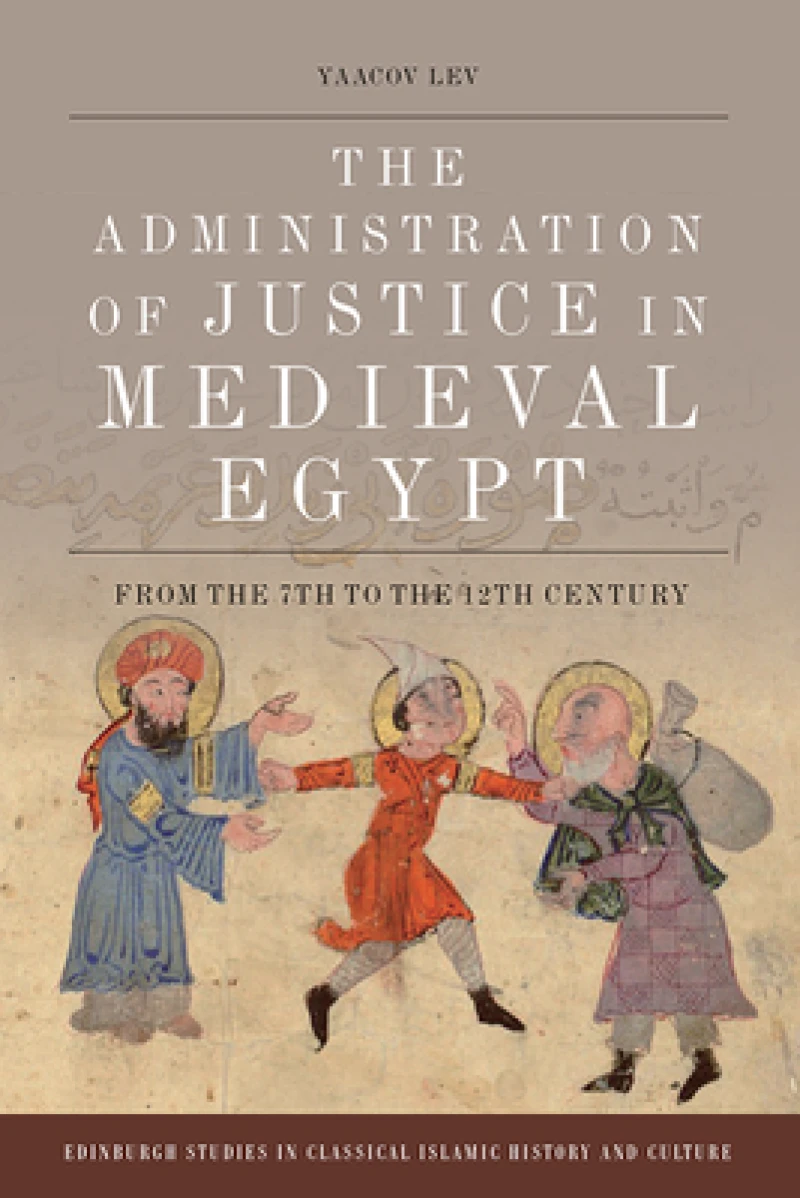
The Administration of Justice in Medieval Egypt : From the 7th to the 12th Century
by
Yaacov Lev
Book Details
Format
Hardback or Cased Book
ISBN-10
1474459234
ISBN-13
9781474459235
Publisher
Edinburgh University Press
Imprint
Edinburgh University Press
Country of Manufacture
GB
Country of Publication
GB
Publication Date
Mar 31st, 2020
Print length
312 Pages
Weight
606 grams
Dimensions
24.10 x 25.80 x 1.90 cms
Product Classification:
African historyMedieval historyLegal history
Ksh 18,000.00
Temporarily out of stock, due soon
0 in stock
Delivery Location
Delivery fee: Select location
Secure
Quality
Fast
This book shows how political and administrative forces shaped the way justice was applied in medieval Egypt. It introduces the model that evolved during the 7th to the 9th centuries, which involved 4 judicial institutions: the cadi, the court of complaint, the police/shurta and the Islamized market law.
This book shows how political and administrative forces shaped the way justice was applied in medieval Egypt. It introduces the model that evolved during the 7th to the 9th centuries, which involved four judicial institutions: the cadi, the court of complaint (mazalim), the police/shurta (responsible for criminal justice) and the Islamized market law (hisba) administrated by the market supervisor/muhtasib.
Literary and non-literary sources are used to highlight how these institutions worked in real-time situations such as the famine of 1024-1025, which posed tremendous challenges to the market supervisors in Cairo. The inner workings of the court of complaint during the 11th-12th century Fatimid state are revealed through array of documentary sources. Further, non-Muslim communities, their courts and their sphere of responsibilities are treated as integral to how justice was dispensed in medieval Islam. Documentary sources offers significant insights into these issues and illuminate the scope and limits of non-Muslims self-rule/judicial autonomy.
In sum, the book shows that the administrative and political history of the judiciary in medieval Egypt implicitly and explicitly illuminates broader questions about religious and social forces that shaped the lives of medieval people in the Middle East, Muslims and non-Muslims alike.
Literary and non-literary sources are used to highlight how these institutions worked in real-time situations such as the famine of 1024-1025, which posed tremendous challenges to the market supervisors in Cairo. The inner workings of the court of complaint during the 11th-12th century Fatimid state are revealed through array of documentary sources. Further, non-Muslim communities, their courts and their sphere of responsibilities are treated as integral to how justice was dispensed in medieval Islam. Documentary sources offers significant insights into these issues and illuminate the scope and limits of non-Muslims self-rule/judicial autonomy.
In sum, the book shows that the administrative and political history of the judiciary in medieval Egypt implicitly and explicitly illuminates broader questions about religious and social forces that shaped the lives of medieval people in the Middle East, Muslims and non-Muslims alike.
Get The Administration of Justice in Medieval Egypt by at the best price and quality guaranteed only at Werezi Africa's largest book ecommerce store. The book was published by Edinburgh University Press and it has pages.

