
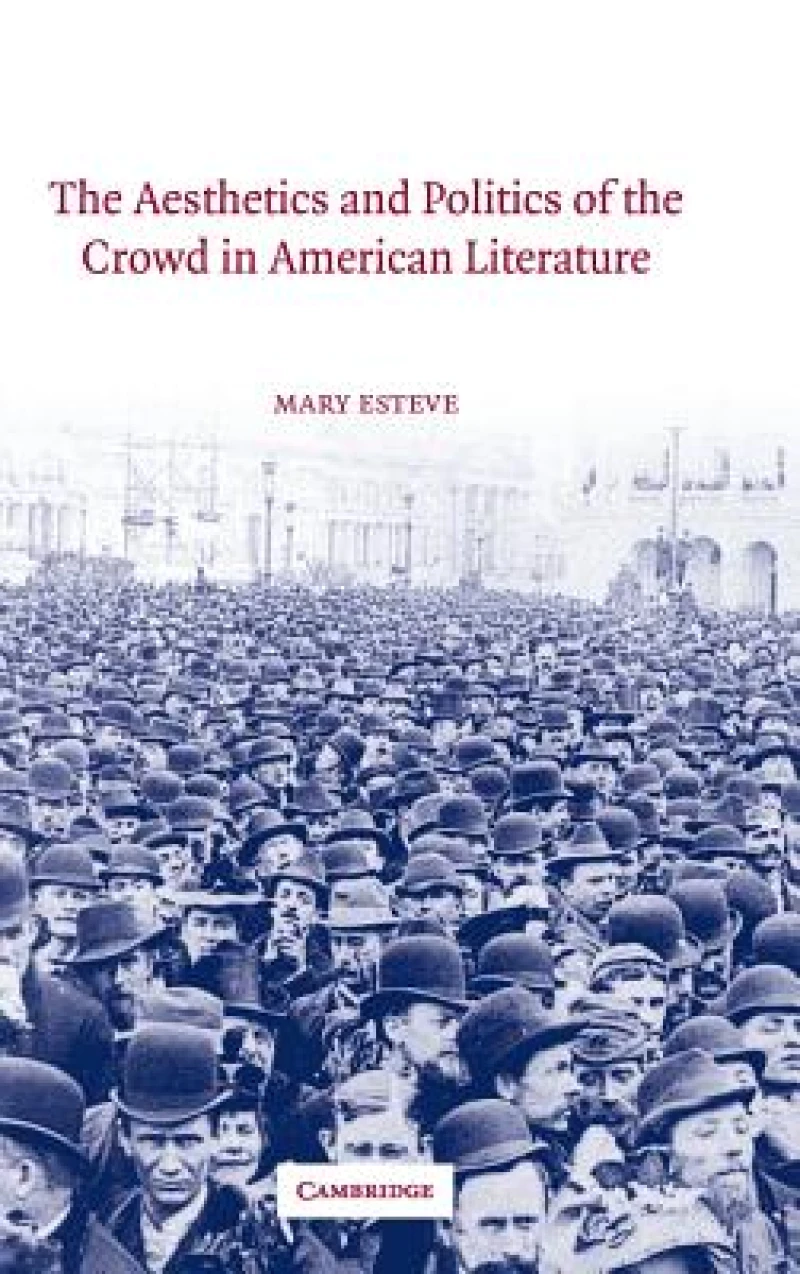
The Aesthetics and Politics of the Crowd in American Literature
by
Mary Esteve
Book Details
Format
Hardback or Cased Book
ISBN-10
052181488X
ISBN-13
9780521814881
Publisher
Cambridge University Press
Imprint
Cambridge University Press
Country of Manufacture
GB
Country of Publication
GB
Publication Date
Feb 27th, 2003
Print length
274 Pages
Weight
566 grams
Dimensions
22.90 x 15.20 x 1.90 cms
Ksh 17,800.00
Manufactured on Demand
0 in stock
Delivery Location
Delivery fee: Select location
Secure
Quality
Fast
Esteve examines crowd representations in American literature from the antebellum era to the early twentieth century. As a central icon of political and cultural democracy, the crowd occupies a prominent place in the American literary and cultural landscape. Esteve analyses the aesthetic and political meanings of such urban crowd scenes.
Mary Esteve provides a study of crowd representations in American literature from the antebellum era to the early twentieth century. As a central icon of political and cultural democracy, the crowd occupies a prominent place in the American literary and cultural landscape. Esteve examines a range of writing by Poe, Hawthorne, Lydia Maria Child, Du Bois, James, and Stephen Crane among others. These writers, she argues, distinguish between the aesthetics of immersion in a crowd and the mode of collectivity demanded of political-liberal subjects. In their representations of everyday crowds, ranging from streams of urban pedestrians to swarms of train travellers, from upper-class parties to lower-class revivalist meetings, such authors seize on the political problems facing a mass liberal democracy - problems such as the stipulations of citizenship, nation formation, mass immigration and the emergence of mass media. Esteve examines both the aesthetic and political meanings of such urban crowd scenes.
Get The Aesthetics and Politics of the Crowd in American Literature by at the best price and quality guaranteed only at Werezi Africa's largest book ecommerce store. The book was published by Cambridge University Press and it has pages.

