
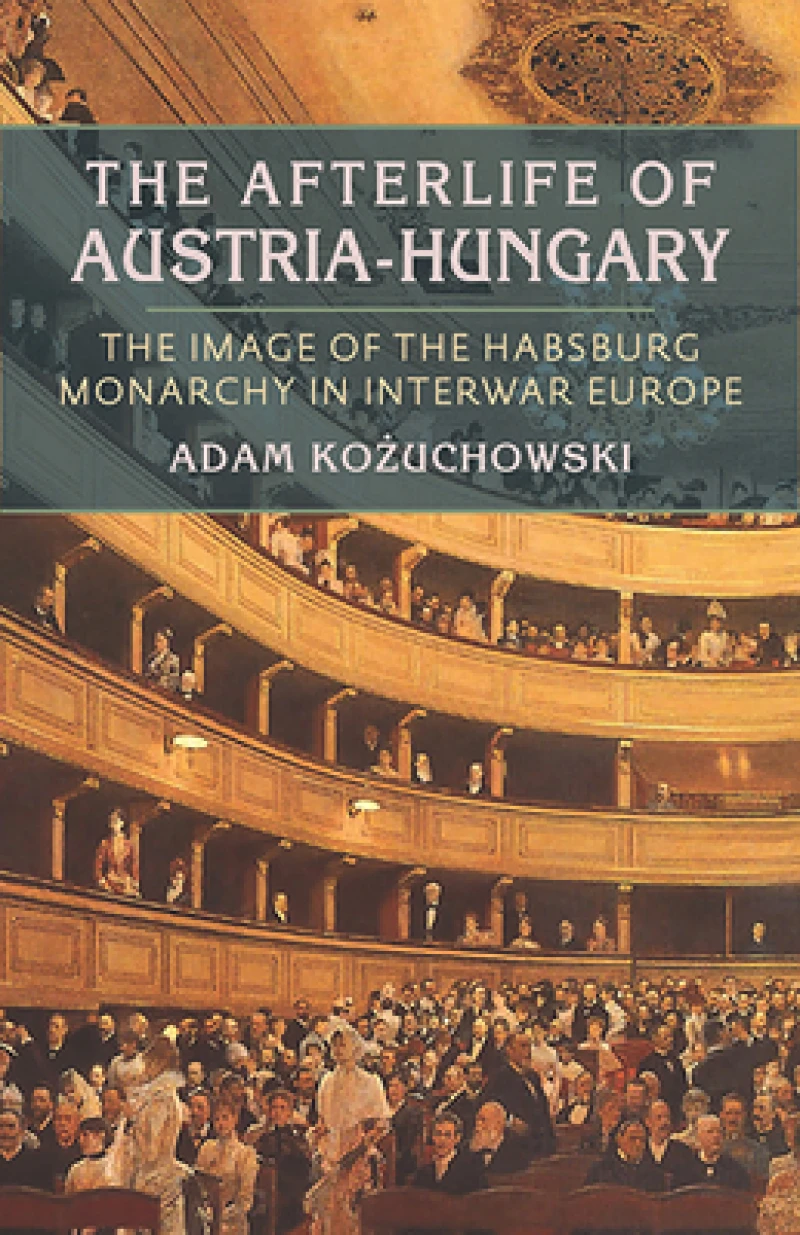
The Afterlife of Austria-Hungary : The Image of the Habsburg Monarchy in Interwar Europe
Book Details
Format
Paperback / Softback
Book Series
Russian and East European Studies
ISBN-10
0822962659
ISBN-13
9780822962656
Publisher
University of Pittsburgh Press
Imprint
University of Pittsburgh Press
Country of Manufacture
US
Country of Publication
GB
Publication Date
Nov 15th, 2013
Print length
232 Pages
Weight
308 grams
Dimensions
21.70 x 14.60 x 1.60 cms
Ksh 8,350.00
Temporarily out of stock, due soon
0 in stock
Delivery Location
Delivery fee: Select location
Secure
Quality
Fast
Examines histories, journalism, and literature in the period between the world wars to expose both the positive and the negative treatment of the Habsburg monarchy following its dissolution and the powerful influence of fiction and memory over history. Originally published in Polish, this study analyses the myriad factors that contributed to this phenomenon.
The assassination of Archduke Franz Ferdinand in 1914 was just one link in a chain of events leading to World War I and the downfall of the Austro-Hungarian empire. By 1918, after nearly four hundred years of rule, the Habsburg monarchy was expunged in an instant of history. Remarkably, despite tales of decadence, ethnic indifference, and a failure to modernize, the empire enjoyed a renewed popularity in interwar narratives. Today, it remains a crucial point of reference for Central European identity, evoking nostalgia among the nations that once dismembered it. The Afterlife of Austria-Hungary examines histories, journalism, and literature in the period between world wars to expose both the positive and the negative treatment of the Habsburg monarchy following its dissolution and the powerful influence of fiction and memory over history. Originally published in Polish, Adam Kozuchowski’s study analyzes the myriad factors that contributed to this phenomenon. Chief among these were economic depression, widespread authoritarianism on the continent, and the painful rise of aggressive nationalism. Many authors of these narratives were well-known intellectuals who yearned for the high culture and peaceable kingdom of their personal memory. Kozuchowski contrasts these imaginaries with the causal realities of the empire’s failure. He considers the aspirations of Czechs, Poles, Romanians, Hungarians, and Austrians, and their quest for autonomy or domination over their neighbors, coupled with the wave of nationalism spreading across Europe. Kozuchowski then dissects the reign of the legendary Habsburg monarch, Franz Joseph, and the lasting perceptions that he inspired. To Kozuchowski, the interwar discourse was a reaction to the monumental change wrought by the dissolution of Austria-Hungary and the fear of a history lost. Those displaced at the empire’s end attempted, through collective (and selective) memory, to reconstruct the vision of a once great multinational power. It was an imaginary that would influence future histories of the empire and even became a model for the European Union.
Get The Afterlife of Austria-Hungary by at the best price and quality guaranteed only at Werezi Africa's largest book ecommerce store. The book was published by University of Pittsburgh Press and it has pages.

