
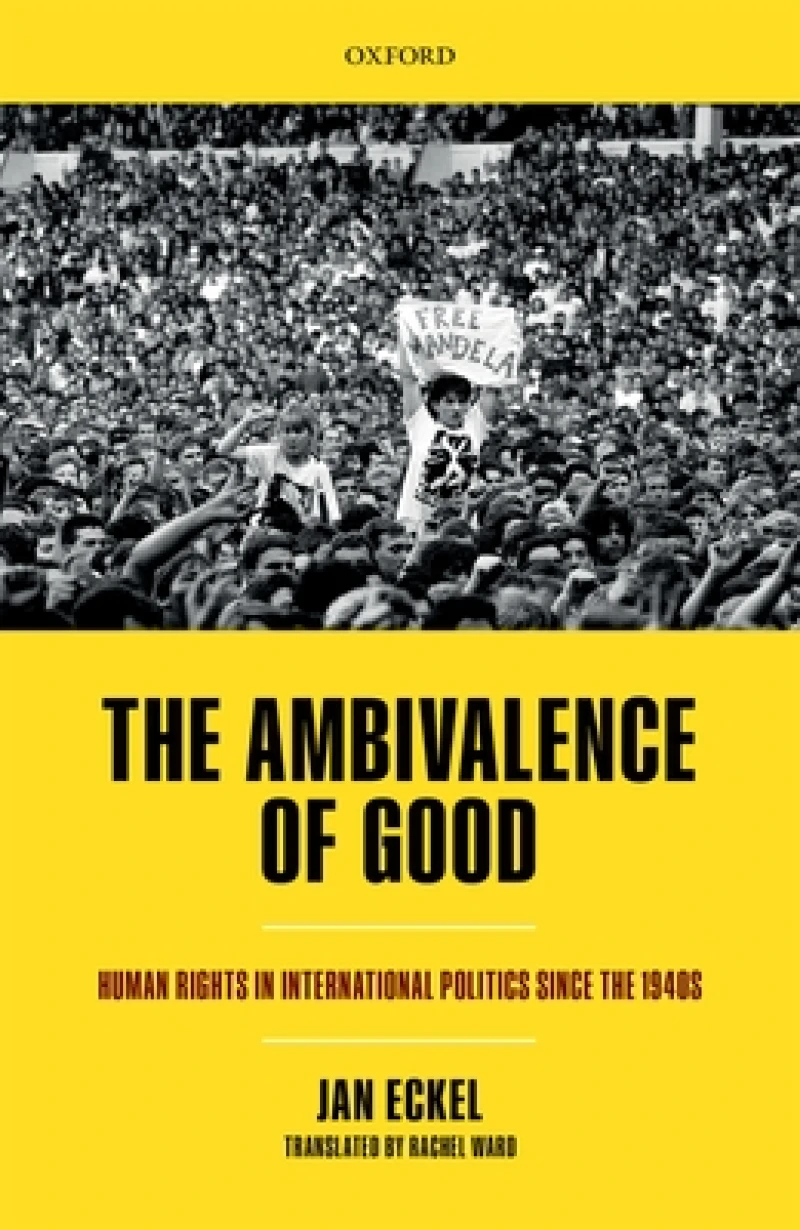
The Ambivalence of Good : Human Rights in International Politics since the 1940s
by
Jan Eckel
Book Details
Format
Hardback or Cased Book
Book Series
Oxford Studies in Modern European History
ISBN-10
0198783361
ISBN-13
9780198783367
Publisher
Oxford University Press
Imprint
Oxford University Press
Country of Manufacture
GB
Country of Publication
GB
Publication Date
Apr 24th, 2019
Print length
456 Pages
Weight
826 grams
Dimensions
24.10 x 15.80 x 2.90 cms
Ksh 21,650.00
Manufactured on Demand
0 in stock
Delivery Location
Delivery fee: Select location
Secure
Quality
Fast
The 20th century was marked by the emergence of human rights and their power to transform international relations, but not everyone who claimed human rights wanted to make the world a better place, while sometimes the benefits of human rights were unintended. Eckel recounts a history that is complex, polycentric, and does not provide easy lessons.
The Ambivalence of Good examines the genesis and evolution of international human rights politics since the 1940s. Focusing on key developments such as the shaping of the UN human rights system, decolonization, the rise of Amnesty International, the campaigns against the Pinochet dictatorship, the moral politics of Western governments, or dissidence in Eastern Europe, the book traces how human rights profoundly, if subtly, transformed global affairs. Moving beyond monocausal explanations and narratives prioritizing one particular decade, such as the 1940s or the 1970s, The Ambivalence of Good argues that we need a complex and nuanced interpretation if we want to understand the truly global reach of human rights, and account for the hopes, conflicts, and interventions to which this idea gave rise. Thus, it portrays the story of human rights as polycentric, demonstrating how actors in various locales imbued them with widely different meanings, arguing that the political field evolved in a fitful and discontinuous process. This process was shaped by consequential shifts that emerged from the search for a new world order during the Second World War, decolonization, the desire to introduce a new political morality into world affairs during the 1970s, and the visions of a peaceful international order after the end of the Cold War. Finally, the book stresses that the projects pursued in the name of human rights nonetheless proved highly ambivalent. Self-interest was as strong a driving force as was the desire to help people in need, and while international campaigns often improved the fate of the persecuted, they were equally likely to have counterproductive effects.The Ambivalence of Good provides the first research-based synopsis of the topic and one of the first synthetic studies of a transnational political field (such as population, health, or the environment) during the twentieth century. Based on archival research in six countries, it breaks new empirical ground concerning the history of human rights in the United Nations, of human rights NGOs, of far-flung mobilizations, and of the uses of human rights in state foreign policy.
Get The Ambivalence of Good by at the best price and quality guaranteed only at Werezi Africa's largest book ecommerce store. The book was published by Oxford University Press and it has pages.

