
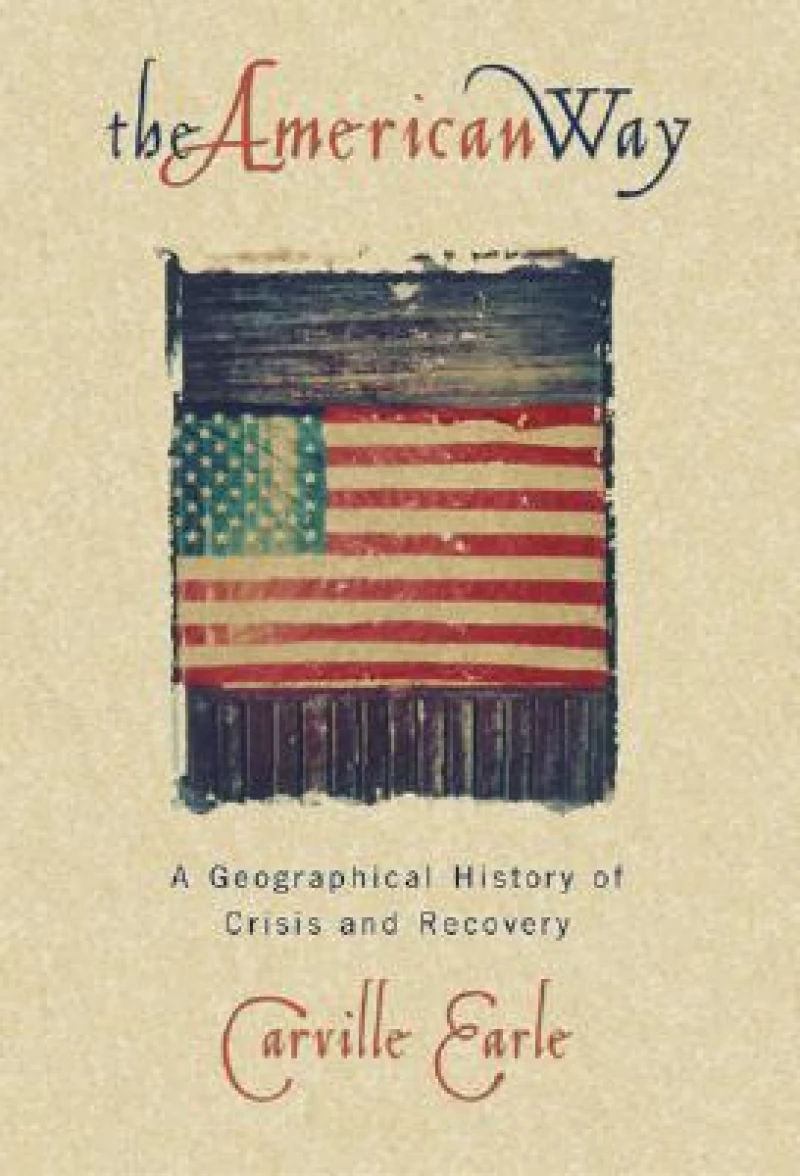
The American Way : A Geographical History of Crisis and Recovery
Book Details
Format
Paperback / Softback
ISBN-10
0847687139
ISBN-13
9780847687138
Publisher
Bloomsbury Publishing Plc
Imprint
Rowman & Littlefield Publishers
Country of Manufacture
GB
Country of Publication
GB
Publication Date
Jul 11th, 2005
Print length
472 Pages
Weight
717 grams
Dimensions
24.10 x 17.00 x 2.20 cms
Product Classification:
Economic historyHuman geography
Ksh 10,800.00
Manufactured on Demand
0 in stock
Delivery Location
Delivery fee: Select location
Secure
Quality
Fast
The geography of contemporary U.S. political economy has roots that run deep into our past. Earle traces their growth to the seventeenth-century origins of liberalism, republicanism, and financial crises.
The geography of contemporary U.S. political economy—the relocation of firms toward the sunbelt and abroad; the decline of manufacturing in the rust belt; and the rise of footloose producer services, NAFTA-inspired trade flows—has roots that run deep into our past. This innovative history by one of our most distinguished historical geographers traces their growth back to the seventeenth-century origins of liberalism, republicanism, and the regular financial crises by then endemic in capitalist societies. The problem the English and then the Americans faced was overcoming these crises while avoiding the political extremes of royal absolutism and later of socialism, communism, and fascism. The English way alternated between the doctrinaire ideologies and geographies of republicanism and liberalism. In 1776, by mixing elements of both, Americans created entirely new ideological alloys. Henceforth, policy regimes alternated between Democrats and Republicans and their distinctive fusions of liberal and republican ideology. Democrats combined publicanism''s tenets of equality, diversified and volatile regions, and consumer revolution with liberalism''s tenets of free trade, geographical consolidation, and dispersion (New Deal "liberalism"). Republicans mixed liberalism''s biases toward elites, regional specialization and stability, and producer revolution with republicanism''s tilt toward nationalism, expansionism, and demographic concentration (Reagan''s America). Muddying liberal and republican ideologies and geographies in ways that tempered their extremes, Americans would add one more twist. Thrice, upon the birth of the first, second, and third republics, they enlarged the geographical jurisdictions of the federal government, extended the domains of U.S. power, and redefined the nature of the state. Carville Earle defines these enlargements as the distributive and partisan "sectional state" of the 1790s, the regulatory and redistributive "national state" of the 1880s, and the neoliberal "transnational sta
Get The American Way by at the best price and quality guaranteed only at Werezi Africa's largest book ecommerce store. The book was published by Bloomsbury Publishing Plc and it has pages.

