
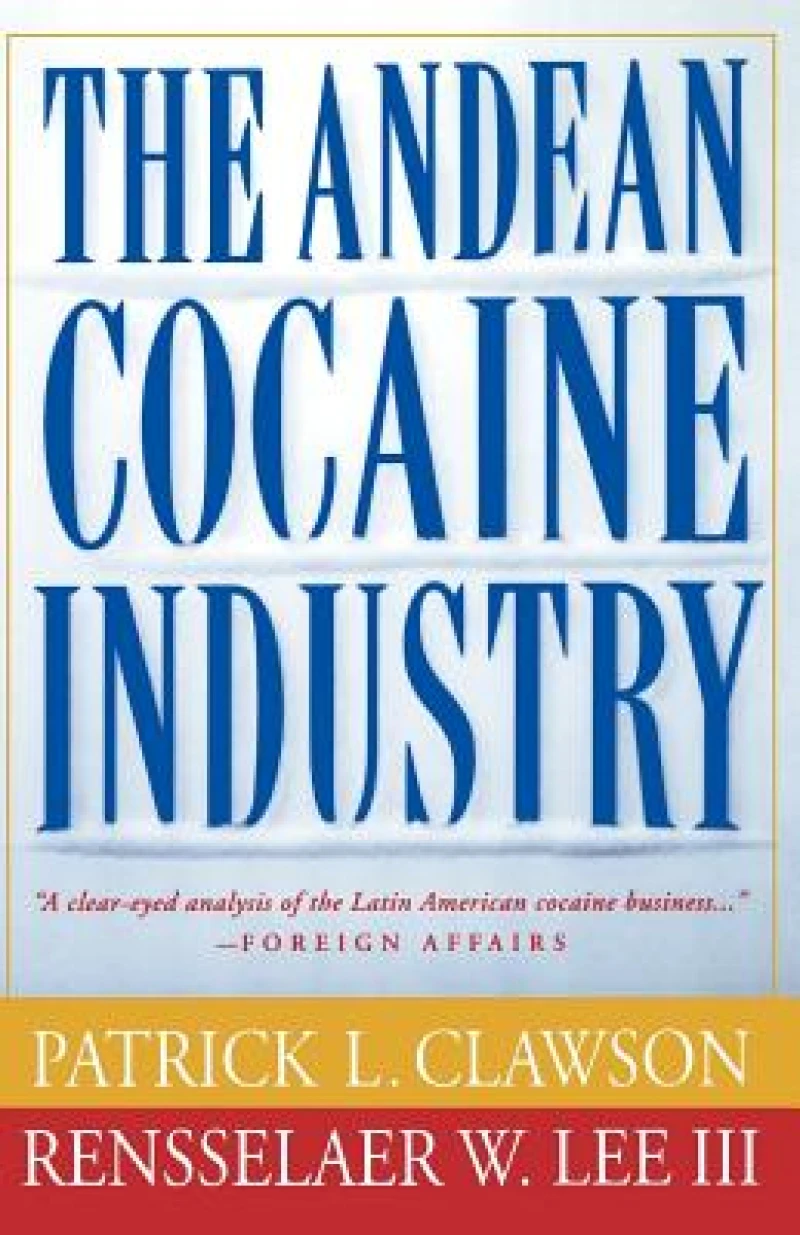
The Andean Cocaine Industry
Book Details
Format
Paperback / Softback
ISBN-10
0312176910
ISBN-13
9780312176914
Publisher
Palgrave USA
Imprint
Palgrave Macmillan
Country of Manufacture
US
Country of Publication
GB
Publication Date
Jun 11th, 1998
Print length
292 Pages
Product Classification:
SociologyCrime & criminologyPsychologyPolitics & governmentPolitical science & theory
Ksh 8,100.00
Werezi Extended Catalogue
0 in stock
Delivery Location
Delivery fee: Select location
Secure
Quality
Fast
It is commonly known that the Andean nations of Colombia, Peru, and Bolivia are the international centers of cocaine production. But until now, there has been no comprehensive view of this billion dollar industry. Using never-before unearthed information culled from their extensive field research, Patrick Clawson and Rensselaer Lee reveal the configuration of the drug industry, from the original cultivation of coca in the fields of South America to the sale of cocaine on the streets of the United States. The authors analyze the economic and political impact of the drug business on the Andean nations, including such problems as violence and the undermining of legitimate business. Through the ground-breaking work of Clawson and Lee, The Andean Cocaine Industry illuminates one of the most pervasive problems facing the world today.
The Andean nations of Colombia, Peru, and Bolivia are the heartland of cocaine, as well as a growing heroin source. Using extensive field research, Clawson and Lee examine the configuration of the drug industry from field to arrival in the US, from the farmers to the processors, the traffickers, and the international criminals. They analyze the economic and political impact of the drug business on the Andean nations, including such problems as the undermining of legitimate business and the exacerbation of violence and corruption. The fight against narcotics in the Andean nations has included a wide range of strategies, implemented with varying degrees of enthusiasm - promotion of alternative crops, eradication of plants, destruction of labs, interdiction of flights, and negotiations with drug lords. Some of these policies have had counterproductive social, political, and economic effects, eg, generating popular sympathy for drug kingpins, driving rural populations to support guerrilla movements, attracting new migrant to coca-growing areas, or acting as a coca price support program by destroying excess leaves. The US government has financed much of the Andean counternarcotics effort. Clawson and Lee ask such questions as whether a different mix of policies, with the same dollars spent would have done more to reduce the coca flow, whether curbing narcotics production is an achievable objective (and if not what US overseas programs should attempt to accomplish), and whether the Andean countries would benefit economically and politically from the legalization of drugs.
Get The Andean Cocaine Industry by at the best price and quality guaranteed only at Werezi Africa's largest book ecommerce store. The book was published by Palgrave USA and it has pages.

