
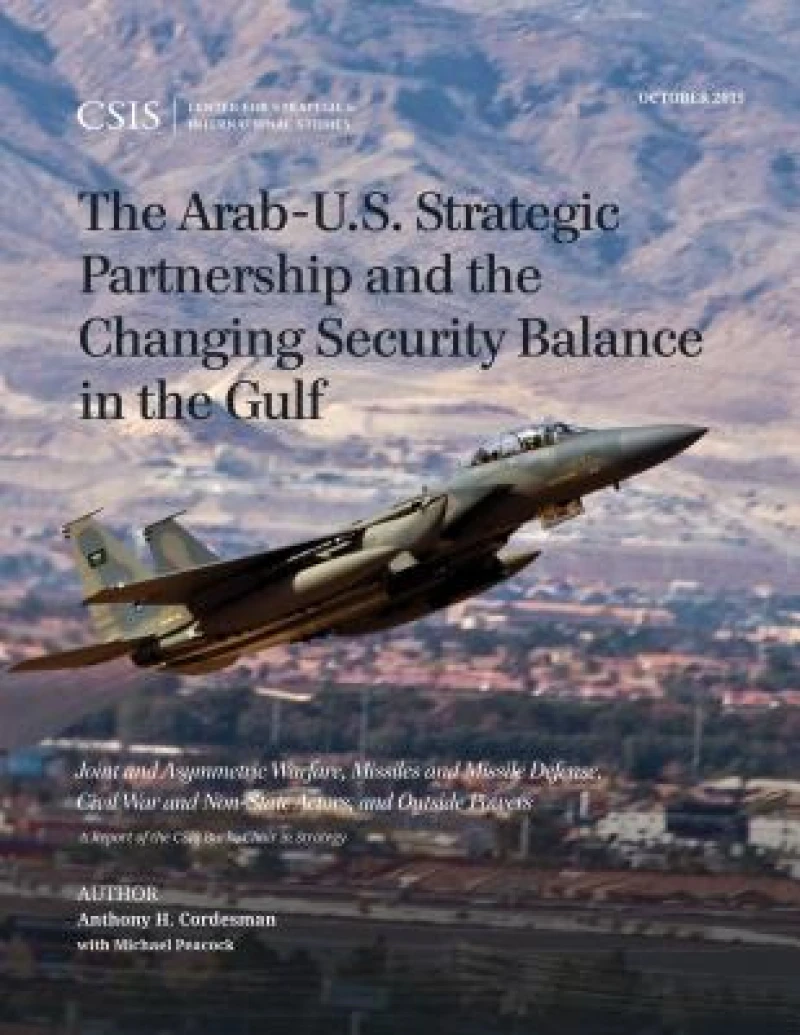
The Arab-U.S. Strategic Partnership and the Changing Security Balance in the Gulf : Joint and Asymmetric Warfare, Missiles and Missile Defense, Civil War and Non-State Actors, and Outside Powers
Book Details
Format
Paperback / Softback
Book Series
CSIS Reports
ISBN-10
1442258985
ISBN-13
9781442258983
Publisher
Centre for Strategic & International Studies,U.S.
Imprint
Centre for Strategic & International Studies,U.S.
Country of Manufacture
US
Country of Publication
GB
Publication Date
Nov 10th, 2015
Print length
616 Pages
Weight
1,474 grams
Dimensions
22.10 x 28.70 x 4.10 cms
Product Classification:
International relations
Ksh 23,600.00
Re-Printing
0 in stock
Delivery Location
Delivery fee: Select location
Secure
Quality
Fast
The ongoing confrontation with Iran, the war against ISIL, the instability in Iraq, the Civil war in Syria, and the conflict in Yemen have all caused major changes in the security situation in the Persian Gulf and in the regional military balance. The strategic partnership between Arab Gulf states, and with the United States and other outside states, must now evolve to deal with conventional military threats and a range of new threats, including ideological extremists, non-state actors and their state sponsors, and a growing range of forces designed to fight asymmetric wars. This new report from the CSIS Burke Chair in Strategy provides a 2015 assessment of the Gulf military balance, the military capabilities of each Gulf state, the role of the United States as a security partner, and the priorities for change in the structure of both the Gulf Cooperation Council and the Arab Gulf military partnership with the United States. The assessment goes far beyond the conventional military balance and examines how force developments in the region affect joint and asymmetric warfare, missiles and missile defense, nuclear forces, as well as terrorism, the role of non-state actors, and outside powers.
The ongoing confrontation with Iran, the war against ISIL, the instability in Iraq, the Civil war in Syria, and the conflict in Yemen have all caused major changes in the security situation in the Persian Gulf and in the regional military balance. The strategic partnership between Arab Gulf states, and with the United States and other outside states, must now evolve to deal with conventional military threats and a range of new threats, including ideological extremists, non-state actors and their state sponsors, and a growing range of forces designed to fight asymmetric wars. This new report from the CSIS Burke Chair in Strategy provides a 2015 assessment of the Gulf military balance, the military capabilities of each Gulf state, the role of the United States as a security partner, and the priorities for change in the structure of both the Gulf Cooperation Council and the Arab Gulf military partnership with the United States. The assessment goes far beyond the conventional military balance and examines how force developments in the region affect joint and asymmetric warfare, missiles and missile defense, nuclear forces, as well as terrorism, the role of non-state actors, and outside powers.
Get The Arab-U.S. Strategic Partnership and the Changing Security Balance in the Gulf by at the best price and quality guaranteed only at Werezi Africa's largest book ecommerce store. The book was published by Centre for Strategic & International Studies,U.S. and it has pages.

