
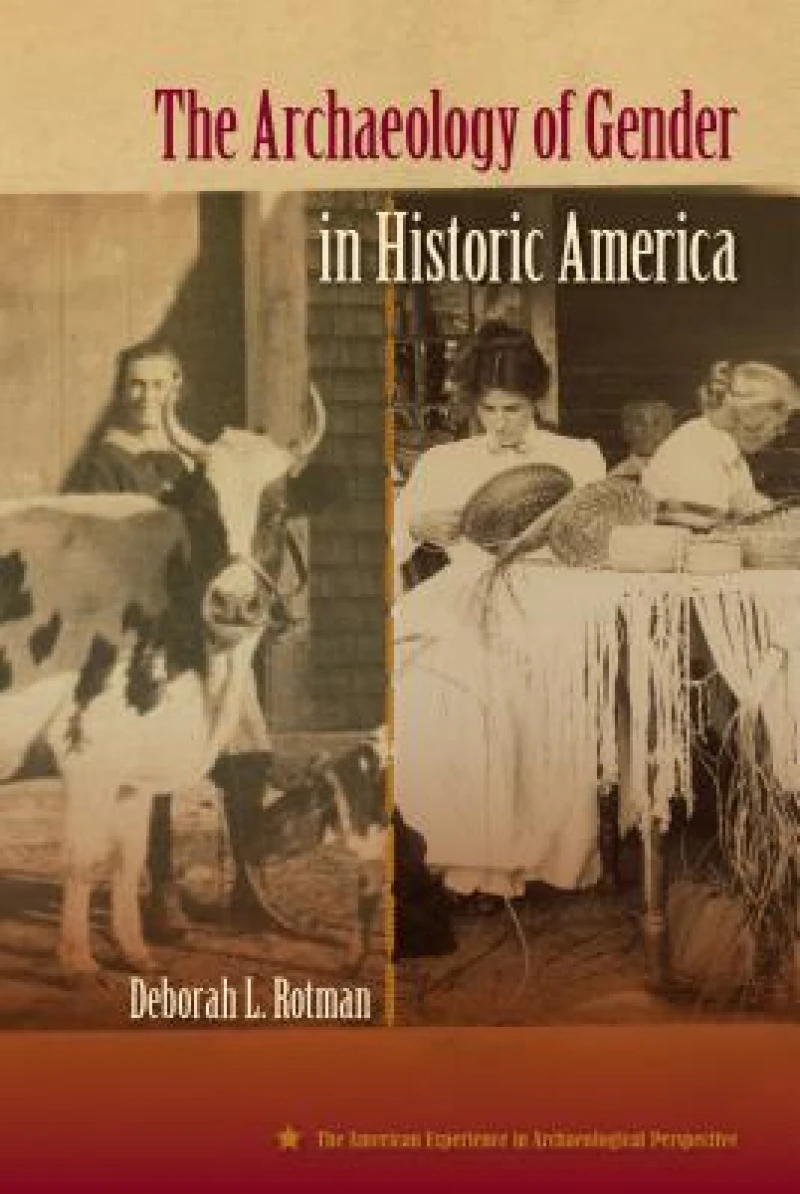
The Archaeology of Gender in Historic America
Book Details
Format
Paperback / Softback
ISBN-10
0813064775
ISBN-13
9780813064772
Publisher
University Press of Florida
Imprint
University Press of Florida
Country of Manufacture
US
Country of Publication
GB
Publication Date
May 22nd, 2018
Print length
192 Pages
Weight
322 grams
Dimensions
15.20 x 22.60 x 1.80 cms
Ksh 3,300.00
Temporarily out of stock, due soon
0 in stock
Delivery Location
Delivery fee: Select location
Secure
Quality
Fast
From domestic spaces to the public realm, Deborah Rotman contextualizes gender and the associated social relationships from the colonial period to the twentieth century. By exploring how individuals and families negotiated and mediated these relationships, she sheds light on how prescriptive gender categories affected those expected to follow them.
“Essential reading in gender studies, The Archaeology of Gender in Historic America shows how historical archaeology has nuanced historiography-based understandings of American gender relations.”—Stacey Lynn Camp, author of The Archaeology of Citizenship
“A powerful synthesis of gender-focused archaeological research. Rotman deftly shows that the study of place and material culture can reveal diverse experiences of gender in historic North America.”—Barbara L. Voss, author of The Archaeology of Ethnogenesis
Patriarchy, colonialism, and the capitalist mode of production have shaped gender through time and across many different cultures. In historic America, gendered social relations were created, codified, and reproduced through the objects used in cultural rituals, the spatial organization of houses, the construction of village landscapes, and the institutions of society, in addition to other social, ideological, economic, and political forces.
From domestic spaces to the public realm, Deborah Rotman contextualizes gender and the associated social relationships from the colonial period through the twentieth century. By exploring how individuals and families negotiated and mediated these relationships, she sheds light on how prescriptive gender categories affected those expected to follow them and examines how diverse groups responded to popular gender ideologies. Additionally, she reveals the ways gender and society influence each other, exposing how American normative notions of masculinity and femininity intersect with class, ethnicity, race, sexuality, and identity. Albeit, Rotman contends, they do not intersect in mutually supportive ways, ultimately giving rise to transformative social changes.
“A powerful synthesis of gender-focused archaeological research. Rotman deftly shows that the study of place and material culture can reveal diverse experiences of gender in historic North America.”—Barbara L. Voss, author of The Archaeology of Ethnogenesis
Patriarchy, colonialism, and the capitalist mode of production have shaped gender through time and across many different cultures. In historic America, gendered social relations were created, codified, and reproduced through the objects used in cultural rituals, the spatial organization of houses, the construction of village landscapes, and the institutions of society, in addition to other social, ideological, economic, and political forces.
From domestic spaces to the public realm, Deborah Rotman contextualizes gender and the associated social relationships from the colonial period through the twentieth century. By exploring how individuals and families negotiated and mediated these relationships, she sheds light on how prescriptive gender categories affected those expected to follow them and examines how diverse groups responded to popular gender ideologies. Additionally, she reveals the ways gender and society influence each other, exposing how American normative notions of masculinity and femininity intersect with class, ethnicity, race, sexuality, and identity. Albeit, Rotman contends, they do not intersect in mutually supportive ways, ultimately giving rise to transformative social changes.
Get The Archaeology of Gender in Historic America by at the best price and quality guaranteed only at Werezi Africa's largest book ecommerce store. The book was published by University Press of Florida and it has pages.

