
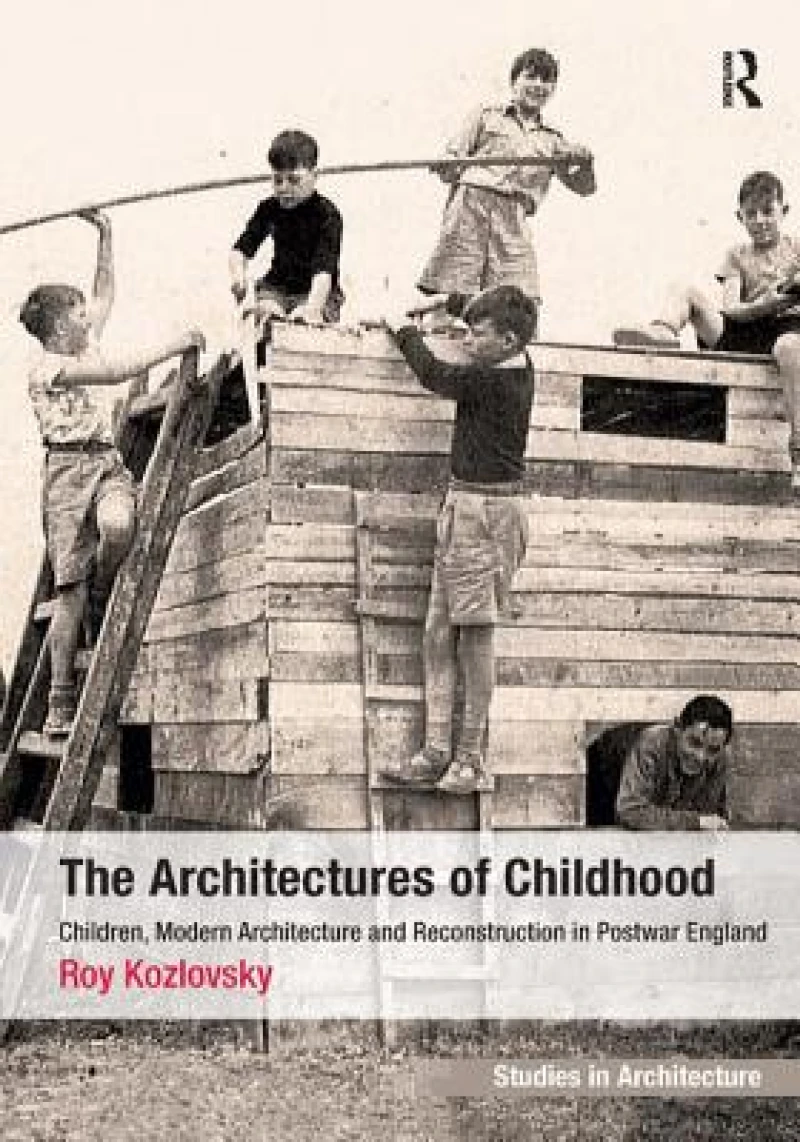
The Architectures of Childhood : Children, Modern Architecture and Reconstruction in Postwar England
Book Details
Format
Hardback or Cased Book
Book Series
Ashgate Studies in Architecture
ISBN-10
1409439771
ISBN-13
9781409439776
Publisher
Taylor & Francis Ltd
Imprint
Routledge
Country of Manufacture
GB
Country of Publication
GB
Publication Date
May 13th, 2013
Print length
292 Pages
Weight
839 grams
Product Classification:
Architecture
Ksh 28,800.00
Werezi Extended Catalogue
0 in stock
Delivery Location
Delivery fee: Select location
Secure
Quality
Fast
Focusing on England between 1935 and 1959, this book examines a selected group of innovative buildings and environments that were designed for children or addressed their needs, such as playgrounds, schools, community centres, hospitals, dwellings and neighbourhoods.
Between 1935 and 1959, the architecture of childhood was at the centre of architectural discourse in a way that is unique in architectural history. Some of the seminal projects of the period, such as the Secondary Modern School at Hunstanton by Peter and Alison Smithson, Le Corbusier’s Unité d’Habitation at Marseilles, or Aldo van Eyck’s playgrounds and orphanage, were designed for children; At CIAM, architects utilized photographs of children to present their visions for reconstruction. The unprecedented visibility of the child to architectural discourse during the period of reconstruction is the starting point for this interdisciplinary study of modern architecture under welfare state patronage. Focusing mainly on England, this book examines a series of innovative buildings and environments developed for children, such as the adventure playground, the Hertfordshire school, the reformed children hospital, Brutalist housing estates, and New Towns. It studies the methods employed by architects, child experts and policy makers to survey, assess and administer the physiological, emotional and developmental needs of the ’user’, the child. It identifies the new aesthetic and spatial order permeating the environments of childhood, based on endowing children with the agency and autonomy to create a self-regulating social order out of their own free will, while rendering their interiority and sociability observable and governable. By inserting the architectural object within a broader social and political context, The Architectures of Childhood situates post-war architecture within the welfare state’s project of governing the self, which most intensively targeted the citizen in the making, the children. Yet the emphasis on the utilization of architecture as an instrument of power does not reduce it into a mere document of social policy, as the author uncovers the surplus of meaning and richness of experience invested in these environments at the historical mom
Get The Architectures of Childhood by at the best price and quality guaranteed only at Werezi Africa's largest book ecommerce store. The book was published by Taylor & Francis Ltd and it has pages.

