
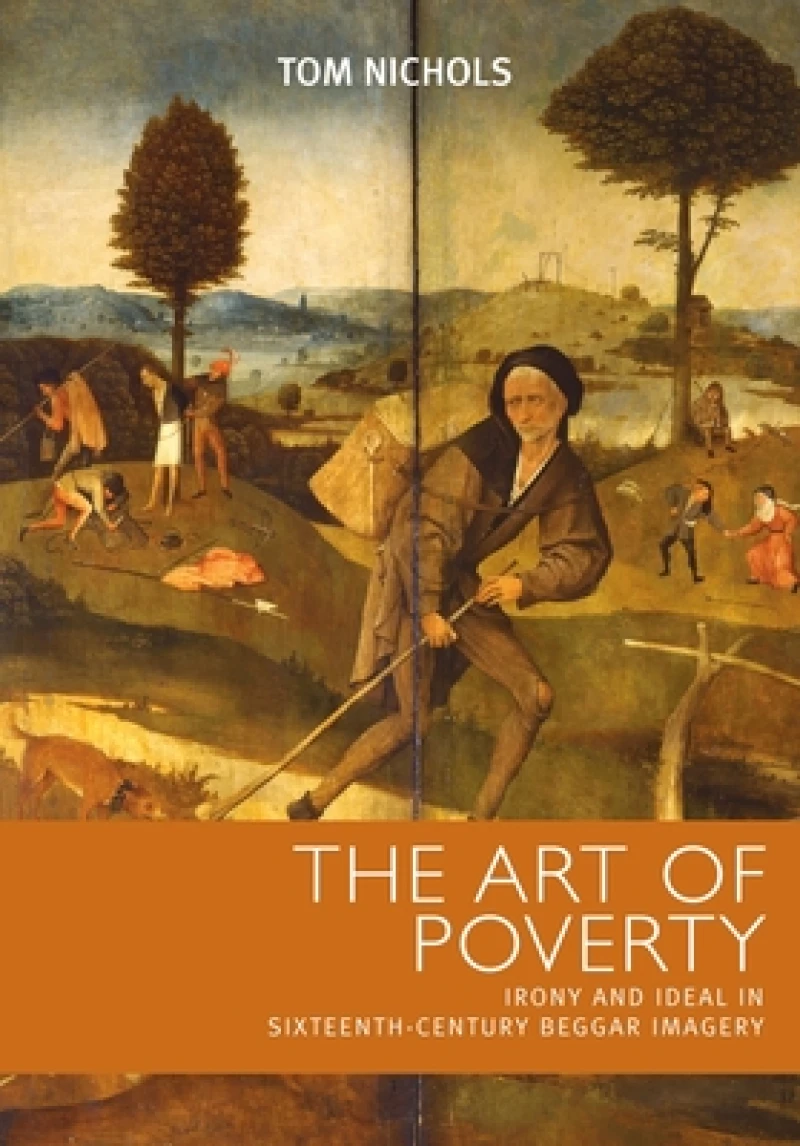
The Art of Poverty : Irony and Ideal in Sixteenth-Century Beggar Imagery
by
Tom Nichols
Book Details
Format
Hardback or Cased Book
ISBN-10
0719075823
ISBN-13
9780719075827
Publisher
Manchester University Press
Imprint
Manchester University Press
Country of Manufacture
GB
Country of Publication
GB
Publication Date
Dec 1st, 2007
Print length
288 Pages
Weight
880 grams
Dimensions
17.80 x 24.10 x 2.10 cms
Product Classification:
History of art & design styles: c 1400 to c 1600
Ksh 15,300.00
Werezi Extended Catalogue
0 in stock
Delivery Location
Delivery fee: Select location
Secure
Quality
Fast
`The art of poverty` is the first book in English to analyse depictions of beggars in sixteenth-century European art. It develops a striking thesis, arguing that such images largely conformed to two paradoxical, though complimentary, traditions: the one ironising, the other idealising. -- .
The art of poverty is the first book in English to analyse depictions of beggars in sixteenth-century European art. Featuring works from Germany, the Low Countries, Britain, France and Italy, it discusses a diverse body of imagery in many different media, from crude woodcuts to monumental church altarpieces. It develops a striking thesis, arguing that these works largely conformed to two paradoxical, though mutually supportive, representational approaches. The earlier chapters follow the emergence of a trenchantly negative approach in Northern art, in which beggars are shown as vagabonds, whose idleness and thievery threatened the values of sixteenth-century society (especially its growing emphasis on the need to work). In the other predominant visual mode, beggars are exalted as examples of sacred purity. In many Italian religious paintings, beggars are morally exalted with reference to sacred texts, and made formally beautiful with reference to revered artistic models. Though these approaches reflect the impact of religious reform, it is shown that, by the end of the century, they happily co-existed within Protestant and Catholic cultures. The final part of the book is concerned with the issue of artistic style and with the growing tendency of the beggar image to mediate and dissolve the didactic traditions through which it had originally been defined. The art of poverty will be of special interest to scholars and students of Renaissance art history, and its progressive approach and cross-disciplinary theme and perspective will also make it vital reading for those concerned with the development of early modern European culture.
Get The Art of Poverty by at the best price and quality guaranteed only at Werezi Africa's largest book ecommerce store. The book was published by Manchester University Press and it has pages.

