
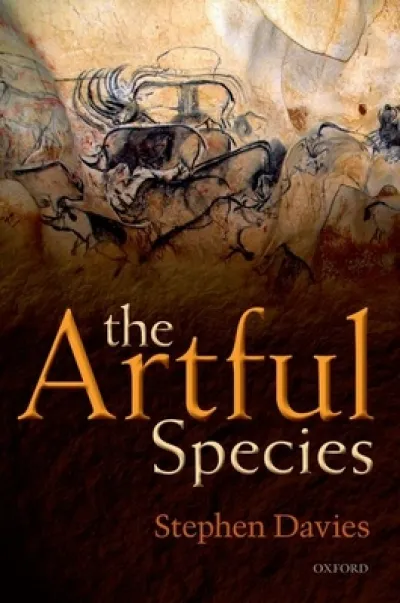
The Artful Species : Aesthetics, Art, and Evolution
Book Details
Format
Paperback / Softback
ISBN-10
0198709633
ISBN-13
9780198709633
Publisher
Oxford University Press
Imprint
Oxford University Press
Country of Manufacture
GB
Country of Publication
GB
Publication Date
Nov 27th, 2014
Print length
310 Pages
Weight
472 grams
Dimensions
23.30 x 15.90 x 1.80 cms
Ksh 7,050.00
Manufactured on Demand
0 in stock
Delivery Location
Delivery fee: Select location
Secure
Quality
Fast
Stephen Davies presents a fascinating exploration of the idea that art, and our aesthetic sensibilities more generally, should be understood as an element in human evolution. He asks: Do animals have aesthetics? Do our aesthetic preferences have prehistoric roots? Is art universal? What is the biological role of aesthetic and artistic behaviour?
The Artful Species explores the idea that our aesthetic responses and art behaviors are connected to our evolved human nature. Our humanoid forerunners displayed aesthetic sensibilities hundreds of thousands of years ago and the art standing of prehistoric cave paintings is virtually uncontested. In Part One, Stephen Davies analyses the key concepts of the aesthetic, art, and evolution, and explores how they might be related. He considers a range of issues, including whether animals have aesthetic tastes and whether art is not only universal but cross-culturally comprehensible. Part Two examines the many aesthetic interests humans take in animals and how these reflect our biological interests, and the idea that our environmental and landscape preferences are rooted in the experiences of our distant ancestors. In considering the controversial subject of human beauty, evolutionary psychologists have traditionally focused on female physical attractiveness in the context of mate selection, but Davies presents a broader view which decouples human beauty from mate choice and explains why it goes more with social performance and self-presentation. Part Three asks if the arts, together or singly, are biological adaptations, incidental byproducts of nonart adaptations, or so removed from biology that they rate as purely cultural technologies. Davies does not conclusively support any one of the many positions considered here, but argues that there are grounds, nevertheless, for seeing art as part of human nature. Art serves as a powerful and complex signal of human fitness, and so cannot be incidental to biology. Indeed, aesthetic responses and art behaviors are the touchstones of our humanity.
Get The Artful Species by at the best price and quality guaranteed only at Werezi Africa's largest book ecommerce store. The book was published by Oxford University Press and it has pages.

