
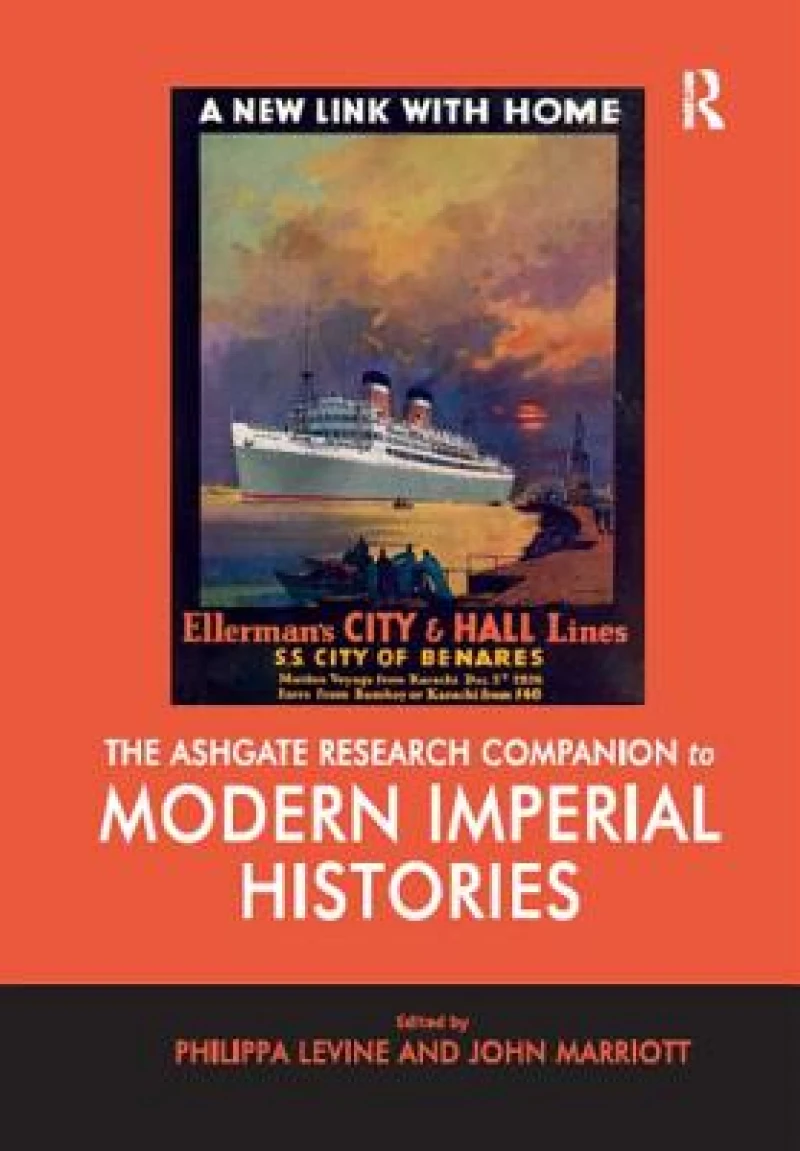
The Ashgate Research Companion to Modern Imperial Histories
Book Details
Format
Paperback / Softback
ISBN-10
1138110302
ISBN-13
9781138110304
Publisher
Taylor & Francis Ltd
Imprint
Routledge
Country of Manufacture
GB
Country of Publication
GB
Publication Date
May 22nd, 2017
Print length
760 Pages
Weight
1,266 grams
Dimensions
17.10 x 24.40 x 4.80 cms
Ksh 10,150.00
Werezi Extended Catalogue
0 in stock
Delivery Location
Delivery fee: Select location
Secure
Quality
Fast
Taking a broad, comparative approach to imperial experiences, this volume provides an authoritative survey of the latest research into the histories of modern empires. The focus is on the era of modern imperial history dating approximately from the early sixteenth century to the present. Such a periodization enables the volume to include the European experience of imperial expansion and settlement, important historical experiences outside the west such as those of Russia, Japan and China, the collapse of European empires attendant on decolonization in the post World War II period, and the contemporary example of North America. The companion is divided into three sections, ''Times'', ''Spaces'' and ''Themes'' which allows chronological, geographical and thematical approaches to be successfully combined. In so doing this volume provides a unique research tool that will be invaluable to all students and scholars interested in the history of empires, imperialism and colonialism in the post-classical world.
Written by leading scholars, this collection provides a comprehensive and authoritative overview of modern empires. Spanning the era of modern imperial history from the early sixteenth century to the present, it challenges both the rather insular focuses on specific experiences, and gives due attention to imperial formations outside the West including the Russian, Japanese, Mughal, Ottoman and Chinese. The companion is divided into three broad sections. Part I - Times - surveys the three main eras of modern imperialism. The first was that dominated by the settlement impulse, with migrants - many voluntarily and many more by force - making new lives in the colonies. This impulse gave way, most especially in the nineteenth century, to a period of busy and rapid expansion which was less likely to promote new settlement, and in which colonists more frequently saw their sojourn in colonial lands as temporary and related to the business mostly of governance and trade. Lastly, in the twentieth century in particular, empires began to fail and to fall. Part II - Spaces - studies the principal imperial formations of the modern world. Each chapter charts the experience of a specific empire while at the same time placing it within the complex patterns of wider imperial constellations. The individual chapters thus survey the broad dynamics of change within the empires themselves and their relationships with other imperial formations, and reflect critically on the ways in which these topics have been approached in the literature. In Part III - Themes - scholars think critically about some of the key features of imperial expansion and decline. These chapters are brief and many are provocative. They reflect the current state of the field, and suggest new lines of inquiry which may follow from more comparative perspectives on empire. The broad range of themes captures the vitality and diversity of contemporary scholarship on questions of empire and colonialism, encompassing political, economic and cultural processes central to the formation and maintenance of empires as well as institutions, ideologies and social categories that shaped the lives both of those implementing and those experiencing the force of empire. In these pages the reader will find the slave and the criminal, the merchant and the maid, the scientist and the artist alongside the structures which sustained their lives and their livelihoods. Overall, the companion emphasises the diversity of imperial experience and process. Comprehensive in its scope, it draws attention to the particularities of individual empires, rather than over-generalising as if all empires, at all times, and in all places, behaved in a similar manner. It is this contingent and historical specificity that enables us to explore in expansive ways precisely what constituted the modern empire.
Get The Ashgate Research Companion to Modern Imperial Histories by at the best price and quality guaranteed only at Werezi Africa's largest book ecommerce store. The book was published by Taylor & Francis Ltd and it has pages.

