
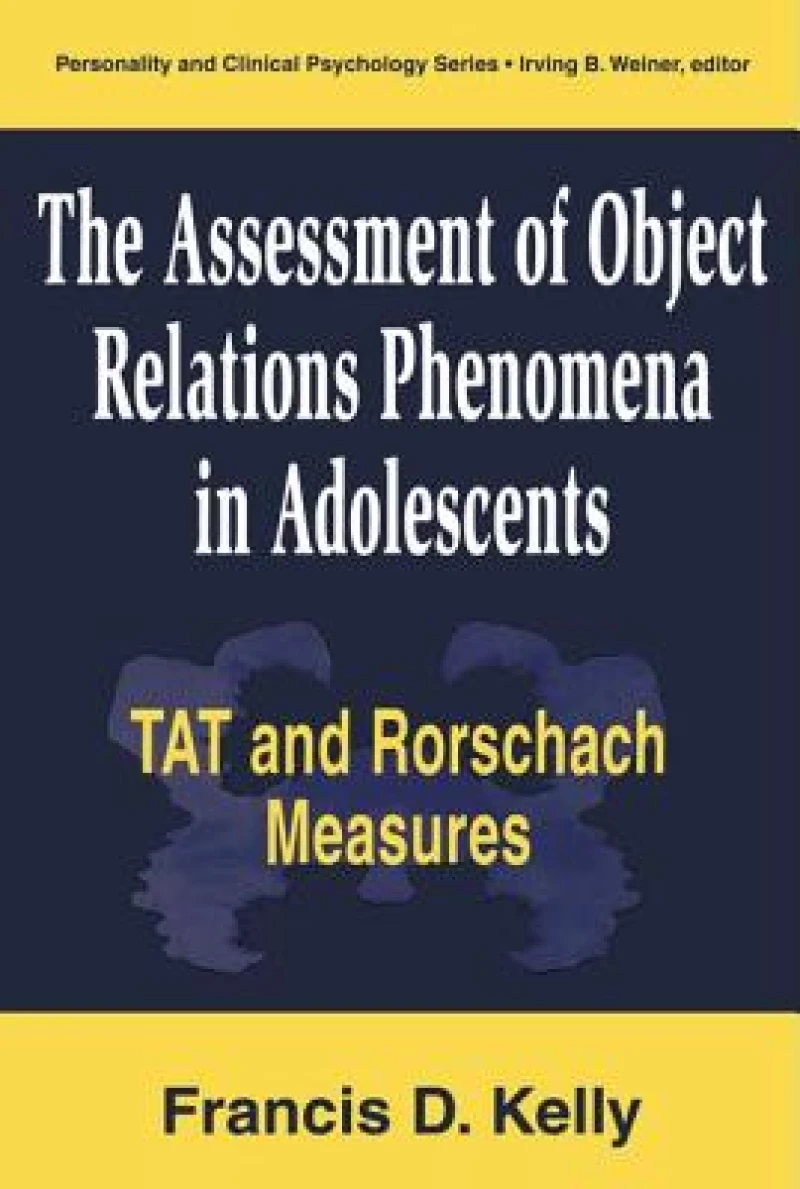
The Assessment of Object Relations Phenomena in Adolescents: Tat and Rorschach Measu
Book Details
Format
Paperback / Softback
ISBN-10
1138988790
ISBN-13
9781138988798
Publisher
Taylor & Francis Ltd
Imprint
Routledge
Country of Manufacture
GB
Country of Publication
GB
Publication Date
Feb 29th, 2016
Print length
224 Pages
Weight
453 grams
Product Classification:
Psychoanalytical theory (Freudian psychology)Psychotherapy
Ksh 9,350.00
Werezi Extended Catalogue
0 in stock
Delivery Location
Delivery fee: Select location
Secure
Quality
Fast
This volume, which deals with projective techniques for assessing personality, in particular object relations, in adolescents, will be of interest to researchers and clinicians dealing with adolescents, both normal and abnormal.
This book offers clinicians a long-awaited comprehensive paradigm for assessing object relations functioning in disturbed younger and older adolescents. It gives a clear sense of how object relations functioning is manifest in different disorders, and illuminates how scores on object relations measures are converted into a therapeutically relevant diagnostic matrix and formulation.
Outlining the process of object relations assessment, Kelly presents vividly detailed cases of a range of disorders including anorexia nervosa, borderline states, depressive disorders, and trauma. The cases portray the vicissitudes of object relations functioning and disruption that result in a unique structural developmental composite for a given adolescent.
A major concern is demonstrating the utility and validity of two object representation measures--The Mutuality of Autonomy Scale (MOA) and The Social Cognition Object Relations Scale (SCORS)--that are the main ones employed in the assessment of adolescents. MOA and SCORS scores facilitate a multidimensional understanding of the nuances of an adolescent''s object relations functioning, and provide clinicians with organized, theory-based data leading to clear, specific treatment directions and guidelines and appropriate therapeutic programming. The book addresses the following questions:
* Is individual psychotherapy indicated--will this adolescent benefit from an insight-oriented approach?
* What are the likely directions that transference parameters will take in the treatment?
* What types of countertransference reactions are likely to be anticipated in a given patient?
* Is medication likely to be helpful in making this adolescent more accessible for treatment?
Focusing only on adolescents, covering both the TAT and the Rorschach, and utilizing object relations theory as its major interpretive foundation, the book offers practitioners an alternative to general references based on a more actuarial, nomothetic, and atheoretical interpretive approach. It reflects one school of contemporary thought in projective assessment--one that advocates a more phenomenological, theory-based approach to test application and interpretation.
Outlining the process of object relations assessment, Kelly presents vividly detailed cases of a range of disorders including anorexia nervosa, borderline states, depressive disorders, and trauma. The cases portray the vicissitudes of object relations functioning and disruption that result in a unique structural developmental composite for a given adolescent.
A major concern is demonstrating the utility and validity of two object representation measures--The Mutuality of Autonomy Scale (MOA) and The Social Cognition Object Relations Scale (SCORS)--that are the main ones employed in the assessment of adolescents. MOA and SCORS scores facilitate a multidimensional understanding of the nuances of an adolescent''s object relations functioning, and provide clinicians with organized, theory-based data leading to clear, specific treatment directions and guidelines and appropriate therapeutic programming. The book addresses the following questions:
* Is individual psychotherapy indicated--will this adolescent benefit from an insight-oriented approach?
* What are the likely directions that transference parameters will take in the treatment?
* What types of countertransference reactions are likely to be anticipated in a given patient?
* Is medication likely to be helpful in making this adolescent more accessible for treatment?
Focusing only on adolescents, covering both the TAT and the Rorschach, and utilizing object relations theory as its major interpretive foundation, the book offers practitioners an alternative to general references based on a more actuarial, nomothetic, and atheoretical interpretive approach. It reflects one school of contemporary thought in projective assessment--one that advocates a more phenomenological, theory-based approach to test application and interpretation.
Get The Assessment of Object Relations Phenomena in Adolescents: Tat and Rorschach Measu by at the best price and quality guaranteed only at Werezi Africa's largest book ecommerce store. The book was published by Taylor & Francis Ltd and it has pages.

