
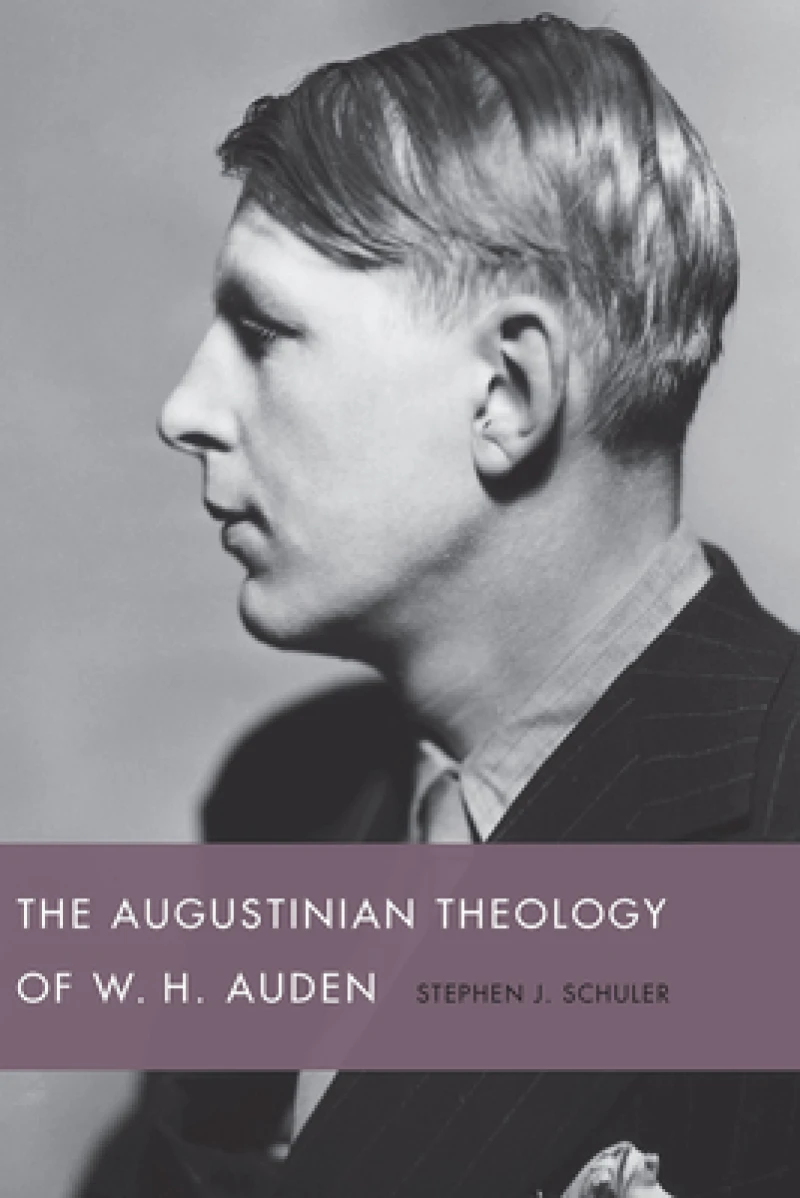
The Augustinian Theology of W. H. Auden
Book Details
Format
Hardback or Cased Book
ISBN-10
1611172438
ISBN-13
9781611172430
Publisher
University of South Carolina Press
Imprint
University of South Carolina Press
Country of Manufacture
US
Country of Publication
GB
Publication Date
Aug 30th, 2013
Print length
248 Pages
Weight
462 grams
Dimensions
16.10 x 23.70 x 2.10 cms
Ksh 7,900.00
Publisher Out of Stock
0 in stock
Delivery Location
Delivery fee: Select location
Secure
Quality
Fast
When W. H. Auden returned to Christianity in the early 1940s, he identified himself with what he called an ""existential"" method of spiritual and literary inquiry, which the writings of St. Augustine helped him define as a mode of thinking that not only allows for human subjectivity, but emphasises the hopes, fears, needs, desires, and anxieties of the individual. Augustine thus became for Auden a model of a thinker who seamlessly merged psychological reflection with philosophical speculation and theological insight, and it is this combination of introspection and theoretical investigation that shapes much of Auden''s later poetry.
The Augustinian Theology of W. H. Auden illustrates that Augustine''s thought is a major influence on Auden''s post-conversion poetry and prose. Auden encountered Augustine both directly, through his reading of the Confessions, and indirectly, through several of Auden''s contemporaries, such as Reinhold Niebuhr, Charles Norris Cochrane, and Charles Williams. Stephen J. Schuler argues that Augustine provided Auden with the language of privation to describe the nature of moral and social evil, enabling him to make sense of the pervasive anxieties produced by World War II. Augustine''s works also offered Auden a rationale for his intuition that the physical world, and especially the human body, is intrinsically good. Auden''s struggle to reconcile the implications of his Augustinian theology with his attitudes toward romantic love and sexuality are explained by Schuler, who demonstrates how the Augustinian theology of Reinhold Niebuhr helped shape Auden''s ideas about human identity and community, which is defined and maintained by love in all its various forms. Finally, Schuler analyses Auden''s Augustinian view of the ethics of poetry.
By examining the presence of Augustinian ideas in Auden''s poetry and prose, Schuler establishes the Augustinian origins of several crucial but often misunderstood features of Auden''s work as well as the importance of Augustine in shaping and articulating the concerns of Auden''s later poetry.
The Augustinian Theology of W. H. Auden illustrates that Augustine''s thought is a major influence on Auden''s post-conversion poetry and prose. Auden encountered Augustine both directly, through his reading of the Confessions, and indirectly, through several of Auden''s contemporaries, such as Reinhold Niebuhr, Charles Norris Cochrane, and Charles Williams. Stephen J. Schuler argues that Augustine provided Auden with the language of privation to describe the nature of moral and social evil, enabling him to make sense of the pervasive anxieties produced by World War II. Augustine''s works also offered Auden a rationale for his intuition that the physical world, and especially the human body, is intrinsically good. Auden''s struggle to reconcile the implications of his Augustinian theology with his attitudes toward romantic love and sexuality are explained by Schuler, who demonstrates how the Augustinian theology of Reinhold Niebuhr helped shape Auden''s ideas about human identity and community, which is defined and maintained by love in all its various forms. Finally, Schuler analyses Auden''s Augustinian view of the ethics of poetry.
By examining the presence of Augustinian ideas in Auden''s poetry and prose, Schuler establishes the Augustinian origins of several crucial but often misunderstood features of Auden''s work as well as the importance of Augustine in shaping and articulating the concerns of Auden''s later poetry.
Get The Augustinian Theology of W. H. Auden by at the best price and quality guaranteed only at Werezi Africa's largest book ecommerce store. The book was published by University of South Carolina Press and it has pages.

