
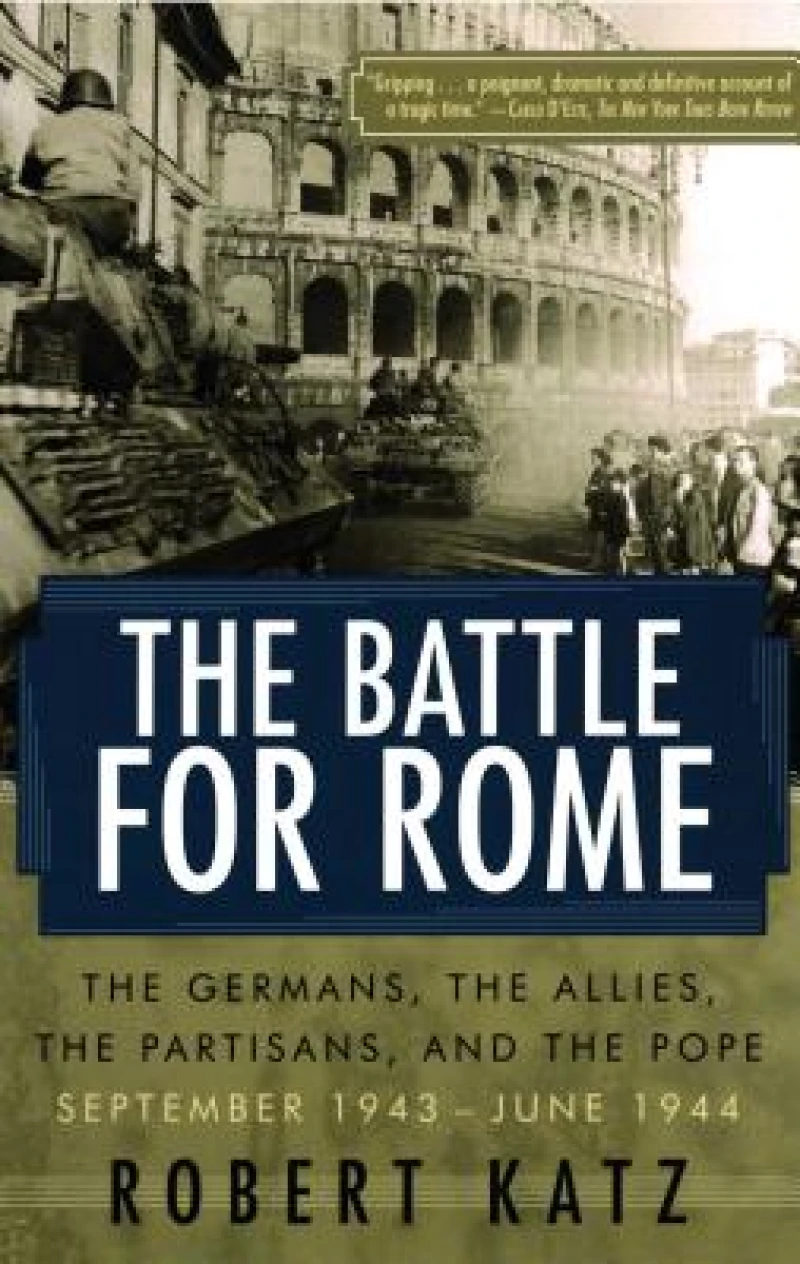
The Battle for Rome : The Germans, the Allies, the Partisans, and the Pope, September 1943-June 1944
by
Robert Katz
Book Details
Format
Paperback / Softback
ISBN-10
0743258088
ISBN-13
9780743258081
Publisher
Simon & Schuster Ltd
Imprint
Simon and Schuster
Country of Manufacture
GB
Country of Publication
GB
Publication Date
Jul 19th, 2004
Print length
418 Pages
Product Classification:
General & world historyEuropean historyModern history to 20th century: c 1700 to c 1900Military historySecond World WarWarfare & defenceWarfare and defenceBattles & campaignsBattles / military campaignsHistoryGeneral and world historyEuropean historyMilitary historySecond World War
Ksh 4,850.00
Manufactured on Demand
0 in stock
Delivery Location
Delivery fee: Select location
Secure
Quality
Fast
Meticulously researched and masterfully rendered, this book sheds light on one of the pivotal points in World War II--the moment when the Eternal City had its closest brush with destruction.
In September 1943, the German army marched into Rome, beginning an occupation that would last nine months until Allied forces liberated the ancient city. During those 270 days, clashing factions -- the occupying Germans, the Allies, the growing resistance movement, and the Pope -- contended for control over the destiny of the Eternal City. In The Battle for Rome, Robert Katz vividly recreates the drama of the occupation and offers new information from recently declassified documents to explain the intentions of the rival forces.
One of the enduring myths of World War II is the legend that Rome was an "open city," free from military activity. In fact the German occupation was brutal, beginning almost immediately with the first roundup of Jews in Italy. Rome was a strategic prize that the Germans and the Allies fought bitterly to win. The Allied advance up the Italian peninsula from Salerno and Anzio in some of the bloodiest fighting of the war was designed to capture the Italian capital.
Dominating the city in his own way was Pope Pius XII, who used his authority in a ceaseless effort to spare Rome, especially the Vatican and the papal properties, from destruction. But historical documents demonstrate that the Pope was as concerned about the Partisans as he was about the Nazis, regarding the Partisans as harbingers of Communism in the Eternal City. The Roman Resistance was a coalition of political parties that agreed on little beyond liberating Rome, but the Partisans, the organized military arm of the coalition, became increasingly active and effective as the occupation lengthened. Katz tells the story of two young Partisans, Elena and Paolo, who fought side by side, became lovers, and later played a central role in the most significant guerrilla action of the occupation. In retaliation for this action, the Germans committed the Ardeatine Caves Massacre, slaying hundreds of Roman men and boys. The Pope''s decision not to intervene in that atrocity has been a source of controversy and debate among historians for decades, but drawing on Vatican documents, Katz authoritatively examines the matter.
Katz takes readers into the occupied city to witness the desperate efforts of the key actors: OSS undercover agent Peter Tompkins, struggling to forge an effective spy network among the Partisans; German diplomats, working against their own government to save Rome even as they condoned the Nazi repression of its citizens; Pope Pius XII, anxiously trying to protect the Vatican at the risk of depending on the occupying Germans, who maintained order by increasingly draconian measures; and the U.S. and British commanders, who disagreed about the best way to engage the enemy, turning the final advance into a race to be first to take Rome.
The Battle for Rome is a landmark work that draws on newly released documents and firsthand testimony gathered over decades to offer the finest account yet of one of the most dramatic episodes of World War II.
One of the enduring myths of World War II is the legend that Rome was an "open city," free from military activity. In fact the German occupation was brutal, beginning almost immediately with the first roundup of Jews in Italy. Rome was a strategic prize that the Germans and the Allies fought bitterly to win. The Allied advance up the Italian peninsula from Salerno and Anzio in some of the bloodiest fighting of the war was designed to capture the Italian capital.
Dominating the city in his own way was Pope Pius XII, who used his authority in a ceaseless effort to spare Rome, especially the Vatican and the papal properties, from destruction. But historical documents demonstrate that the Pope was as concerned about the Partisans as he was about the Nazis, regarding the Partisans as harbingers of Communism in the Eternal City. The Roman Resistance was a coalition of political parties that agreed on little beyond liberating Rome, but the Partisans, the organized military arm of the coalition, became increasingly active and effective as the occupation lengthened. Katz tells the story of two young Partisans, Elena and Paolo, who fought side by side, became lovers, and later played a central role in the most significant guerrilla action of the occupation. In retaliation for this action, the Germans committed the Ardeatine Caves Massacre, slaying hundreds of Roman men and boys. The Pope''s decision not to intervene in that atrocity has been a source of controversy and debate among historians for decades, but drawing on Vatican documents, Katz authoritatively examines the matter.
Katz takes readers into the occupied city to witness the desperate efforts of the key actors: OSS undercover agent Peter Tompkins, struggling to forge an effective spy network among the Partisans; German diplomats, working against their own government to save Rome even as they condoned the Nazi repression of its citizens; Pope Pius XII, anxiously trying to protect the Vatican at the risk of depending on the occupying Germans, who maintained order by increasingly draconian measures; and the U.S. and British commanders, who disagreed about the best way to engage the enemy, turning the final advance into a race to be first to take Rome.
The Battle for Rome is a landmark work that draws on newly released documents and firsthand testimony gathered over decades to offer the finest account yet of one of the most dramatic episodes of World War II.
Get The Battle for Rome by at the best price and quality guaranteed only at Werezi Africa's largest book ecommerce store. The book was published by Simon & Schuster Ltd and it has pages.

