
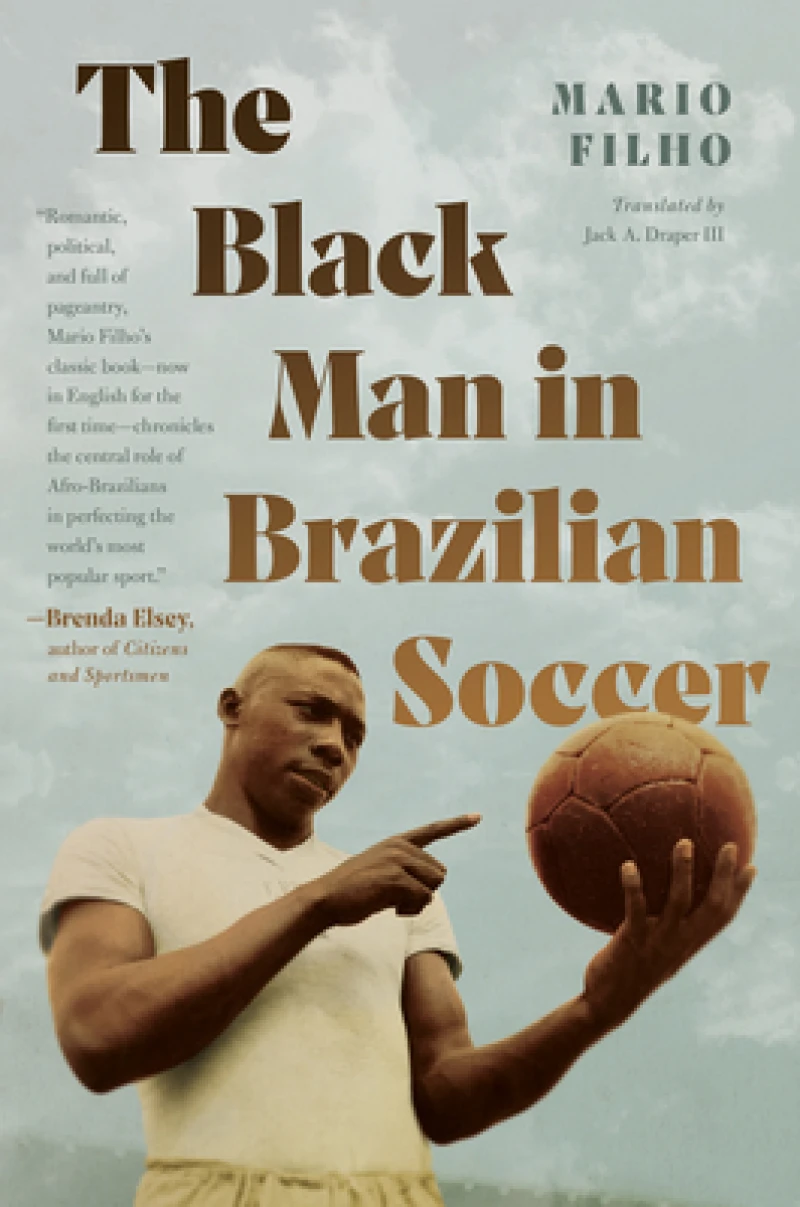
The Black Man in Brazilian Soccer
by
Mario Filho
Book Details
Format
Hardback or Cased Book
Book Series
Latin America in Translation
ISBN-10
1469636972
ISBN-13
9781469636979
Publisher
The University of North Carolina Press
Imprint
The University of North Carolina Press
Country of Manufacture
US
Country of Publication
GB
Publication Date
Apr 12th, 2021
Print length
368 Pages
Weight
690 grams
Dimensions
23.30 x 15.50 x 2.30 cms
Ksh 13,700.00
Werezi Extended Catalogue
0 in stock
Delivery Location
Delivery fee: Select location
Secure
Quality
Fast
At turns lyrical, ironic, and sympathetic, Mario Filho's chronicle of ""the beautiful game"" is a classic of Brazilian sports writing. Filho - a famous Brazilian journalist after whom Rio's Maracana stadium is officially named - tells the Brazilian soccer story as a boundary-busting one of race relations, popular culture, and national identity.
At turns lyrical, ironic, and sympathetic, Mario Filho's chronicle of "the beautiful game" is a classic of Brazilian sports writing. Filho (1908-1966)-a famous Brazilian journalist after whom Rio's Maracana stadium is officially named-tells the Brazilian soccer story as a boundary-busting one of race relations, popular culture, and national identity. Now in English for the first time, the book highlights national debates about the inclusion of African-descended people in the body politic and situates early black footballers as key creators of Brazilian culture.
When first introduced to Brazil by British expatriots at the end of the nineteenth century, the game was reserved for elites, excluding poor, working-class, and black Brazilians. Filho, drawing on lively in-depth interviews with coaches, players, and fans, points to the 1920s and 1930s as watershed decades when the gates cracked open. The poor players and players of color entered the game despite virulent discrimination. By the mid-1960s, Brazil had established itself as a global soccer powerhouse, winning two World Cups with the help of star Afro-Brazilians such as Pele and Garrincha. As a story of sport and racism in the world's most popular sport, this book could not be more relevant today.
When first introduced to Brazil by British expatriots at the end of the nineteenth century, the game was reserved for elites, excluding poor, working-class, and black Brazilians. Filho, drawing on lively in-depth interviews with coaches, players, and fans, points to the 1920s and 1930s as watershed decades when the gates cracked open. The poor players and players of color entered the game despite virulent discrimination. By the mid-1960s, Brazil had established itself as a global soccer powerhouse, winning two World Cups with the help of star Afro-Brazilians such as Pele and Garrincha. As a story of sport and racism in the world's most popular sport, this book could not be more relevant today.
Get The Black Man in Brazilian Soccer by at the best price and quality guaranteed only at Werezi Africa's largest book ecommerce store. The book was published by The University of North Carolina Press and it has pages.

