
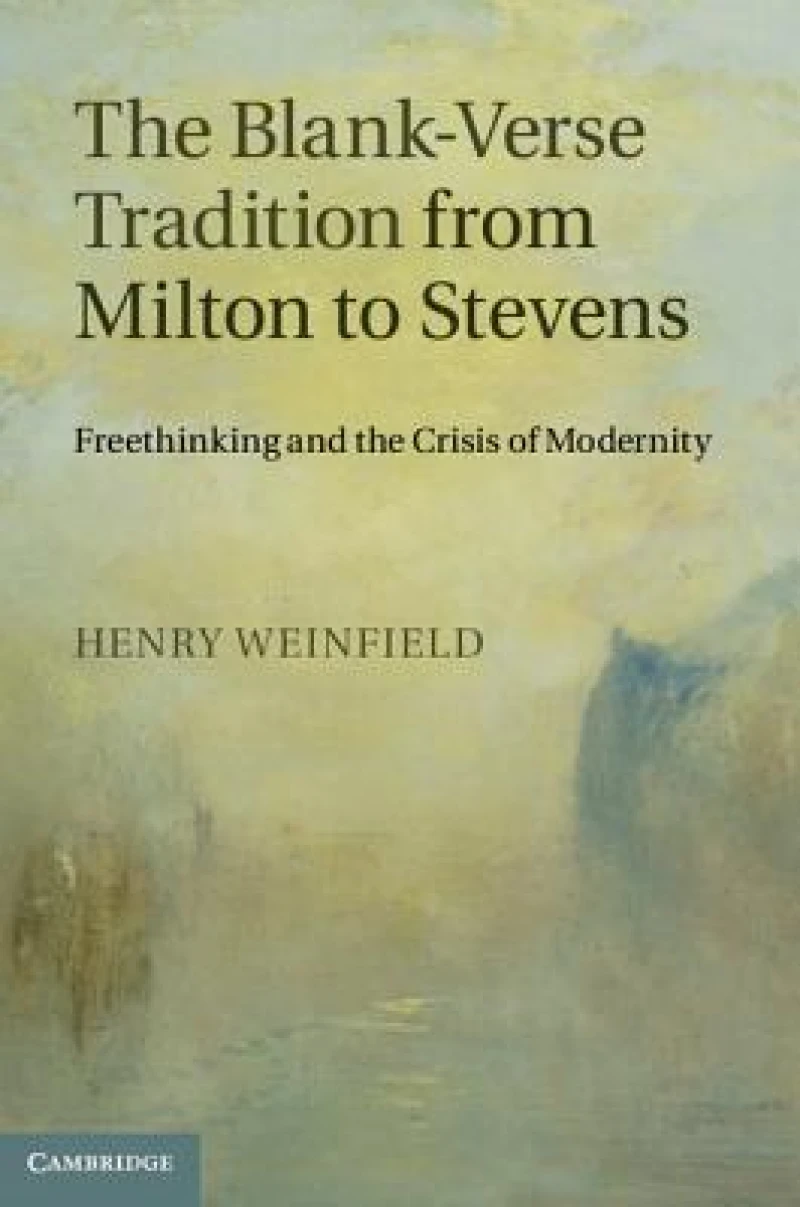
The Blank-Verse Tradition from Milton to Stevens : Freethinking and the Crisis of Modernity
Book Details
Format
Hardback or Cased Book
ISBN-10
1107025400
ISBN-13
9781107025400
Publisher
Cambridge University Press
Imprint
Cambridge University Press
Country of Manufacture
US
Country of Publication
GB
Publication Date
Jun 28th, 2012
Print length
264 Pages
Weight
556 grams
Dimensions
23.70 x 15.70 x 1.80 cms
Product Classification:
Literary studies: generalLiterary studies: poetry & poetsLiterary studies: poetry and poets
Ksh 17,100.00
Manufactured on Demand
0 in stock
Delivery Location
Delivery fee: Select location
Secure
Quality
Fast
Blank verse has been central to English poetry since the Renaissance, most famously in Shakespeare's plays and in Paradise Lost. Henry Weinfield's detailed readings of the masterpieces of English blank verse focus on Milton, Wordsworth, Shelley, Keats, Tennyson and Stevens, tracing what lies behind their choice of form.
Blank verse, unrhymed iambic pentameter, has been central to English poetry since the Renaissance. It is the basic vehicle of Shakespeare''s plays and the form in which Milton chose to write Paradise Lost. Milton associated it with freedom, and the Romantics, connecting it in turn with freethinking, used it to explore change and confront modernity, sometimes in unexpectedly radical ways. Henry Weinfield''s detailed readings of the masterpieces of English blank verse focus on Milton, Wordsworth, Shelley, Keats, Tennyson and Stevens. He traces the philosophical and psychological struggles underlying these poets'' choice of form and genre, and the extent to which their work is marked, consciously or not, by the influence of other poets. Unusually attuned to echoes between poems, this study sheds new light on how important poetic texts, most of which are central to the literary canon, unfold as works of art.
Get The Blank-Verse Tradition from Milton to Stevens by at the best price and quality guaranteed only at Werezi Africa's largest book ecommerce store. The book was published by Cambridge University Press and it has pages.

