

The Bondsman''s Burden : An Economic Analysis of the Common Law of Southern Slavery
Book Details
Format
Hardback
ISBN-10
0521592380
ISBN-13
9780521592383
Publisher
Cambridge University Press
Imprint
Cambridge University Press
Country of Manufacture
GB
Country of Publication
GB
Publication Date
Nov 13th, 1997
Print length
292 Pages
Weight
568 grams
Dimensions
16.10 x 23.70 x 2.40 cms
KSh 21,250.00
Currently unavailable
0 in stock
Delivery Location
Delivery fee: Select location
Secure
Quality
Fast
Were slaves property or human beings under law? Southern judges designed laws that protected property rights and helped slavery remain economically viable, the foundation of laws applicable to free people. This 1998 book provides a rigorous, compelling economic analysis of the common law of Southern slavery, inspecting thousands of legal disputes.
Were slaves property or human beings under the law? In crafting answers to this question, Southern judges designed efficient laws that protected property rights and helped slavery remain economically viable. But, by preserving property rights, they sheltered the persons embodied by that property - the slaves themselves. Slave law therefore had unintended consequences: it generated rules that judges could apply to free persons, precedents that became the foundation for laws designed to protect ordinary Americans. The Bondsman's Burden, first published in 1998, provides a rigorous and compelling economic analysis of the common law of Southern slavery, inspecting thousands of legal disputes heard in Southern antebellum courts, disputes involving servants, employees, accident victims, animals, and other chattel property, as well as slaves. The common law, although it supported the institution of slavery, did not favor every individual slave owner who brought a grievance to court.
Get The Bondsman''s Burden by Jenny Bourne Wahl at the best price and quality guaranteed only at Werezi Africa's largest book ecommerce store. The book was published by Cambridge University Press and it has 292 pages.
Customers Who Bought This Also Bought

Frederick Douglass
KSh 3,350.00

King Leopold''s Ghost
KSh 2,350.00

An African History of Africa
KSh 4,500.00

Barracoon
KSh 1,800.00

Zorg
KSh 3,950.00

Zorg
KSh 3,050.00
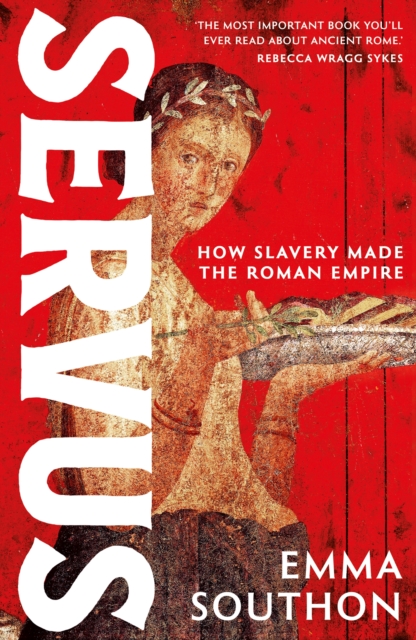
Servus
KSh 4,500.00

The Heretic of Cacheu
KSh 4,500.00

Master Slave Husband Wife
KSh 2,000.00

African History of Africa
KSh 2,000.00

Bury the Chains
KSh 3,050.00

Demon of Unrest
KSh 2,350.00