
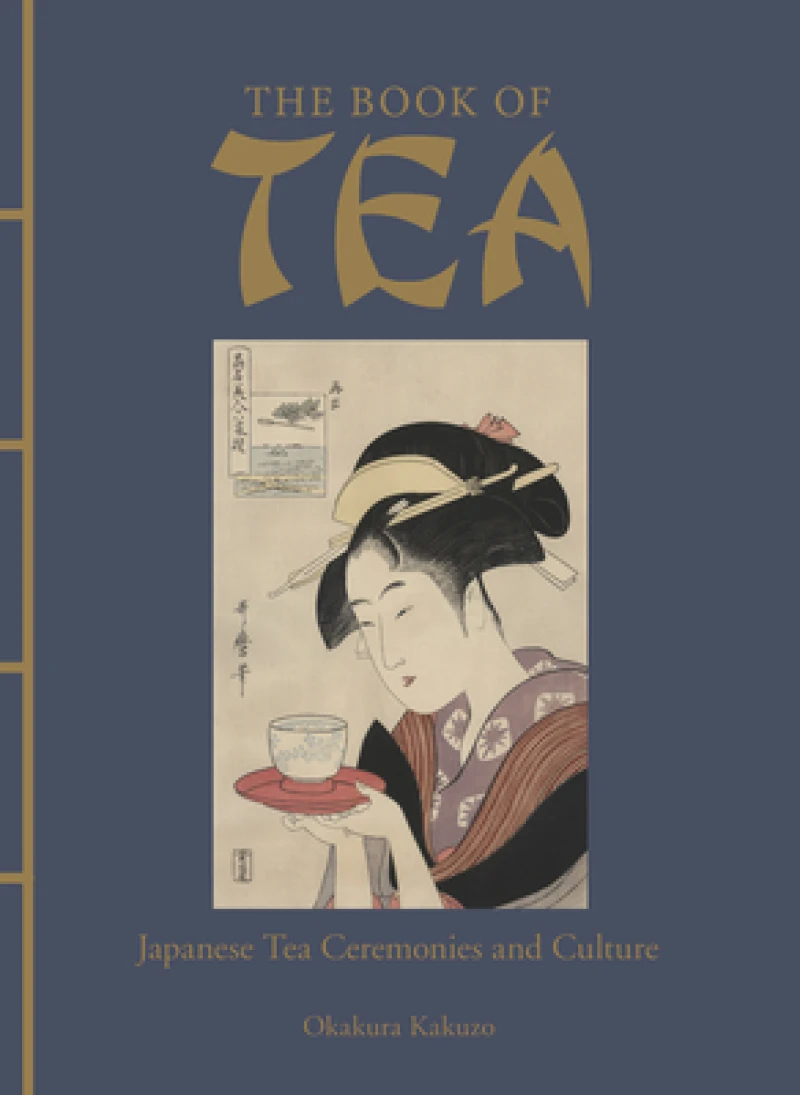
The Book of Tea : Japanese Tea Ceremonies and Culture
Book Details
Format
Hardback or Cased Book
Book Series
Chinese Bound
ISBN-10
1838861092
ISBN-13
9781838861094
Publisher
Amber Books Ltd
Imprint
Amber Books
Country of Manufacture
CN
Country of Publication
GB
Publication Date
Oct 14th, 2021
Print length
96 Pages
Weight
796 grams
Dimensions
19.80 x 26.60 x 2.40 cms
Ksh 3,700.00
Re-Printing
Delivery in 14 days
7 copies in stock
Delivery Location
Delivery fee: Select location
Delivery in 14 days
Secure
Quality
Fast
The Book of Tea, written in English in 1906 for a Western audience, celebrates the secular art of the Japanese tea ceremony and linking its importance with Zen Buddhism and Taoism. Covering cultural life, aesthetics and philosophy, this is an exquisitely produced edition using traditional Chinese bookbinding techniques.
With a new introduction, this is an exquisitely produced edition of a classic text made using traditional Chinese bookbinding techniques.
“Tea began as a medicine and grew into a beverage,” are the opening words of Okakura Kakuzō’s The Book of Tea, written in English in 1906 for a Western audience. The book is a long essay celebrating the secular art of the Japanese tea ceremony and linking its importance with Zen Buddhism and Taoism. It is both about cultural life, aesthetics, and philosophy, emphasizing how Teaism, a term Kakuzō coined, taught the Japanese many things—most importantly, simplicity, which can be seen in Japanese art and architecture. Looking back at the evolution of the Japanese tea ceremony, Kakuzō argues that Teaism, in itself, is one of the profound universal remedies that two parties could sit down to. While the West had scoffed at Eastern religion and morals, it held Eastern tea ceremonies in high regard.
“Tea began as a medicine and grew into a beverage,” are the opening words of Okakura Kakuzō’s The Book of Tea, written in English in 1906 for a Western audience. The book is a long essay celebrating the secular art of the Japanese tea ceremony and linking its importance with Zen Buddhism and Taoism. It is both about cultural life, aesthetics, and philosophy, emphasizing how Teaism, a term Kakuzō coined, taught the Japanese many things—most importantly, simplicity, which can be seen in Japanese art and architecture. Looking back at the evolution of the Japanese tea ceremony, Kakuzō argues that Teaism, in itself, is one of the profound universal remedies that two parties could sit down to. While the West had scoffed at Eastern religion and morals, it held Eastern tea ceremonies in high regard.
Get The Book of Tea by at the best price and quality guaranteed only at Werezi Africa's largest book ecommerce store. The book was published by Amber Books Ltd and it has pages.

