
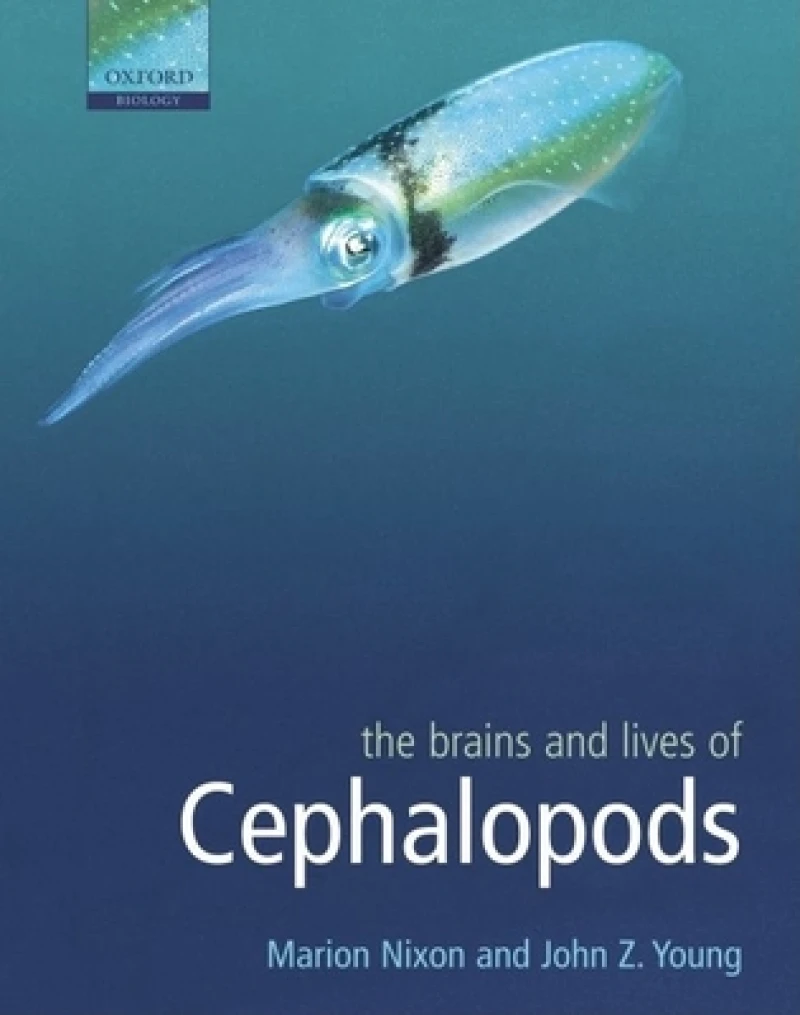
The Brains and Lives of Cephalopods
Book Details
Format
Hardback or Cased Book
ISBN-10
0198527616
ISBN-13
9780198527619
Publisher
Oxford University Press
Imprint
Oxford University Press
Country of Manufacture
GB
Country of Publication
GB
Publication Date
Sep 4th, 2003
Print length
406 Pages
Weight
1,261 grams
Dimensions
28.40 x 22.80 x 2.90 cms
Product Classification:
Taxonomy & systematicsHydrobiologyAnimal physiologyMolluscs
Ksh 33,750.00
Manufactured on Demand
0 in stock
Delivery Location
Delivery fee: Select location
Secure
Quality
Fast
Cephalopods are fast-moving, voracious predators, and can change colour with breath-taking rapidity. These animals possess highly-developed nervous systems, large brains, elaborate senses, complex behaviour and are capable of learning. This work describes many of these features, illustrated with line drawings and photomicrographs.
The cephalopods include nautiluses, cuttlefishes, sepiolids, squids and octopuses. They are found throughout the world''s seas, from Arctic to Antarctic waters, from the inter-tidal zone to mid-ocean, and from surface waters to deep trenches.Many differences in size, form and life-style are found among these animals. They range from the giant squid, the world''s largest marine invertebrate, to species of less than two centimetres in length. Apart from nautilus, which live for more than fifteen years, most are short-lived and grow to maturity very quickly. Their reproductive habits also differ widely: some produce many eggs that are spawned simultaneously, some produce relatively few eggs spawned at intervals, others brood their eggs and one species is ovoviviparous.Most cephalopods are agile and swift-moving and all possess elaborate sense organs, well-developed nervous systems and complex behaviour. The brain is large and highly organised with many lobes, some of which process sensory inputs, some organise motor activity and others are involved in modifying behaviour: the capacity to communicate and learn is especially well-developed in these animals. All of these features have been major factors in enabling cephalopods to pursue a variety of predatory life-styles with great success.The book describes the brains and sense organs of 57 of the 139 genera of the class Cephalopoda, many in great detail, as well as a variety of morphological features, all dealt with systematically. The text is well-illustrated with fully labelled line drawings and photomicrographs. Attention is drawn to the many gaps in our knowledge of these intriguing marine invertebrates with a view to stimulating future research.
Get The Brains and Lives of Cephalopods by at the best price and quality guaranteed only at Werezi Africa's largest book ecommerce store. The book was published by Oxford University Press and it has pages.

