
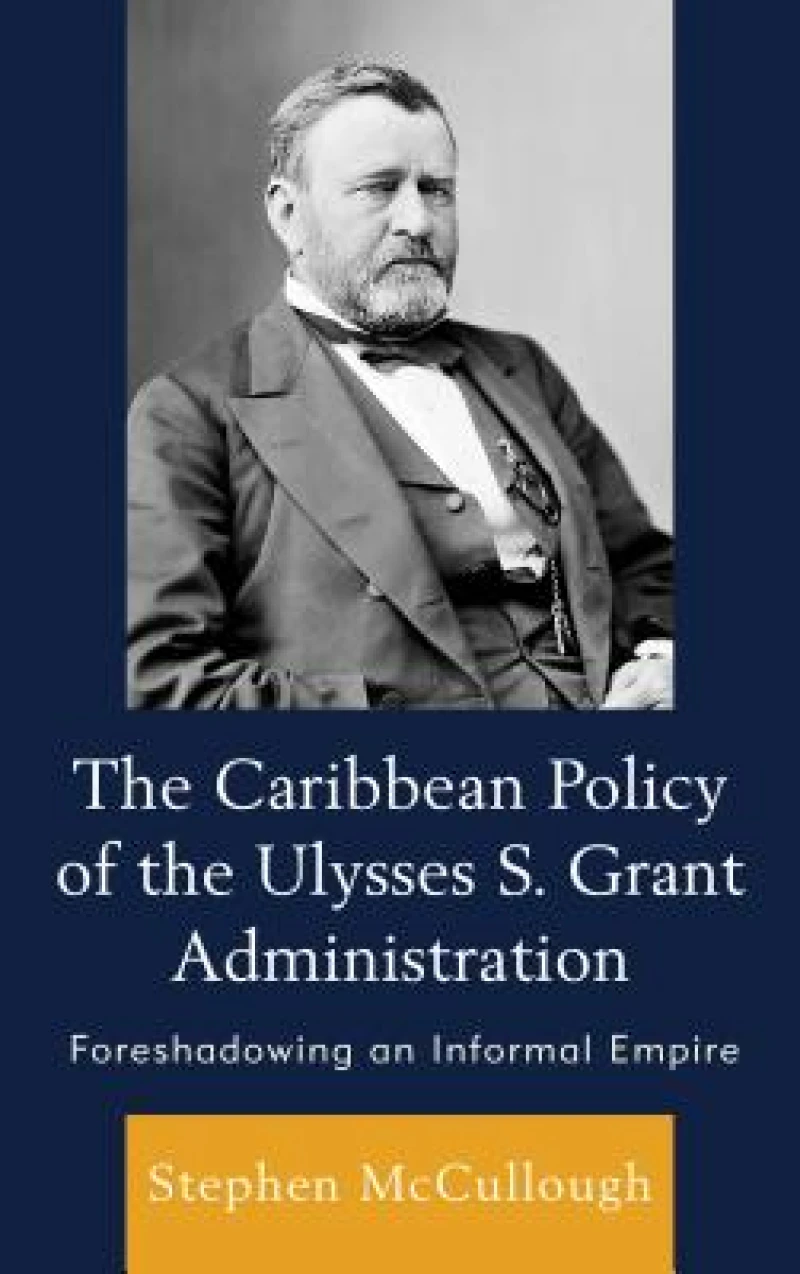
The Caribbean Policy of the Ulysses S. Grant Administration : Foreshadowing an Informal Empire
Book Details
Format
Hardback or Cased Book
ISBN-10
1498500129
ISBN-13
9781498500128
Publisher
Bloomsbury Publishing Plc
Imprint
Lexington Books
Country of Manufacture
GB
Country of Publication
GB
Publication Date
Nov 30th, 2017
Print length
230 Pages
Weight
467 grams
Dimensions
23.70 x 16.00 x 1.90 cms
Product Classification:
History of the AmericasModern history to 20th century: c 1700 to c 1900
Ksh 17,450.00
Manufactured on Demand
0 in stock
Delivery Location
Delivery fee: Select location
Secure
Quality
Fast
This study examines the policies of the Ulysses S. Grant administration in the Caribbean. It analyzes how the administration reacted to an uprising in Spanish Cuba by seeking to expand US military and commercial influence and replace European dominance with an informal US empire.
From 1869 to 1877, the United States found itself deeply involved in the Caribbean as Washington sought to replace European influence and colonialism with an informal American empire. The Ulysses S. Grant administration primarily dealt with an uprising in Spanish Cuba known as the Ten Years’ War that threatened to draw in the United States. The Cuban rebels used the United States as a base of support, causing conflict between Washington and Madrid. Many Americans, including Grant, wanted to replace Spanish rule in Cuba with a U.S. protectorate, but Secretary of State Hamilton Fish opposed American colonial entanglements. President Grant looked to expand U.S. interests in the Caribbean. He looked to acquire colonies to provide naval bases to protect the trade routes to a potential American built and controlled canal in Central America.Fish preferred to expand U.S. commercial interests in the region rather than acquiring colonies. At no time was he prepared to obligate the United States to any long-term commitments. He wanted to end the war in Cuba because it hurt U.S. economic interests. He had no desire to acquire territory, but expected the Caribbean to fall into the U.S. economic sphere. Despite his personal opposition to territorial acquisition in Fish went along with Grant’s Dominican annexation project because he foresaw it as a chance to end European imperialism and to gain the president’s confidence. The Senate’s failure to approve the Dominican annexation only hardened his opposition to the creation of an American empire. He rejected Haitian offers of a naval base within that country, and he continually sought an end to the Cuban rebellion, lest it drag in the United States. Though the administration’s many peace initiatives failed, it forestalled Congressional intervention and kept the United States neutral in the conflict.
Get The Caribbean Policy of the Ulysses S. Grant Administration by at the best price and quality guaranteed only at Werezi Africa's largest book ecommerce store. The book was published by Bloomsbury Publishing Plc and it has pages.

