
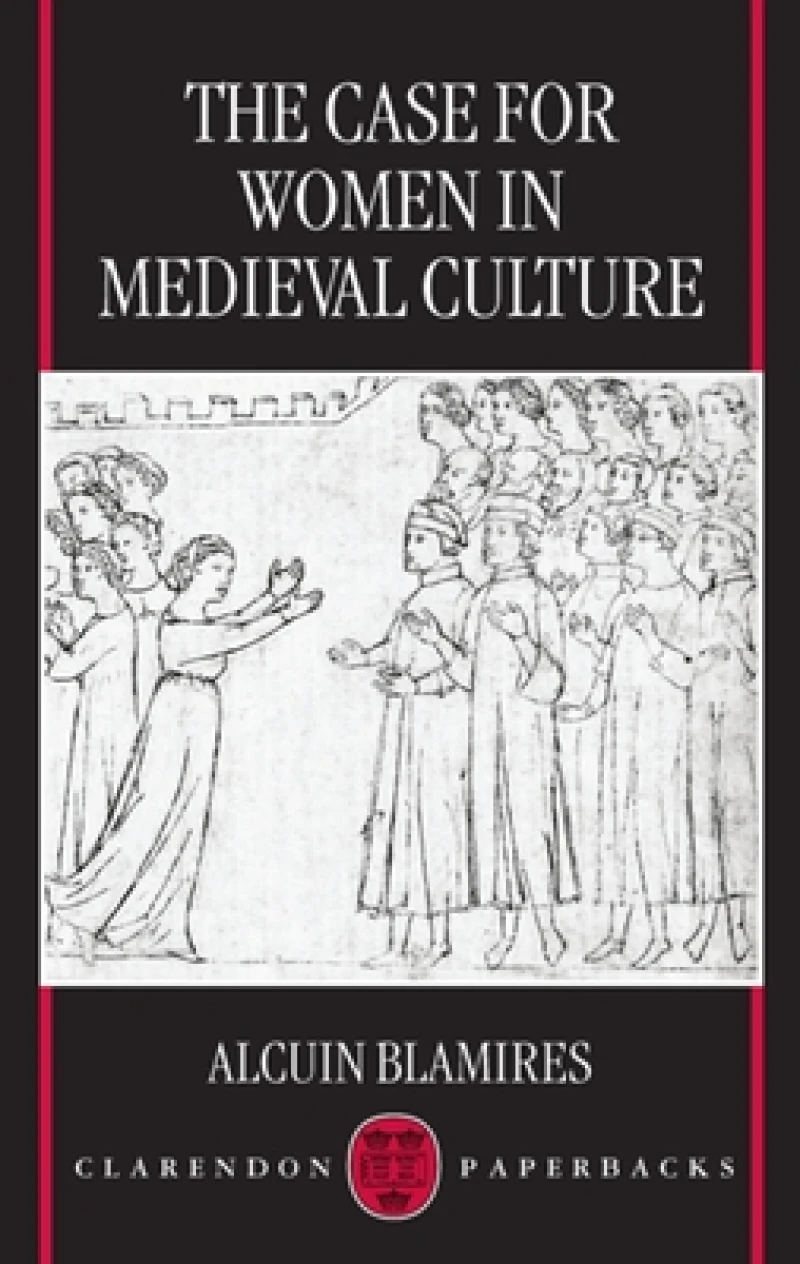
The Case for Women in Medieval Culture
Book Details
Format
Paperback / Softback
ISBN-10
0198186304
ISBN-13
9780198186304
Publisher
Oxford University Press
Imprint
Oxford University Press
Country of Manufacture
GB
Country of Publication
GB
Publication Date
Aug 27th, 1998
Print length
288 Pages
Weight
396 grams
Dimensions
21.60 x 14.30 x 1.70 cms
Ksh 13,050.00
Manufactured on Demand
0 in stock
Delivery Location
Delivery fee: Select location
Secure
Quality
Fast
The medieval period is commonly perceived as particularly misogynistic, yet the culture of the time constructed a case for women that is little known today. This book sets out to demonstrate the existence of substantial profeminine traditions extending back from the Middle Ages to the fourth century.
Misogyny is of course not the whole story of medieval discourse on women: medieval culture also envisaged a case for women. But hitherto studies of profeminine attitudes in that periods culture have tended to concentrate on courtly literature or on female visionary writings or on attempts to transcend misogyny by major authors such as Christine de Pizan and Chaucer. This book sets out to demonstrate something different: that there existed from early in the Middle Ages a corpus of substantial traditions in defence of women, on which the more familiar authors drew, and that this corpus itself consolidated strands of profeminine thought that had been present as far back as the patristic literature of the fourth century. The Case for Women surveys extant writings formally defending women in the Middle Ages; breaks new ground by identifying a source for profeminine argument in biblical apocrypha; offers a series of explorations of the background and circulation of central arguments on behalf of women; and seeks to situate relevant texts by Christine de Pizan, Chaucer, Abelard, and Hrotsvitha in relation to these arguments. Topics covered range from the privileges of women, and pro-Eve polemic, to the social and moral strengths attributed to women, and to the powerful modelsfrequently disruptive of patriarchal complacencypresented by Old and New Testament women. The contribution made by these emphases (which are not to be confused with feminism in a modern sense) to medieval constructions of gender is throughout critically assessed, and the book concludes by asking how far defenders were controlled by, or able to query, assumptions about what was natural (and therefore imagined inflexible) in gender theory.
Get The Case for Women in Medieval Culture by at the best price and quality guaranteed only at Werezi Africa's largest book ecommerce store. The book was published by Oxford University Press and it has pages.

