
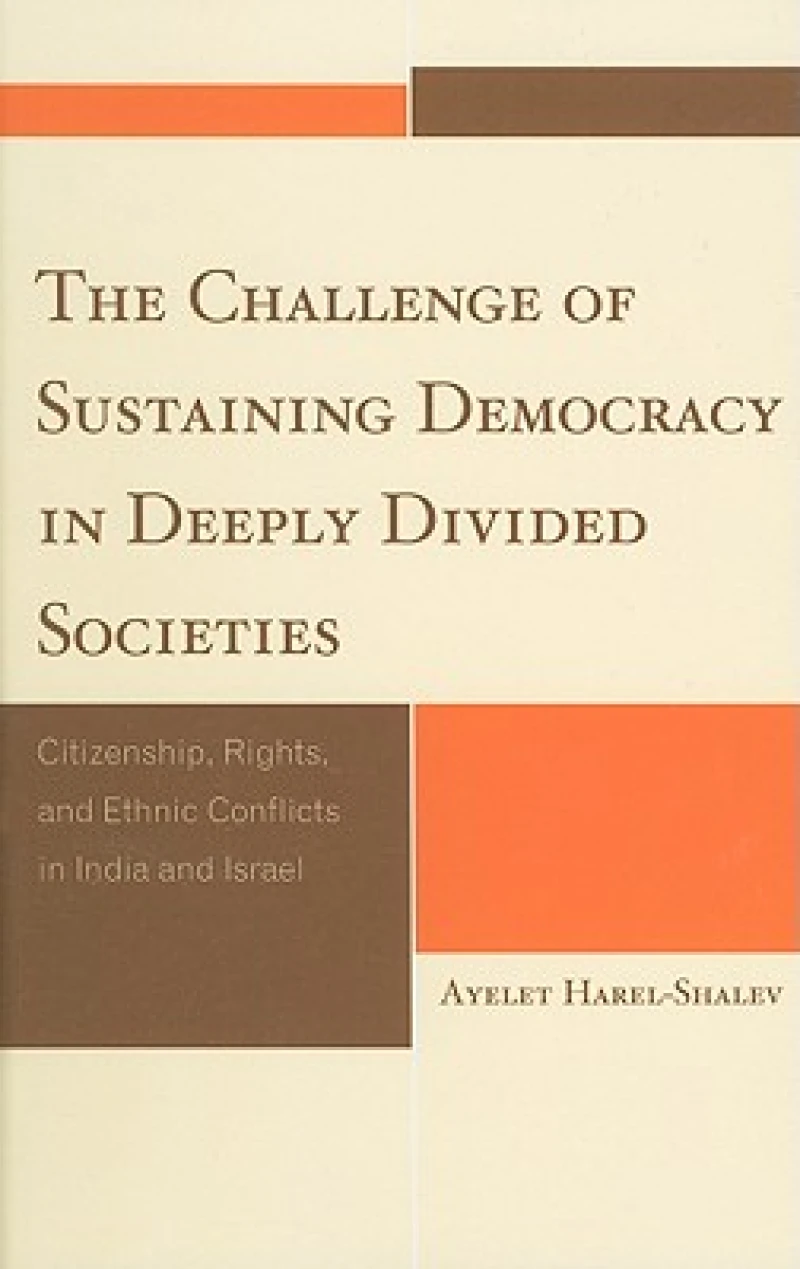
The Challenge of Sustaining Democracy in Deeply Divided Societies : Citizenship, Rights, and Ethnic Conflicts in India and Israel
Book Details
Format
Hardback or Cased Book
Book Series
Studies in Public Policy
ISBN-10
0739126849
ISBN-13
9780739126844
Publisher
Bloomsbury Publishing Plc
Imprint
Lexington Books
Country of Manufacture
GB
Country of Publication
GB
Publication Date
Aug 4th, 2010
Print length
514 Pages
Weight
934 grams
Dimensions
24.10 x 16.30 x 3.70 cms
Product Classification:
Comparative politicsPolitical structures: democracy
Ksh 27,400.00
Manufactured on Demand
0 in stock
Delivery Location
Delivery fee: Select location
Secure
Quality
Fast
In this book, Harel-Shalev analyzes public policy and governmental features in procedurally democratic states that govern deeply divided societies. The book traces the political formula that enables such states to survive while sustaining a democratic process in the face of religious, ethnic, and national conflicts. It investigates citizenship discourses, analyzes the mechanisms political regimes use to give rights to minorities while simultaneously limiting their power, and illustrates how this unique political formula can be applied in two case studies of vastly different countries-Israel and India. The analogous conflicts in India and Israel that threaten the survival of democracy-the ethno-religious conflict between Hindus and Muslims in India and the ethno-national conflict between Jews and Arab-Palestinians in Israel-are analyzed in depth. In addition, the core cases of India and Israel, states in which democracy has survived for over sixty years, are compared with two additional countries where democracy was short-lived. This issue is especially pertinent to the world today, as many young nations currently in the process of state building are coping with the challenges inherent in building democratic institutions in plural and polarized societies. The book explores the inherent tension between the conflicting logics of democracy, citizenship, and nation-state, and suggests enhanced tools for investigating societies in which this tension exists.
In this book, Harel-Shalev analyzes public policy and governmental features in procedurally democratic states that govern deeply divided societies. The book traces the political formula that enables such states to survive while sustaining a democratic process in the face of religious, ethnic, and national conflicts. It investigates citizenship discourses, analyzes the mechanisms political regimes use to give rights to minorities while simultaneously limiting their power, and illustrates how this unique political formula can be applied in two case studies of vastly different countries-Israel and India. The analogous conflicts in India and Israel that threaten the survival of democracy-the ethno-religious conflict between Hindus and Muslims in India and the ethno-national conflict between Jews and Arab-Palestinians in Israel-are analyzed in depth. In addition, the core cases of India and Israel, states in which democracy has survived for over sixty years, are compared with two additional countries where democracy was short-lived. This issue is especially pertinent to the world today, as many young nations currently in the process of state building are coping with the challenges inherent in building democratic institutions in plural and polarized societies. The book explores the inherent tension between the conflicting logics of democracy, citizenship, and nation-state, and suggests enhanced tools for investigating societies in which this tension exists.
Get The Challenge of Sustaining Democracy in Deeply Divided Societies by at the best price and quality guaranteed only at Werezi Africa's largest book ecommerce store. The book was published by Bloomsbury Publishing Plc and it has pages.

