
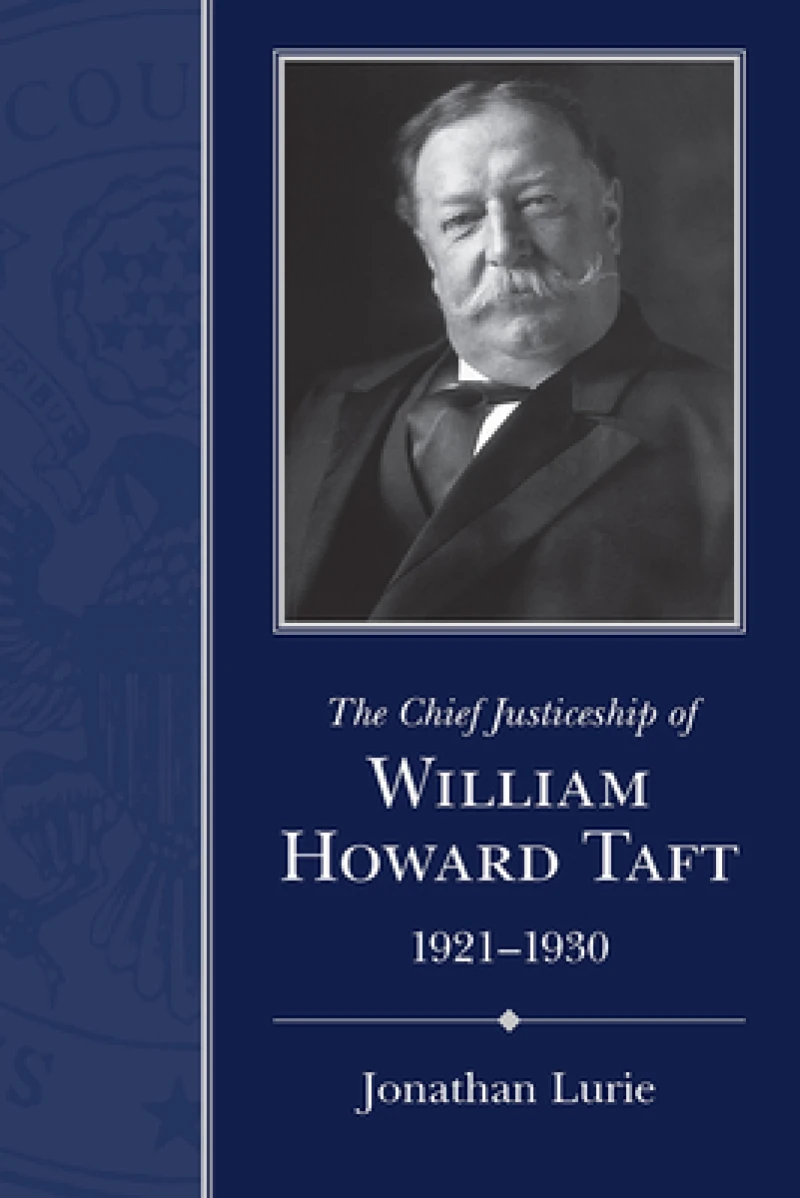
The Chief Justiceship of William Howard Taft, 1921-1930
Book Details
Format
Hardback or Cased Book
ISBN-10
1611179874
ISBN-13
9781611179873
Publisher
University of South Carolina Press
Imprint
University of South Carolina Press
Country of Manufacture
US
Country of Publication
GB
Publication Date
Jun 15th, 2019
Print length
264 Pages
Weight
525 grams
Dimensions
23.10 x 15.70 x 3.00 cms
Ksh 7,900.00
Werezi Extended Catalogue
0 in stock
Delivery Location
Delivery fee: Select location
Secure
Quality
Fast
In The Chief Justiceship of William Howard Taft, 1921-1930, Jonathan Lurie offers a comprehensive examination of the Supreme Court tenure of the only person to have held the offices of president of the United States and chief justice of the United States Supreme Court.
In The Chief Justiceship of William Howard Taft, 1921-1930, Jonathan Lurie offers a comprehensive examination of the Supreme Court tenure of the only person to have held the offices of president of the United States and chief justice of the United States Supreme Court. Taft joined the Court during the Jazz Age and the era of prohibition, a period of disillusion and retreat from the idealism reflected during Woodrow Wilson's presidency. Lurie considers how conservative trends at this time were reflected in key decisions of Taft's court.
Although Taft was considered an undistinguished chief executive, such a characterization cannot be applied to his tenure as chief justice. Lurie demonstrates that Taft's leadership on this tribunal, matched by his productive relations with Congress, in effect created the modern Supreme Court. Furthermore he draws on the unpublished letters Taft wrote to his three children, Robert, Helen, and Charles, generally once a week. His missives contain an intriguing mixture of family news, insights concerning contemporaneous political issues, and occasional commentary on his fellow justices and cases under consideration.
Lurie structures his study in parallel with the eight full terms in which Taft occupied the center seat. Lurie examines key decisions while avoiding legal jargon wherever possible. The high point of Taft's chief justiceship was the period from 1921 to 1925. The second part of his tenure was in fact a period of slow decline, with his health worsening with each passing year. By early 1930 he was forced to resign, and his death soon followed. In the epilogue Lurie explains why Taft is still regarded as an outstanding chief justice - if not a great jurist - and details why this distinction is important.
Although Taft was considered an undistinguished chief executive, such a characterization cannot be applied to his tenure as chief justice. Lurie demonstrates that Taft's leadership on this tribunal, matched by his productive relations with Congress, in effect created the modern Supreme Court. Furthermore he draws on the unpublished letters Taft wrote to his three children, Robert, Helen, and Charles, generally once a week. His missives contain an intriguing mixture of family news, insights concerning contemporaneous political issues, and occasional commentary on his fellow justices and cases under consideration.
Lurie structures his study in parallel with the eight full terms in which Taft occupied the center seat. Lurie examines key decisions while avoiding legal jargon wherever possible. The high point of Taft's chief justiceship was the period from 1921 to 1925. The second part of his tenure was in fact a period of slow decline, with his health worsening with each passing year. By early 1930 he was forced to resign, and his death soon followed. In the epilogue Lurie explains why Taft is still regarded as an outstanding chief justice - if not a great jurist - and details why this distinction is important.
Get The Chief Justiceship of William Howard Taft, 1921-1930 by at the best price and quality guaranteed only at Werezi Africa's largest book ecommerce store. The book was published by University of South Carolina Press and it has pages.

