
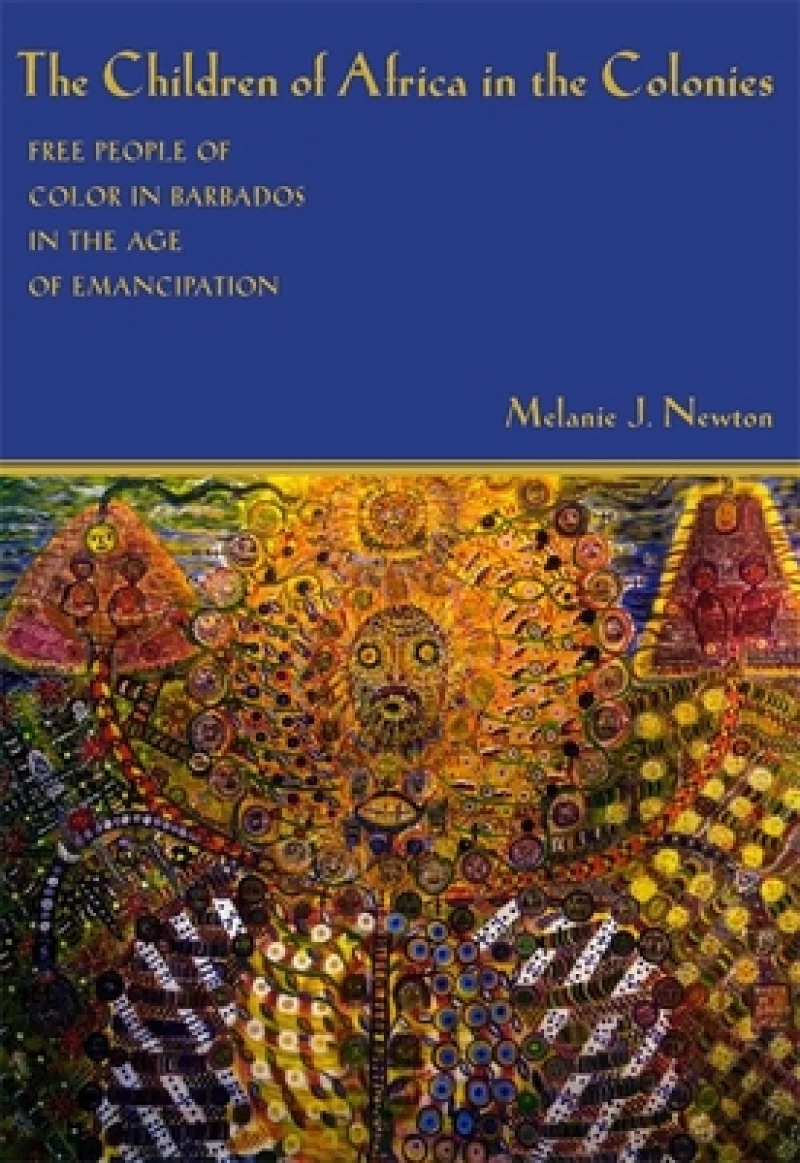
The Children of Africa in the Colonies : Free People of Color in Barbados in the Age of Emancipation
Book Details
Format
Hardback or Cased Book
Book Series
Antislavery, Abolition, and the Atlantic World
ISBN-10
0807133264
ISBN-13
9780807133262
Publisher
Louisiana State University Press
Imprint
Louisiana State University Press
Country of Manufacture
US
Country of Publication
GB
Publication Date
Jun 1st, 2008
Print length
336 Pages
Weight
333 grams
Dimensions
23.40 x 15.50 x 2.80 cms
Ksh 7,200.00
Publisher Out of Stock
0 in stock
Delivery Location
Delivery fee: Select location
Secure
Quality
Fast
Mining a rich vein of primary and secondary sources, Newton's study elegantly describes how class divisions and disagreements over labour and social policy among free and slave black Barbadians led to political unrest and devastated the hope for an entirely new social structure and a plebeian majority in the British Caribbean.
How emancipation transformed social and political relations in Barbados.
When a small group of free men of colour gathered in 1838 to celebrate the end of apprenticeship in Barbados, they spoke of emancipation as the moment of freedom for all coloured people, not just the former slaves. The fact that many of these men had owned slaves themselves gives a hollow ring to their lofty pronouncements. Yet in The Children of Africa in the Colonies, Melanie J. Newton demonstrates that simply dismissing these men as hypocrites ignores the complexity of their relationship to slavery. Exploring the role of free blacks in Barbados from 1790 to 1860, Newton argues that the emancipation process transformed social relations between Afro-Barbadians and slaves and ex-slaves.
Free people of colour in Barbados genuinely wanted slavery to end, Newton explains, a desire motivated in part by the realisation that emancipation offered them significant political advantages. As a result, free people's goals for the civil rights struggle that began in Barbados in the 1790s often diverged from those of the slaves, and the tensions that formed along class, education, and gender lines severely weakened the movement. While the populist masses viewed emancipation as an opportunity to form a united community among all people of colour, wealthy free people viewed it as a chance to better their position relative to white Europeans.
To this end, free people of colour refashioned their identities in relationship to Africa. Prior to the 1820s, Newton reveals, they downplayed their African descent, emphasising instead their legal status as free people and their position as owners of property, including slaves. As the emancipation debate in the Atlantic world reached its zenith in the 1820s and 1830s and whites grew increasingly hostile and inflexible, elite free people allied themselves with the politics of the working class and the slaves, relying for the first time on their African heritage and the association of their skin colour with slavery to openly challenge white supremacy.
After emancipation, free people of colour again redefined themselves, now as loyal British imperial subjects, casting themselves in the role of political protectors of their ex-slave brethren in an attempt to escape social and political disenfranchisement. While some wealthy men of colour gained political influence as a result of emancipation, the absence of fundamental change in the distribution of land and wealth left most men and women of colour with little hope of political independence or social mobility.
Mining a rich vein of primary and secondary sources, Newton's study elegantly describes how class divisions and disagreements over labor and social policy among free and slave black Barbadians led to political unrest and devastated the hope for an entirely new social structure and a plebeian majority in the British Caribbean.
When a small group of free men of colour gathered in 1838 to celebrate the end of apprenticeship in Barbados, they spoke of emancipation as the moment of freedom for all coloured people, not just the former slaves. The fact that many of these men had owned slaves themselves gives a hollow ring to their lofty pronouncements. Yet in The Children of Africa in the Colonies, Melanie J. Newton demonstrates that simply dismissing these men as hypocrites ignores the complexity of their relationship to slavery. Exploring the role of free blacks in Barbados from 1790 to 1860, Newton argues that the emancipation process transformed social relations between Afro-Barbadians and slaves and ex-slaves.
Free people of colour in Barbados genuinely wanted slavery to end, Newton explains, a desire motivated in part by the realisation that emancipation offered them significant political advantages. As a result, free people's goals for the civil rights struggle that began in Barbados in the 1790s often diverged from those of the slaves, and the tensions that formed along class, education, and gender lines severely weakened the movement. While the populist masses viewed emancipation as an opportunity to form a united community among all people of colour, wealthy free people viewed it as a chance to better their position relative to white Europeans.
To this end, free people of colour refashioned their identities in relationship to Africa. Prior to the 1820s, Newton reveals, they downplayed their African descent, emphasising instead their legal status as free people and their position as owners of property, including slaves. As the emancipation debate in the Atlantic world reached its zenith in the 1820s and 1830s and whites grew increasingly hostile and inflexible, elite free people allied themselves with the politics of the working class and the slaves, relying for the first time on their African heritage and the association of their skin colour with slavery to openly challenge white supremacy.
After emancipation, free people of colour again redefined themselves, now as loyal British imperial subjects, casting themselves in the role of political protectors of their ex-slave brethren in an attempt to escape social and political disenfranchisement. While some wealthy men of colour gained political influence as a result of emancipation, the absence of fundamental change in the distribution of land and wealth left most men and women of colour with little hope of political independence or social mobility.
Mining a rich vein of primary and secondary sources, Newton's study elegantly describes how class divisions and disagreements over labor and social policy among free and slave black Barbadians led to political unrest and devastated the hope for an entirely new social structure and a plebeian majority in the British Caribbean.
Get The Children of Africa in the Colonies by at the best price and quality guaranteed only at Werezi Africa's largest book ecommerce store. The book was published by Louisiana State University Press and it has pages.

