
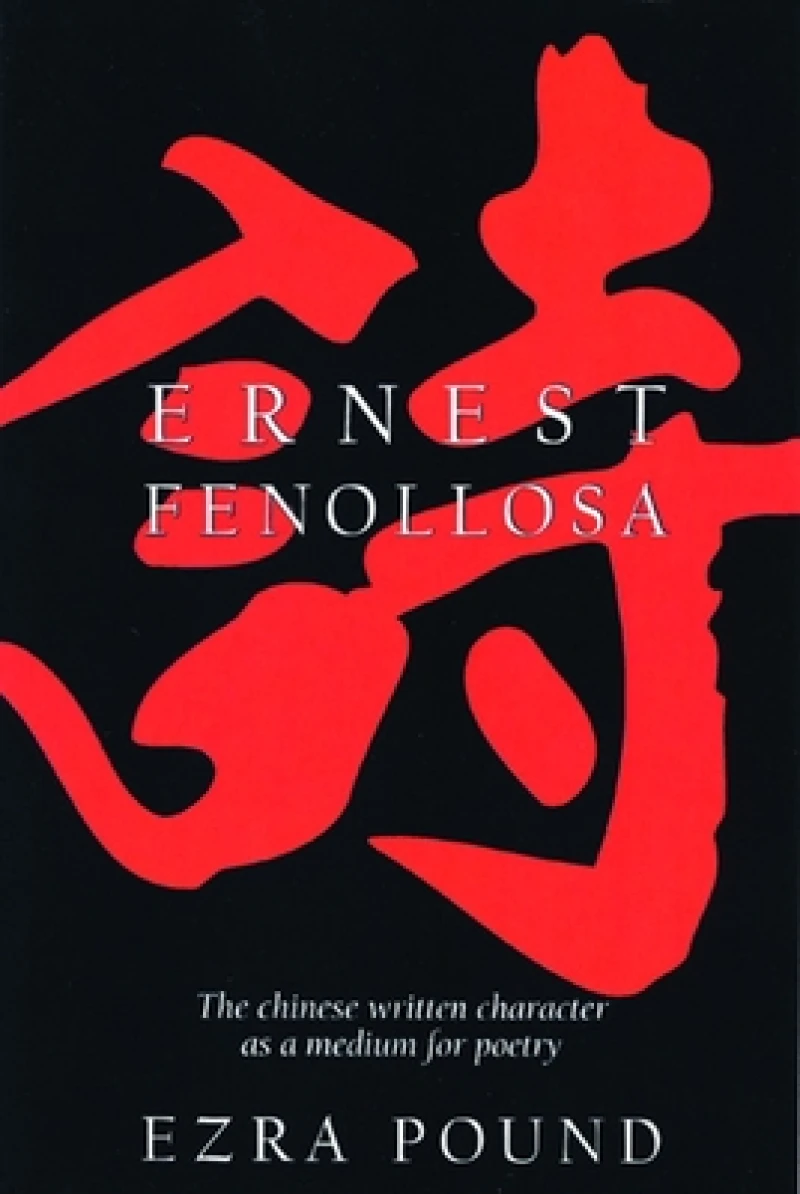
The Chinese Written Character as a Medium for Poetry
Book Details
Delivery Location
Delivery fee: Select location
This important and much-disputed essay edited by Ezra Pound from the manuscript of Ernest Fenollosa (and published in Instigations, London, 1920) has since gone through several editions, despite the ridicule of such sinologists as Professor George Kennedy of Yale, who called it "a small mass of confusion."
The old theory as to the nature of the Chinese written character (which Pound and Fenollosa followed) is that the written character is ideogrammic—a stylized picture of the thing or concept it represents. The opposing theory (which prevails today among scholars) is that the character may have had pictorial origins in prehistoric times but that these origins have been obscured in all but a few very simple cases, and that in any case native writers don’t have the original pictorial meaning in mind as they write.
Whether Pound proceeded on false premises remains an academic question. Let the pedants rave. An important extension of imagist technique in poetry was gained by Pound’s perception of the essentially poetic nature of the Chinese character as it is still written.
"Scholarly edition that combines the first full publication of Fenollosa''s essay as he wrote it, along with the 1919 version of the essay as altered by Ezra Pound."—The Chronicle of Higher Education
"How can we come to a new understanding of Chinese classical literature when our inherited view of it is so powerfully shaped and conditioned by a ''strong misreading,'' which is a vital part of our own poetic language? This question afflicts Haun Saussy in his extraordinary introduction to a new critical edition of The Chinese Written Character as a Medium for Poetry, which presents both the edited and original versions of Fenollosa''s essay."—The Threepenny Review
"Fenollosa''s critical assessment of what could evolve from a blending of the East and West is perhaps more relevant today than when it was written."—Oyster Boy Review
"This book—indispensable to anyone following modern poetics—reminds us that one of the four most influential modern essays on poetry (the others are T.S. Eliot''s) was the product of a scholar-translator, writing in 1903, well before there was any modern poetry in English. Fenollosa''s belief that the Chinese language is profoundly suited to poetry is well known, but because of Pound''s editing, we had no way of knowing what Fenollosa made of the music of poetry. Least of all could we have imagined that he thought the music of this poetry was better preserved by Japanese phonics than by living Chinese speakers. Fenollosa was an idealistic advocate of Anglo-American empire fused with pan-Asian ''humanity,'' by which he meant roughly what is covered by the term ''humanities.'' He saw the approach of a peaceful east/west fusion, economic, military, and cultural, and sought to guide its arrival by elucidating the art of classical Chinese poetry, without any expectation that his essay would alter the ways that Anglo-American poets shape sentences. This handsome edition is a major contribution to the history of modern poetics. Until now we have known little of the intellectual, political, and religious context of this great essay on diction and syntax. Haun Saussy, Jonathan Stalling, and Lucas Klein reveal the range and growth of Fenollosa''s still appealing conviction that modern poetry has to go far beyond national borders."—Robert von Hallberg, University of Chicago
Get The Chinese Written Character as a Medium for Poetry by at the best price and quality guaranteed only at Werezi Africa's largest book ecommerce store. The book was published by City Lights Books and it has pages.

