
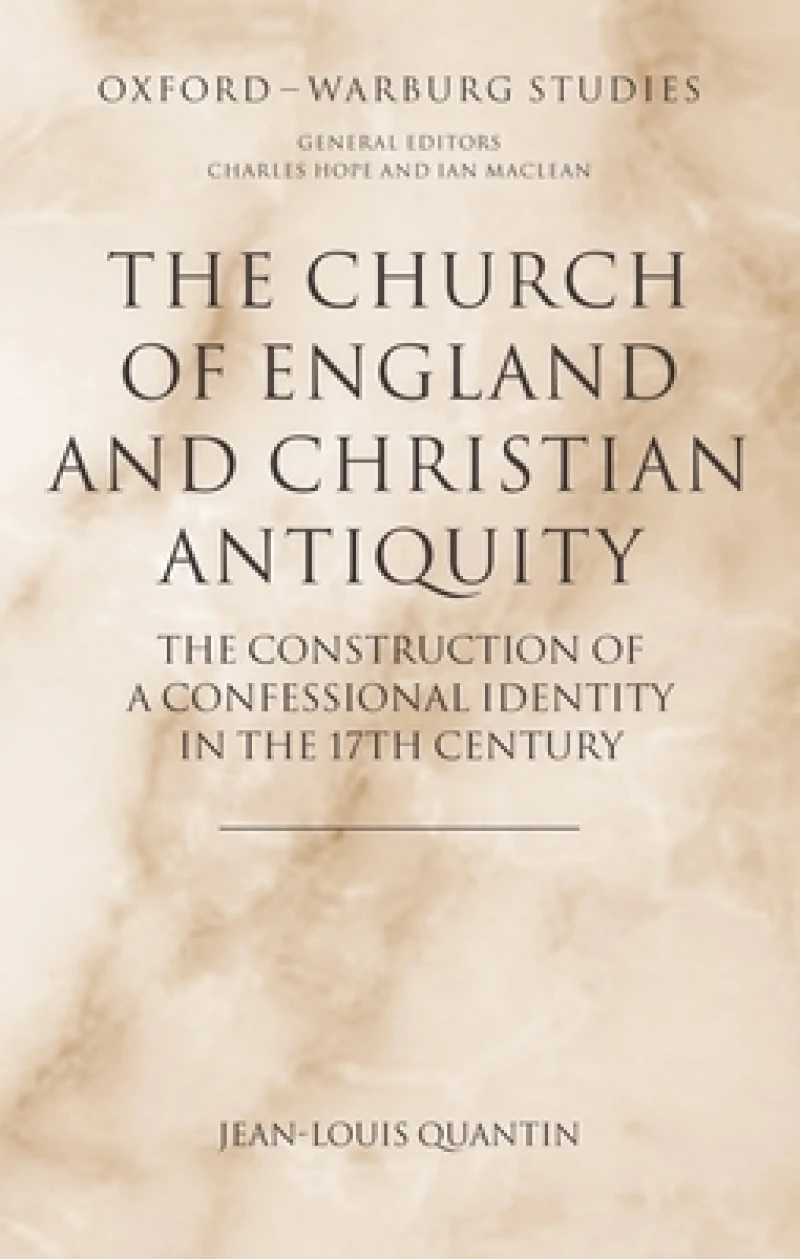
The Church of England and Christian Antiquity : The Construction of a Confessional Identity in the 17th Century
Book Details
Format
Hardback or Cased Book
Book Series
Oxford-Warburg Studies
ISBN-10
0199557861
ISBN-13
9780199557868
Publisher
Oxford University Press
Imprint
Oxford University Press
Country of Manufacture
GB
Country of Publication
GB
Publication Date
Feb 12th, 2009
Print length
518 Pages
Weight
768 grams
Dimensions
14.50 x 21.80 x 3.50 cms
Ksh 38,000.00
Manufactured on Demand
0 in stock
Delivery Location
Delivery fee: Select location
Secure
Quality
Fast
Jean-Louis Quantin shows how the appeal to Christian antiquity played a key role in the construction of a new confessional identity, 'Anglicanism', maintaining that theologians of the Church of England came to consider that their Church occupied a unique position, because it alone was faithful to the beliefs and practices of the Church Fathers.
Today, the statement that Anglicans are fond of the Fathers and keen on patristic studies looks like a platitude. Like many platitudes, it is much less obvious than one might think. Indeed, it has a long and complex history. Jean-Louis Quantin shows how, between the Reformation and the last years of the Restoration, the rationale behind the Church of England''s reliance on the Fathers as authorities on doctrinal controversies, changed significantly. Elizabethan divines, exactly like their Reformed counterparts on the Continent, used the Church Fathers to vindicate the Reformation from Roman Catholic charges of novelty, but firmly rejected the authority of tradition. They stressed that, on all questions controverted, there was simply no consensus of the Fathers. Beginning with the ''avant-garde conformists'' of early Stuart England, the reference to antiquity became more and more prominent in the construction of a new confessional identity, in contradistinction both to Rome and to Continental Protestants, which, by 1680, may fairly be called ''Anglican''. English divines now gave to patristics the very highest of missions. In that late age of Christianity - so the idea ran - now that charisms had been withdrawn and miracles had ceased, the exploration of ancient texts was the only reliable route to truth. As the identity of the Church of England was thus redefined, its past was reinvented. This appeal to the Fathers boosted the self-confidence of the English clergy and helped them to surmount the crises of the 1650s and 1680s. But it also undermined the orthodoxy that it was supposed to support.
Get The Church of England and Christian Antiquity by at the best price and quality guaranteed only at Werezi Africa's largest book ecommerce store. The book was published by Oxford University Press and it has pages.

