
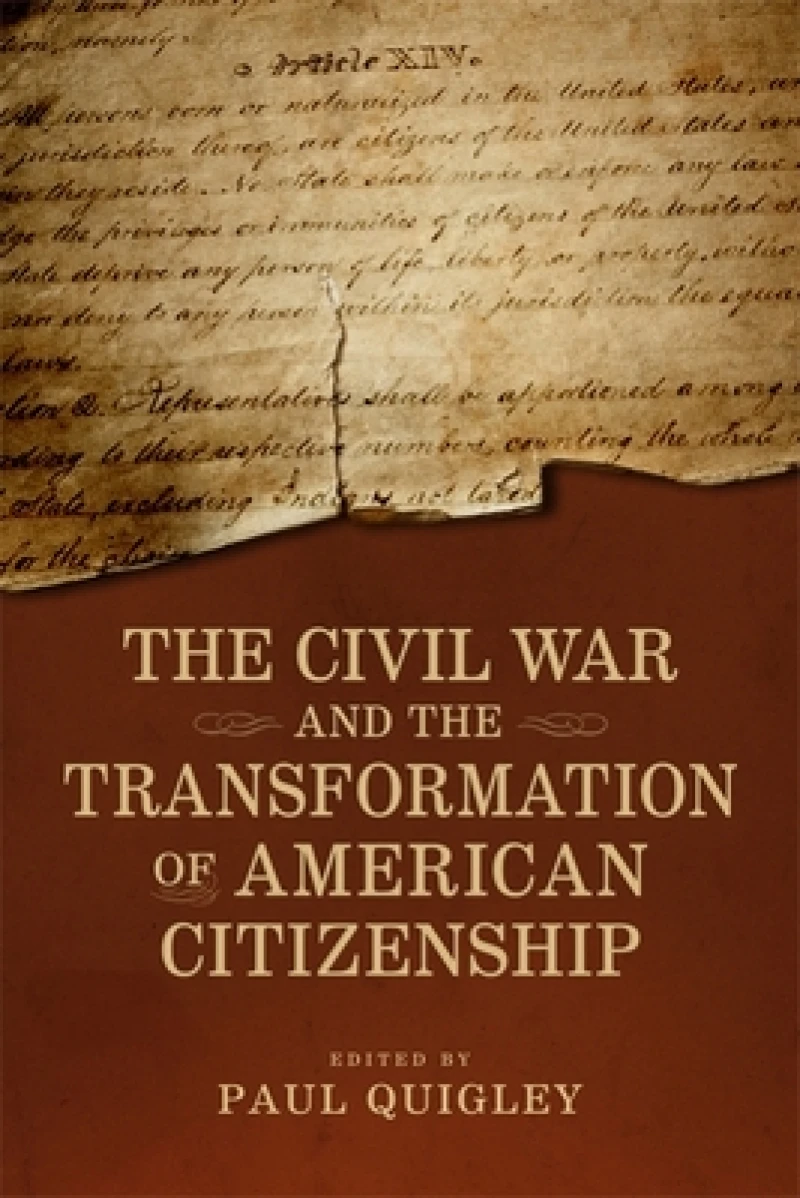
The Civil War and the Transformation of American Citizenship
Book Details
Format
Hardback or Cased Book
ISBN-10
0807168637
ISBN-13
9780807168639
Publisher
Louisiana State University Press
Imprint
Louisiana State University Press
Country of Manufacture
US
Country of Publication
GB
Publication Date
Jun 4th, 2018
Print length
256 Pages
Weight
333 grams
Dimensions
22.60 x 17.00 x 2.50 cms
Ksh 7,200.00
Temporarily out of stock, due soon
0 in stock
Delivery Location
Delivery fee: Select location
Secure
Quality
Fast
The meanings and practices of American citizenship were as contested during the Civil War era as they are today. By examining a variety of perspectives, The Civil War and the Transformation of American Citizenship offers a wide-ranging exploration of citizenship's metamorphoses amid the extended crises of war and emancipation.
The meanings and practices of American citizenship were as contested during the Civil War era as they are today. By examining a variety of perspectives, from prominent lawmakers in Washington, D.C., to enslaved women, from black firemen in southern cities to Confederate émigrés in Latin America, The Civil War and the Transformation of American Citizenship offers a wide-ranging exploration of citizenship's metamorphoses amid the extended crises of war and emancipation.
Americans in the antebellum era considered citizenship, at its most basic level, as a legal status acquired through birth or naturalization, and one that offered certain rights in exchange for specific obligations. Yet throughout the Civil War period, the boundaries and consequences of what it meant to be a citizen remained in flux. At the beginning of the war, Confederates relinquished their status as U.S. citizens, only to be mostly reabsorbed as full American citizens in its aftermath. The Reconstruction years also saw African American men acquire, at least in theory, the core rights of citizenship. As these changes swept across the nation, Americans debated the parameters of citizenship, the possibility of adopting or rejecting citizenship at will, and the relative importance of political privileges, economic opportunity, and cultural belonging. Ongoing inequities between races and genders, over the course of the Civil War and in the years that followed, further shaped these contentious debates.
The Civil War and the Transformation of American Citizenship reveals how war, Emancipation, and Reconstruction forced the country to rethink the concept of citizenship not only in legal and constitutional terms but also within the context of the lives of everyday Americans, from imprisoned Confederates to former slaves.
Americans in the antebellum era considered citizenship, at its most basic level, as a legal status acquired through birth or naturalization, and one that offered certain rights in exchange for specific obligations. Yet throughout the Civil War period, the boundaries and consequences of what it meant to be a citizen remained in flux. At the beginning of the war, Confederates relinquished their status as U.S. citizens, only to be mostly reabsorbed as full American citizens in its aftermath. The Reconstruction years also saw African American men acquire, at least in theory, the core rights of citizenship. As these changes swept across the nation, Americans debated the parameters of citizenship, the possibility of adopting or rejecting citizenship at will, and the relative importance of political privileges, economic opportunity, and cultural belonging. Ongoing inequities between races and genders, over the course of the Civil War and in the years that followed, further shaped these contentious debates.
The Civil War and the Transformation of American Citizenship reveals how war, Emancipation, and Reconstruction forced the country to rethink the concept of citizenship not only in legal and constitutional terms but also within the context of the lives of everyday Americans, from imprisoned Confederates to former slaves.
Get The Civil War and the Transformation of American Citizenship by at the best price and quality guaranteed only at Werezi Africa's largest book ecommerce store. The book was published by Louisiana State University Press and it has pages.

