
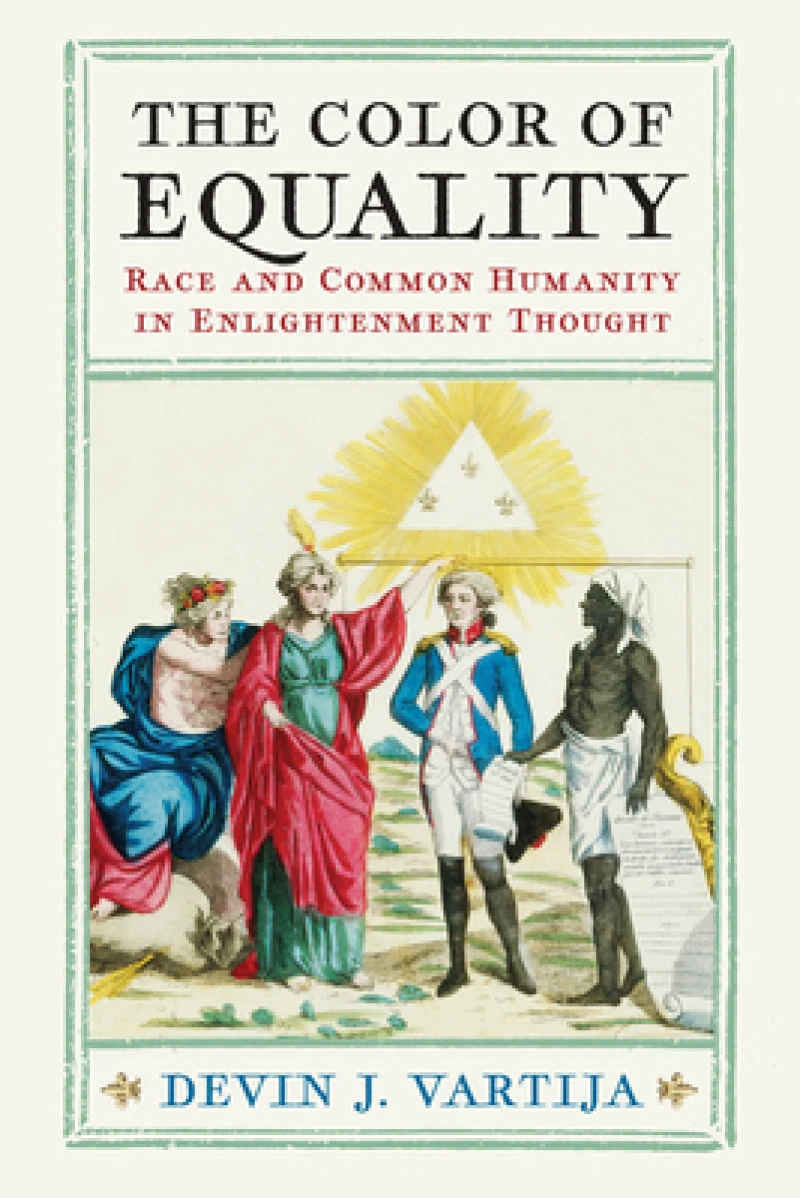
The Color of Equality : Race and Common Humanity in Enlightenment Thought
Book Details
Format
Hardback or Cased Book
Book Series
Intellectual History of the Modern Age
ISBN-10
0812253191
ISBN-13
9780812253191
Publisher
University of Pennsylvania Press
Imprint
University of Pennsylvania Press
Country of Manufacture
GB
Country of Publication
GB
Publication Date
Aug 6th, 2021
Print length
312 Pages
Weight
648 grams
Dimensions
16.30 x 23.60 x 2.70 cms
Product Classification:
General & world historyEuropean history
Ksh 9,350.00
Werezi Extended Catalogue
0 in stock
Delivery Location
Delivery fee: Select location
Secure
Quality
Fast
The Enlightenment is often either praised as the wellspring of modern egalitarianism or condemned as the cradle of scientific racism. How should we make sense of this paradox? The Color of Equality is the first book to investigate both the inclusive language of common humanity and the hierarchical language of race in Enlightenment thought, seeking to understand how eighteenth-century thinkers themselves made sense of these tensions. Using three major Enlightenment encyclopedias from England, France, and Switzerland, the book provides a rich contextualization of the conflicting ideas of equality and race in eighteenth-century thought. Enlightenment thinkers used physical features to categorize humanity into novel "racial" groups in a discourse that was imbued with Eurocentric aesthetic and moral judgments. Simultaneously, however, these very same thinkers politicized equality by putting it to new uses, such as a vitriolic denunciation of slavery and inhumane treatment that was grounded in the nascent philosophy of human rights. Vartija contends that the tension between Enlightenment ideas of race and equality can best be explained by these thinkers' attempt to provide a naturalistic account of humanity, including both our physical and moral attributes. Enlightenment racial classification fits into the novel inclusion of humanity in histories of nature, while the search for the origins of morality in social experience alone lent equality a normative authority it had not previously possessed. Eschewing straightforward approbation or blame of the Enlightenment, The Color of Equality demonstrates that our present-day thinking about human physical and cultural diversity continues to be deeply informed by an eighteenth-century European intellectual revolution with global ramifications.
Get The Color of Equality by at the best price and quality guaranteed only at Werezi Africa's largest book ecommerce store. The book was published by University of Pennsylvania Press and it has pages.

