
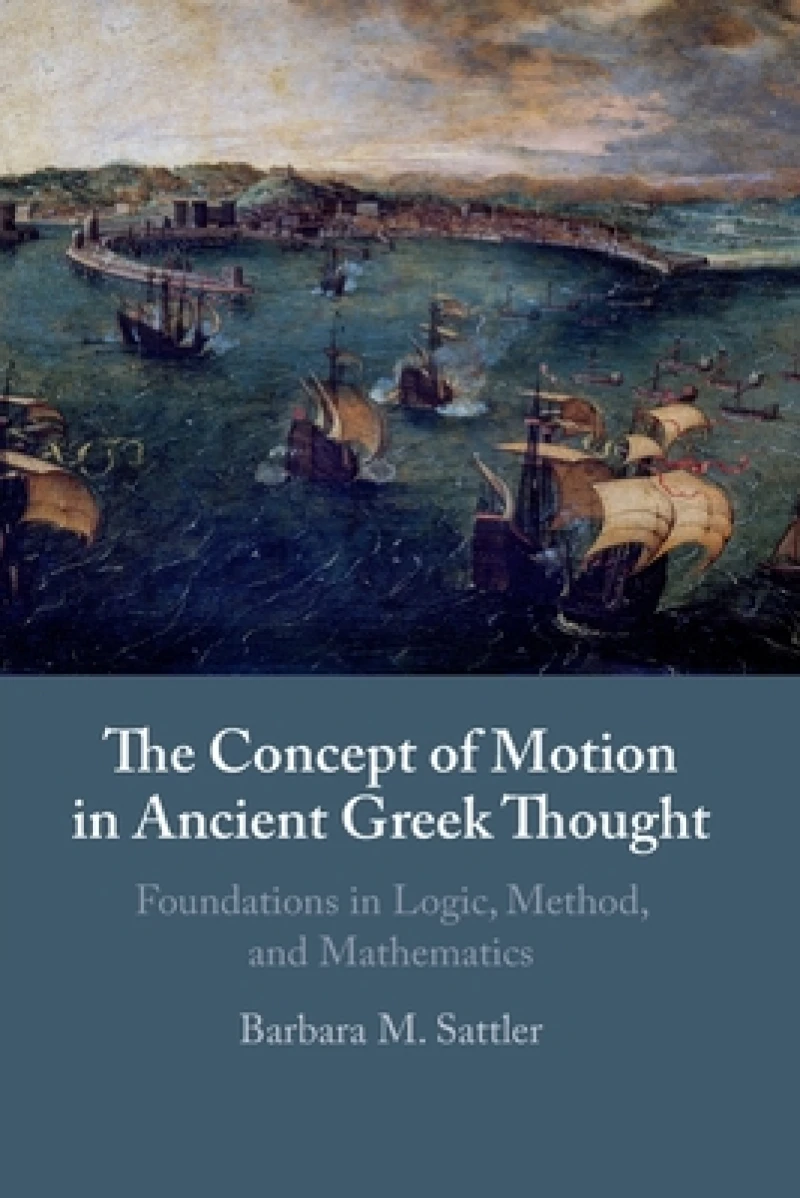
The Concept of Motion in Ancient Greek Thought : Foundations in Logic, Method, and Mathematics
Book Details
Format
Paperback / Softback
ISBN-10
1108745210
ISBN-13
9781108745215
Publisher
Cambridge University Press
Imprint
Cambridge University Press
Country of Manufacture
GB
Country of Publication
GB
Publication Date
Nov 4th, 2021
Print length
437 Pages
Weight
632 grams
Dimensions
15.30 x 22.80 x 2.70 cms
Ksh 7,550.00
Werezi Extended Catalogue
0 in stock
Delivery Location
Delivery fee: Select location
Secure
Quality
Fast
The understanding of motion - the core concept of natural philosophy - underwent crucial changes in Greek thinking from Parmenides to Aristotle. This book examines the logical, methodological, and mathematical foundations for the emergence of a full conception of motion that also allows for comparing and measuring speeds.
This book examines the birth of the scientific understanding of motion. It investigates which logical tools and methodological principles had to be in place to give a consistent account of motion, and which mathematical notions were introduced to gain control over conceptual problems of motion. It shows how the idea of motion raised two fundamental problems in the 5th and 4th century BCE: bringing together being and non-being, and bringing together time and space. The first problem leads to the exclusion of motion from the realm of rational investigation in Parmenides, the second to Zeno''s paradoxes of motion. Methodological and logical developments reacting to these puzzles are shown to be present implicitly in the atomists, and explicitly in Plato who also employs mathematical structures to make motion intelligible. With Aristotle we finally see the first outline of the fundamental framework with which we conceptualise motion today.
Get The Concept of Motion in Ancient Greek Thought by at the best price and quality guaranteed only at Werezi Africa's largest book ecommerce store. The book was published by Cambridge University Press and it has pages.

