
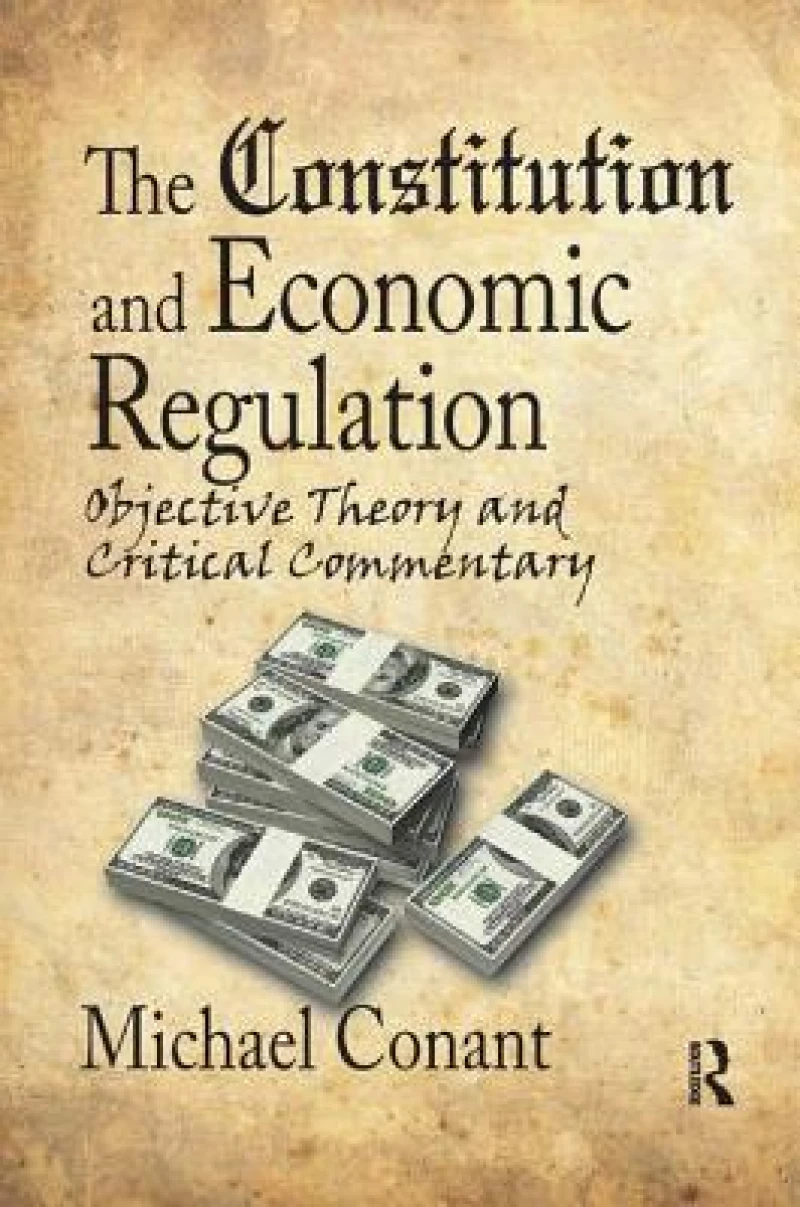
The Constitution and Economic Regulation : Commerce Clause and the Fourteenth Amendment
Book Details
Delivery Location
Delivery fee: Select location
This study uses basic economic analysis as a technique to comment critically on the original meaning and the interpretation of those clauses of the Constitution that have particular bearing on the economy. Many new conclusions are markedly different from those of the Supreme Court and earlier commentators. Conant''s view is that the commerce clause and the equal protection clause, if they had been construed consistently with their comprehensive original meanings, would have given much greater federal protection against state laws that impaire free markets.
Economic policy for the nation was vested in Congress. To the extent that special interests could buy congressional favor for their anticompetitive activities, free markets were impaired within constraints as interpreted by the court. These decisions have been criticized for their failure to incorporate the antimonopoly tradition in the Ninth Amendment and their failure to recognize equal protection of laws incorporated into the Fifth Amendment. Conant holds that statutory controls of the economy are justifiable in economic theory if they are designed to remedy market failures and thereby increase efficiency. If statutes are passed to interfere with markets and create market inefficiencies for the benefit of special interest groups, they should be condemned under the standards of normative microeconomics. There are four main classes of market failure: monopoly, externalities, public goods, and informational asymmetry. This masterful analysis examines all four reasons for market failure in depth.
Litigation costs are analogous to transaction costs. If legal principles and rules are clearly and precisely defined by the Supreme Court when they are first appealed, litigation and its costs should be minimized. Conant claims that if legal principles or rules are uncertain because they lack definable standards, the number of legal actions filed and litigation costs will be much greater. This promotes additional litigation challenging the many statutes enacted to remedy asserted market failures in an expanding industrial economy. This work brilliantly addresses the danger to the economy in court rulings seeking to legislate standards of reasonableness.
Get The Constitution and Economic Regulation by at the best price and quality guaranteed only at Werezi Africa's largest book ecommerce store. The book was published by Taylor & Francis Ltd and it has pages.

