
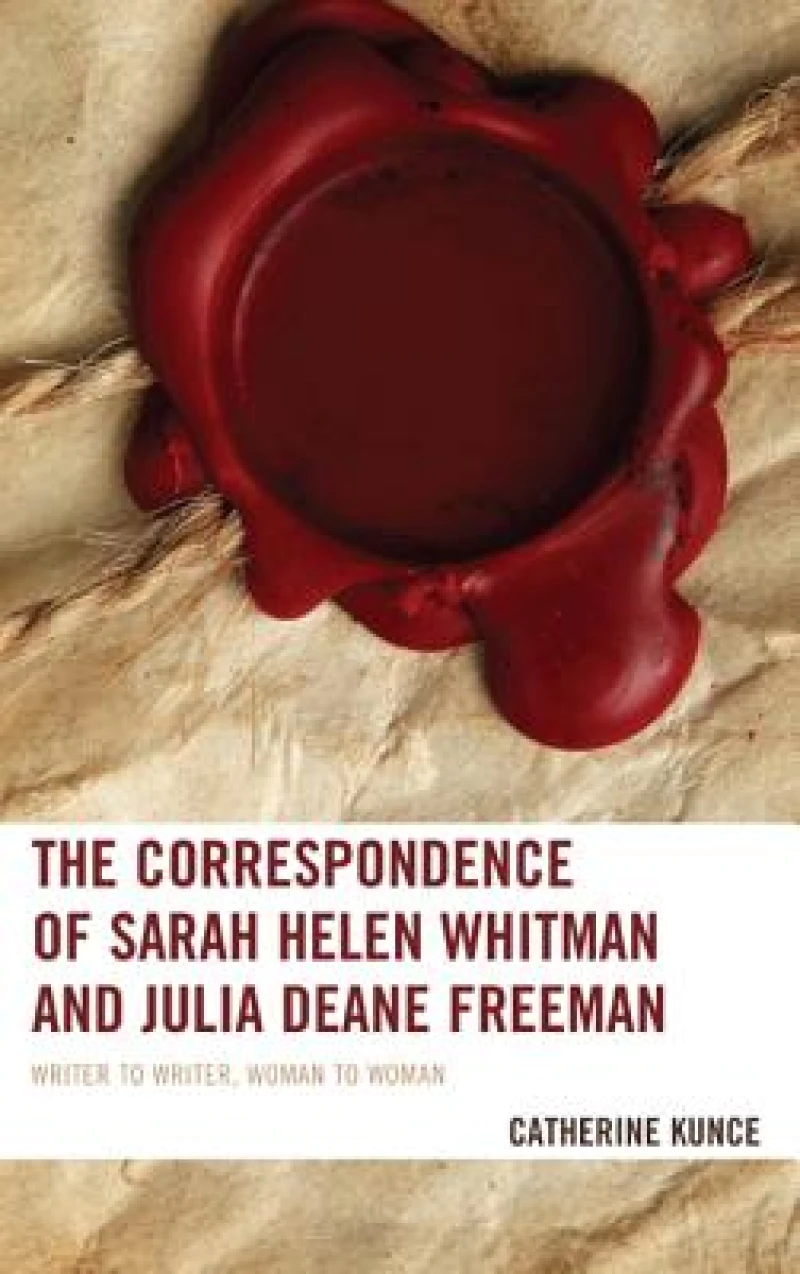
The Correspondence of Sarah Helen Whitman and Julia Deane Freeman : Writer to Writer, Woman to Woman
Book Details
Format
Hardback or Cased Book
ISBN-10
1611494389
ISBN-13
9781611494389
Publisher
Bloomsbury Publishing Plc
Imprint
University of Delaware Press
Country of Manufacture
GB
Country of Publication
GB
Publication Date
Nov 21st, 2013
Print length
182 Pages
Weight
432 grams
Dimensions
15.90 x 23.60 x 2.20 cms
Product Classification:
Diaries, letters & journalsLiterary studies: general
Ksh 16,450.00
Manufactured on Demand
0 in stock
Delivery Location
Delivery fee: Select location
Secure
Quality
Fast
The eighty-one manuscript letters, drafts, notes, and fragments comprising the correspondence between Sarah Helen Whitman (Poe’s onetime fiancée) and Julia Deane Freeman span a tumultuous time in American history, 1856–1863. A veritable Who’s Who in literature during the period, the women’s letters reference works and writers such as Emerson, Hawthorne, Poe, Walt Whitman, and scores of women writers such as Margaret Fuller, Paulina Davis, Elizabeth Oakes Smith, Susan Warner, Julia Ward Howe, and E.D.E.N. Southworth, and their works. Comparing prominent publishers, critiquing famous journalists, discussing current events—including the impending Civil War, slavery, the spread of Spiritualism, the rising consciousness of women’s rights, and the prevailing tastes in theater, music, and art—the correspondence exposes an untapped vein of historical riches.Yet the letters offer more than a compendium of literary works and historical events. When viewed through the lens of contemporary critical theories, the letters shimmer with significance. The Whitman/Freeman correspondence witnesses the growth of a profound friendship, the genesis and development of which parallels, to a startling degree, Whitman’s affair with Poe. The letters additionally support, and in some instances, complicate, contemporary scholars’ perspectives regarding issues related to women. While scholars have rescued many nineteenth-century women writers from unmerited obscurity, Whitman and Freeman recount in “real time” their assessment of contemporary women writers. A well-informed abolitionist who bequeathed a portion of her estate to a black orphanage, Whitman has much to say about political viewpoints, both national and local, during a time that denied women the right to vote. How Whitman negotiates society’s strictures and her iconoclastic self-expression deserves careful study in itself. Well crafted and thoroughly engaging, the previously unpublished correspondence between Sarah Helen Whitman and Julia Deane Freeman provides scholars of numerous disciplines with fresh and fascinating material.
The eighty-one manuscript letters, drafts, notes, and fragments comprising the correspondence between Sarah Helen Whitman (Poe’s onetime fiancée) and Julia Deane Freeman span a tumultuous time in American history, 1856–1863. A veritable Who’s Who in literature during the period, the women’s letters reference works and writers such as Emerson, Hawthorne, Poe, Walt Whitman, and scores of women writers such as Margaret Fuller, Paulina Davis, Elizabeth Oakes Smith, Susan Warner, Julia Ward Howe, and E.D.E.N. Southworth, and their works. Comparing prominent publishers, critiquing famous journalists, discussing current events—including the impending Civil War, slavery, the spread of Spiritualism, the rising consciousness of women’s rights, and the prevailing tastes in theater, music, and art—the correspondence exposes an untapped vein of historical riches. Yet the letters offer more than a compendium of literary works and historical events. When viewed through the lens of contemporary critical theories, the letters shimmer with significance. The Whitman/Freeman correspondence witnesses the growth of a profound friendship, the genesis and development of which parallels, to a startling degree, Whitman’s affair with Poe. The letters additionally support, and in some instances, complicate, contemporary scholars’ perspectives regarding issues related to women. While scholars have rescued many nineteenth-century women writers from unmerited obscurity, Whitman and Freeman recount in “real time” their assessment of contemporary women writers. A well-informed abolitionist who bequeathed a portion of her estate to a black orphanage, Whitman has much to say about political viewpoints, both national and local, during a time that denied women the right to vote. How Whitman negotiates society’s strictures and her iconoclastic self-expression deserves careful study in itself. Well crafted and thoroughly engaging, the previously unpublished correspondence between Sarah Helen Whitman and Julia Deane Freeman provides scholars of numerous disciplines with fresh and fascinating material.
Get The Correspondence of Sarah Helen Whitman and Julia Deane Freeman by at the best price and quality guaranteed only at Werezi Africa's largest book ecommerce store. The book was published by Bloomsbury Publishing Plc and it has pages.

