

The Cortex and the Critical Point : Understanding the Power of Emergence
Book Details
Format
Paperback / softback
ISBN-10
0262544032
ISBN-13
9780262544030
Publisher
MIT Press Ltd
Imprint
MIT Press
Country of Manufacture
GB
Country of Publication
GB
Publication Date
Aug 30th, 2022
Print length
224 Pages
Weight
470 grams
Dimensions
17.80 x 25.50 x 2.20 cms
Product Classification:
Biology, life sciences
KSh 8,650.00
Werezi Extended Catalogue
Delivery in 12 days
2 copies in stock
Delivery Location
Delivery fee: Select location
Delivery in 12 days
Secure
Quality
Fast
How the cerebral cortex operates near a critical phase transition point for optimum performance.
Individual neurons have limited computational powers, but when they work together, it is almost like magic. Firing synchronously and then breaking off to improvise by themselves, they can be paradoxically both independent and interdependent. This happens near the critical point: when neurons are poised between a phase where activity is damped and a phase where it is amplified, where information processing is optimized, and complex emergent activity patterns arise. The claim that neurons in the cortex work best when they operate near the critical point is known as the criticality hypothesis. In this book John Beggs—one of the pioneers of this hypothesis—offers an introduction to the critical point and its relevance to the brain.
Drawing on recent experimental evidence, Beggs first explains the main ideas underlying the criticality hypotheses and emergent phenomena. He then discusses the critical point and its two main consequences—first, scale-free properties that confer optimum information processing; and second, universality, or the idea that complex emergent phenomena, like that seen near the critical point, can be explained by relatively simple models that are applicable across species and scale. Finally, Beggs considers future directions for the field, including research on homeostatic regulation, quasicriticality, and the expansion of the cortex and intelligence. An appendix provides technical material; many chapters include exercises that use freely available code and data sets.
Individual neurons have limited computational powers, but when they work together, it is almost like magic. Firing synchronously and then breaking off to improvise by themselves, they can be paradoxically both independent and interdependent. This happens near the critical point: when neurons are poised between a phase where activity is damped and a phase where it is amplified, where information processing is optimized, and complex emergent activity patterns arise. The claim that neurons in the cortex work best when they operate near the critical point is known as the criticality hypothesis. In this book John Beggs—one of the pioneers of this hypothesis—offers an introduction to the critical point and its relevance to the brain.
Drawing on recent experimental evidence, Beggs first explains the main ideas underlying the criticality hypotheses and emergent phenomena. He then discusses the critical point and its two main consequences—first, scale-free properties that confer optimum information processing; and second, universality, or the idea that complex emergent phenomena, like that seen near the critical point, can be explained by relatively simple models that are applicable across species and scale. Finally, Beggs considers future directions for the field, including research on homeostatic regulation, quasicriticality, and the expansion of the cortex and intelligence. An appendix provides technical material; many chapters include exercises that use freely available code and data sets.
Get The Cortex and the Critical Point by John M. Beggs at the best price and quality guaranteed only at Werezi Africa's largest book ecommerce store. The book was published by MIT Press Ltd and it has 224 pages.
Customers Who Bought This Also Bought

Biology for Cambridge International AS & A Level Coursebook
KSh 12,150.00
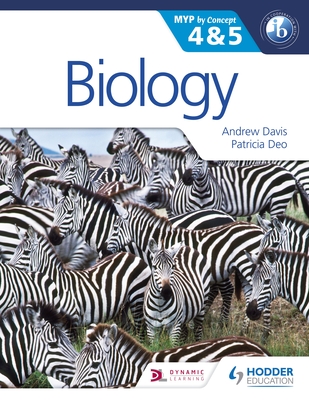
Biology for the IB MYP 4 & 5
KSh 9,950.00
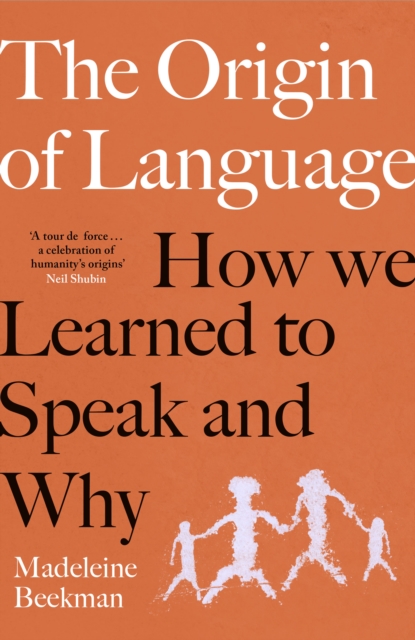
The Origin of Language
KSh 4,500.00

Animal Vegetable Criminal
KSh 1,800.00

Pearson Edexcel International A Level Biology Student Book
KSh 8,450.00

Pearson Edexcel International AS Level Biology Student Book
KSh 8,300.00

Pearson Edexcel International A Level Biology Lab Book
KSh 1,800.00

Bonk
KSh 2,000.00
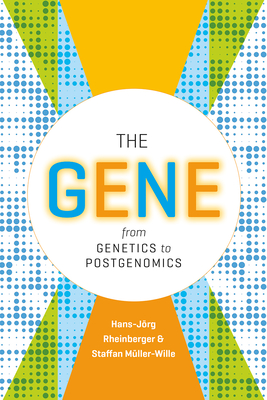
The Gene
KSh 4,350.00
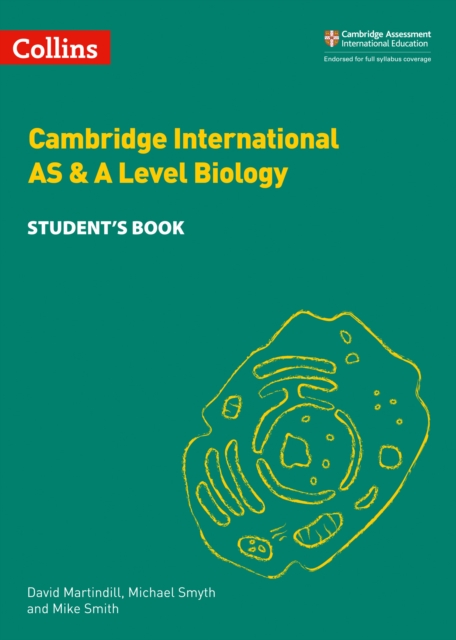
Caie as & a Level Biology SB
KSh 10,550.00

A-Level Biology: AQA Year 1 & 2 Complete Revision & Practice with Online Edition
KSh 4,450.00

They Had Names
KSh 3,900.00
More in This Genre
Biology for Cambridge International AS & A Level Coursebook
KSh 12,150.00
Biology for the IB MYP 4 & 5
KSh 9,950.00
The Origin of Language
KSh 4,500.00
Animal Vegetable Criminal
KSh 1,800.00
Pearson Edexcel International A Level Biology Student Book
KSh 8,450.00
Pearson Edexcel International AS Level Biology Student Book
KSh 8,300.00
