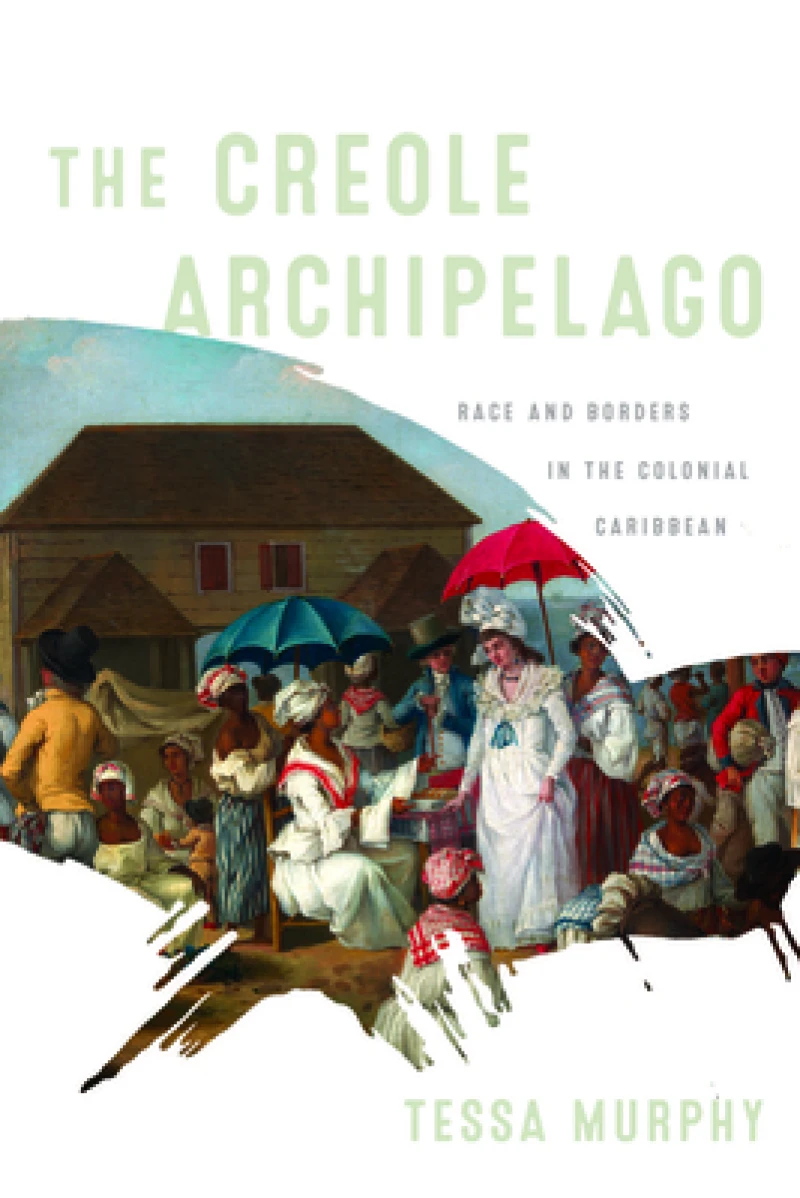
The Creole Archipelago : Race and Borders in the Colonial Caribbean
by
Tessa Murphy
Book Details
Format
Hardback or Cased Book
Book Series
Early American Studies
ISBN-10
0812253388
ISBN-13
9780812253382
Publisher
University of Pennsylvania Press
Imprint
University of Pennsylvania Press
Country of Manufacture
US
Country of Publication
GB
Publication Date
Oct 26th, 2021
Print length
277 Pages
Weight
658 grams
Dimensions
16.20 x 23.60 x 2.90 cms
Product Classification:
History of the AmericasEarly modern history: c 1450/1500 to c 1700
Ksh 10,100.00
Werezi Extended Catalogue
0 in stock
Delivery Location
Delivery fee: Select location
Secure
Quality
Fast
In The Creole Archipelago, Tessa Murphy traces how generations of Indigenous Kalinagos, free and enslaved Africans, and settlers from a variety of European nations used maritime routes to forge social, economic, and informal political connections that spanned the eastern Caribbean. Focusing on a chain of volcanic islands, each one visible from the next, whose societies developed outside the sphere of European rule until the end of the Seven Years' War in 1763, Murphy argues that the imperial frameworks typically used to analyze the early colonial Caribbean are at odds with the geographic realities that shaped daily life in the region. Through use of wide-ranging sources including historical maps, parish records, an Indigenous-language dictionary, and colonial correspondence housed in the Caribbean, France, England, and the United States, Murphy shows how this watery borderland became a center of broader imperial experimentation, contestation, and reform. British and French officials dispatched to Dominica, Grenada, St. Lucia, St. Vincent, and Tobago after 1763 encountered a creolized society that repeatedly frustrated their attempts to transform the islands into productive plantation colonies. By centering the stories of Kalinagos who asserted continued claims to land, French Catholics who demanded the privileges of British subjects, and free people of African descent who insisted on their right to own land and enslaved people, Murphy offers a vivid counterpoint to larger Caribbean plantation societies like Jamaica and Barbados. By looking outward from the eastern Caribbean chain, The Creole Archipelago resituates small islands as microcosms of broader historical processes central to understanding early American and Atlantic history, including European usurpation of Indigenous lands, the rise of slavery and plantation production, and the creation and codification of racial difference.
Get The Creole Archipelago by at the best price and quality guaranteed only at Werezi Africa's largest book ecommerce store. The book was published by University of Pennsylvania Press and it has pages.