
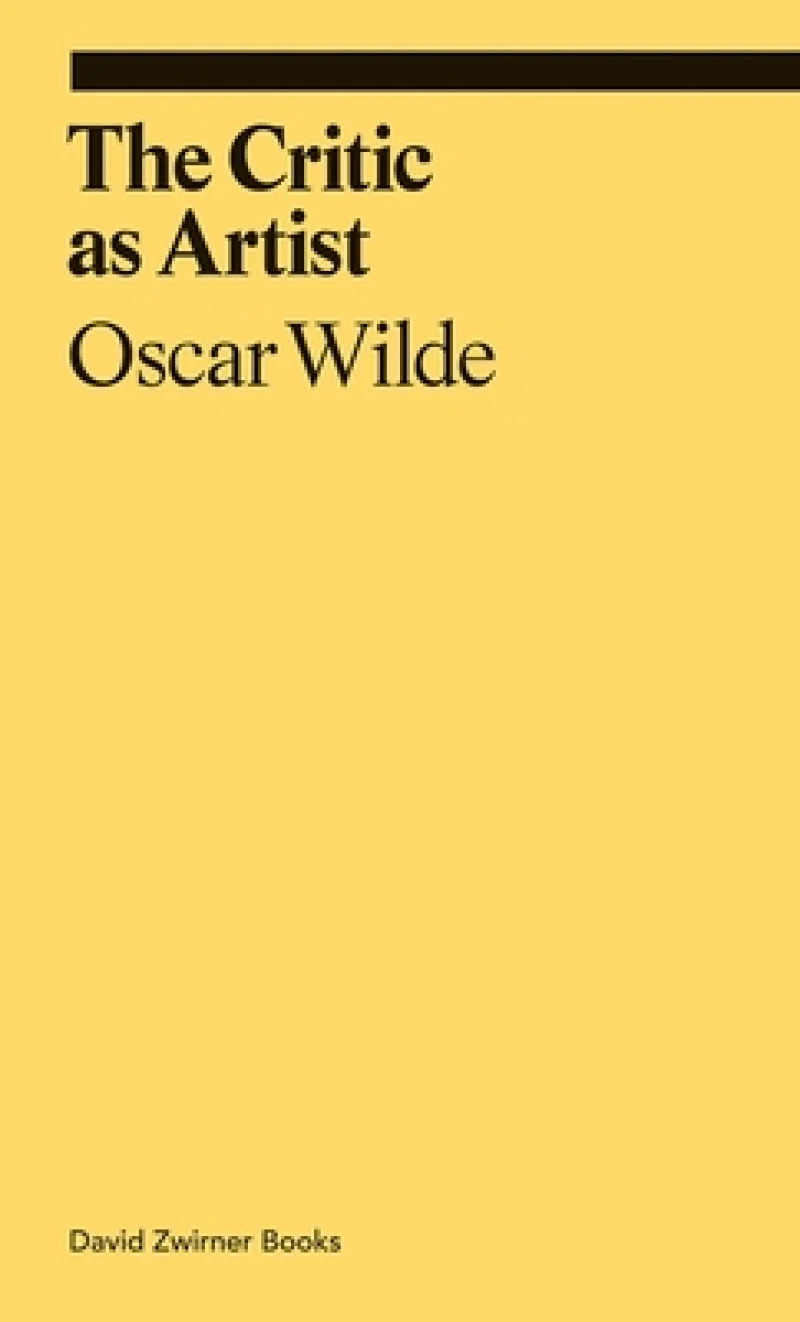
The Critic as Artist
by
Oscar Wilde
Book Details
Format
Paperback / Softback
Book Series
Ekphrasis
ISBN-10
1644230038
ISBN-13
9781644230039
Publisher
David Zwirner
Imprint
David Zwirner
Country of Manufacture
US
Country of Publication
GB
Publication Date
May 9th, 2019
Print length
144 Pages
Weight
122 grams
Dimensions
17.60 x 10.70 x 1.50 cms
Product Classification:
The arts: general issuesLiterary essays
Ksh 2,150.00
Temporarily out of stock, due soon
0 in stock
Delivery Location
Delivery fee: Select location
Secure
Quality
Fast
In The Critic as Artist, arguably the most complete exploration of his aesthetic thinking, and certainly the most entertaining, Oscar Wilde harnesses his famous wit to demolish the supposed boundary between art and criticism. Subtitled Upon the Importance of Doing Nothing and Discussing Everything, the essay takes the form of a leisurely dialogue between two characters: Ernest, who insists upon Wilde’s own belief in art’s freedom from societal mandates and values, and a quizzical Gilbert. With his playwright’s ear for dialogue, Wilde champions idleness and contemplation as prerequisites to artistic cultivation. Beyond the well-known dictum of art for art’s sake, Wilde’s originality lays argument for the equality of criticism and art. For him, criticism is not subject to the work of art, but can in fact precede it: the artist cannot create without engaging his or her critical faculties first. And, as Wilde writes, “To the critic the work of art is simply a suggestion for a new work of his own.” The field of art and criticism should be open to the free play of the mind, but Wilde plays seriously, even prophetically. Writing in 1891, he foresaw that criticism would have an increasingly important role as the need to make sense of what we see increases with the complexities of modern life. It is only the fine perception and explication of beauty, Wilde suggests, that will allow us to create meaning, joy, empathy, and peace out of the chaos of facts and reality.
In The Critic as Artist, arguably the most complete exploration of his aesthetic thinking, and certainly the most entertaining, Oscar Wilde harnesses his famous wit to demolish the supposed boundary between art and criticism.
Subtitled Upon the Importance of Doing Nothing and Discussing Everything, the essay takes the form of a leisurely dialogue between two characters: Ernest, who insists upon Wilde’s own belief in art’s freedom from societal mandates and values, and a quizzical Gilbert. With his playwright’s ear for dialogue, Wilde champions idleness and contemplation as prerequisites to artistic cultivation. Beyond the well-known dictum of art for art’s sake, Wilde’s originality lays argument for the equality of criticism and art. For him, criticism is not subject to the work of art, but can in fact precede it: the artist cannot create without engaging his or her critical faculties first. And, as Wilde writes, “To the critic the work of art is simply a suggestion for a new work of his own.”
The field of art and criticism should be open to the free play of the mind, but Wilde plays seriously, even prophetically. Writing in 1891, he foresaw that criticism would have an increasingly important role as the need to make sense of what we see increases with the complexities of modern life. It is only the fine perception and explication of beauty, Wilde suggests, that will allow us to create meaning, joy, empathy, and peace out of the chaos of facts and reality.
Subtitled Upon the Importance of Doing Nothing and Discussing Everything, the essay takes the form of a leisurely dialogue between two characters: Ernest, who insists upon Wilde’s own belief in art’s freedom from societal mandates and values, and a quizzical Gilbert. With his playwright’s ear for dialogue, Wilde champions idleness and contemplation as prerequisites to artistic cultivation. Beyond the well-known dictum of art for art’s sake, Wilde’s originality lays argument for the equality of criticism and art. For him, criticism is not subject to the work of art, but can in fact precede it: the artist cannot create without engaging his or her critical faculties first. And, as Wilde writes, “To the critic the work of art is simply a suggestion for a new work of his own.”
The field of art and criticism should be open to the free play of the mind, but Wilde plays seriously, even prophetically. Writing in 1891, he foresaw that criticism would have an increasingly important role as the need to make sense of what we see increases with the complexities of modern life. It is only the fine perception and explication of beauty, Wilde suggests, that will allow us to create meaning, joy, empathy, and peace out of the chaos of facts and reality.
Get The Critic as Artist by at the best price and quality guaranteed only at Werezi Africa's largest book ecommerce store. The book was published by David Zwirner and it has pages.

