
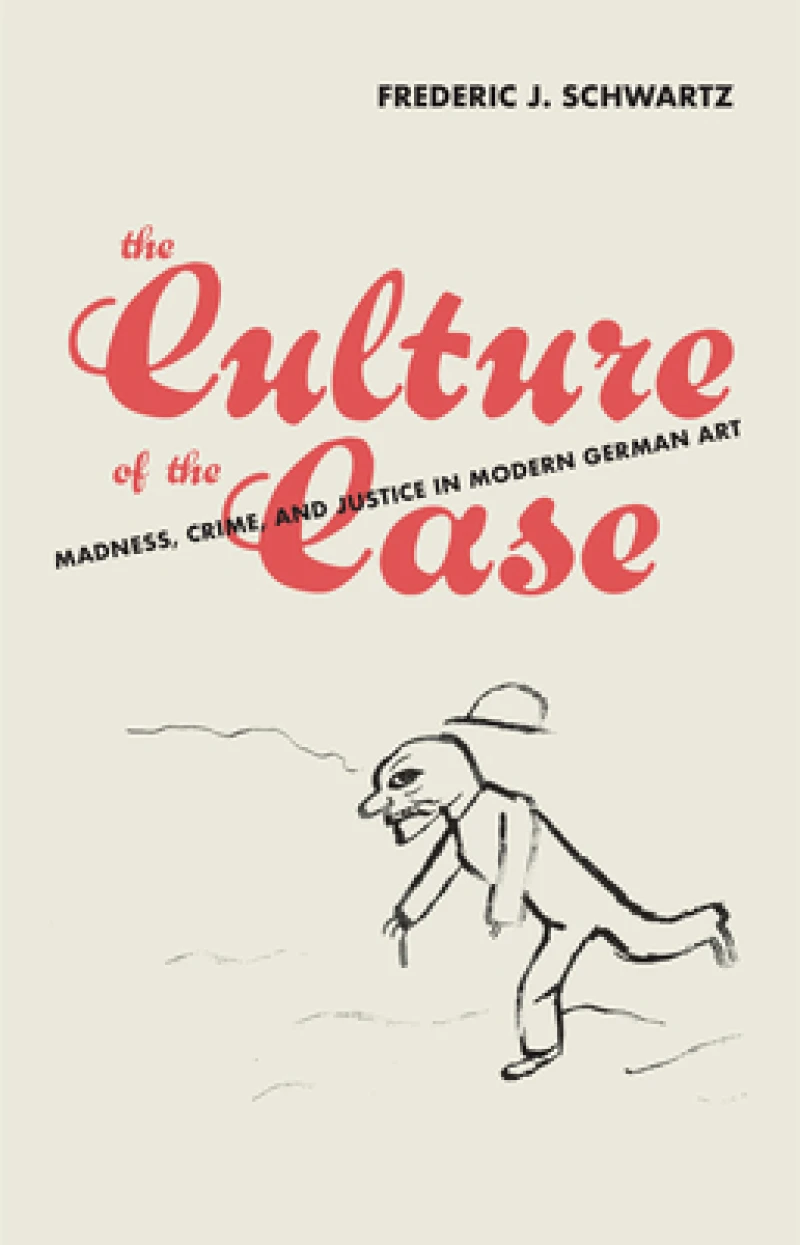
The Culture of the Case : Madness, Crime, and Justice in Modern German Art
Book Details
Format
Hardback or Cased Book
ISBN-10
0262047705
ISBN-13
9780262047708
Publisher
MIT Press Ltd
Imprint
MIT Press
Country of Manufacture
GB
Country of Publication
GB
Publication Date
Jun 13th, 2023
Print length
352 Pages
Weight
1,022 grams
Dimensions
25.20 x 16.90 x 3.10 cms
Product Classification:
The arts: general issues
Ksh 7,400.00
Re-Printing
Delivery in 14 days
1 copies in stock
Delivery Location
Delivery fee: Select location
Delivery in 14 days
Secure
Quality
Fast
How artists in twentieth-century Germany adapted the idea of the medical or legal case as an artistic strategy to push to the fore sexualities, scandals, and crimes that were otherwise concealed.
In early twentieth-century Germany, the artistic avant-garde borrowed procedures from the medical and juridical realms to expose and debate matters that society preferred remain hidden and unspoken. Frederic J. Schwartz explores how the evocation or creation of a case provided artists with a means to engage themes that ranged from blasphemy to Lustmord, or sexual murder. Shedding light on the case as a cultural form, Schwartz shows its profound effect on artists and the ways it dovetailed with methods used by these figures to exploit fundamental changes taking place across the mass media of their time.
As Schwartz shows, the case was a common denominator that connected seemingly disparate works. George Grosz and Rudolf Schlichter drew on it for their violent visual art, as did architect Adolf Loos when he equated ornament with crime. Expressionists, meanwhile, approached the question of whether the so-called mad shared a right of public expression with those deemed sane, and examined medical and legal approaches to what society labeled as insanity. The case also took on a personal dimension when artists found themselves confronted with, or chose to engage with, the legal system. German courts prosecuted John Heartfield and others for their provocative works, while Bertolt Brecht created publicity for himself by suing the firm to whom he sold the film rights to The Threepenny Opera. Provocative and insightful, The Culture of the Case offers a privileged view of the spaces of representation in which imagesin some instances, as casesfunctioned at a key moment of modernity.
In early twentieth-century Germany, the artistic avant-garde borrowed procedures from the medical and juridical realms to expose and debate matters that society preferred remain hidden and unspoken. Frederic J. Schwartz explores how the evocation or creation of a case provided artists with a means to engage themes that ranged from blasphemy to Lustmord, or sexual murder. Shedding light on the case as a cultural form, Schwartz shows its profound effect on artists and the ways it dovetailed with methods used by these figures to exploit fundamental changes taking place across the mass media of their time.
As Schwartz shows, the case was a common denominator that connected seemingly disparate works. George Grosz and Rudolf Schlichter drew on it for their violent visual art, as did architect Adolf Loos when he equated ornament with crime. Expressionists, meanwhile, approached the question of whether the so-called mad shared a right of public expression with those deemed sane, and examined medical and legal approaches to what society labeled as insanity. The case also took on a personal dimension when artists found themselves confronted with, or chose to engage with, the legal system. German courts prosecuted John Heartfield and others for their provocative works, while Bertolt Brecht created publicity for himself by suing the firm to whom he sold the film rights to The Threepenny Opera. Provocative and insightful, The Culture of the Case offers a privileged view of the spaces of representation in which imagesin some instances, as casesfunctioned at a key moment of modernity.
Get The Culture of the Case by at the best price and quality guaranteed only at Werezi Africa's largest book ecommerce store. The book was published by MIT Press Ltd and it has pages.

