
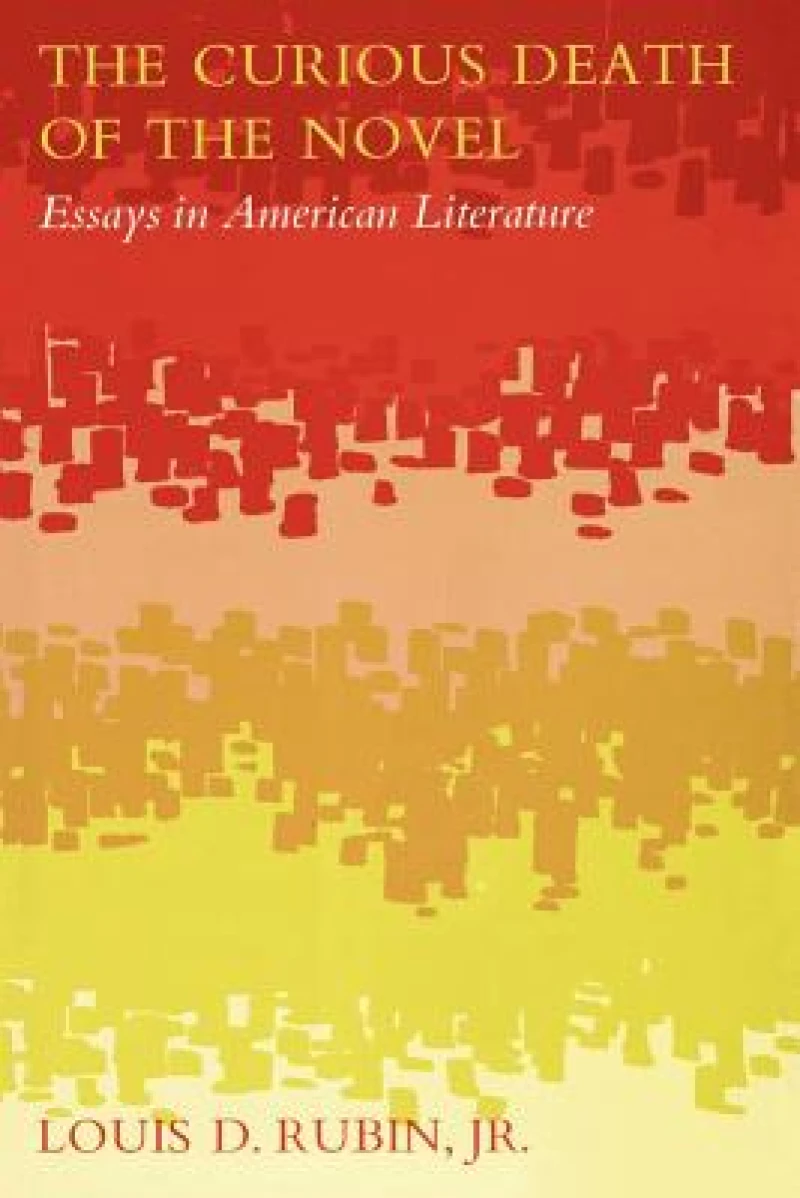
The Curious Death of the Novel : Essays in American Literature
Book Details
Format
Paperback / Softback
ISBN-10
0807124702
ISBN-13
9780807124703
Publisher
Louisiana State University Press
Imprint
Louisiana State University Press
Country of Manufacture
US
Country of Publication
GB
Publication Date
Mar 1st, 1999
Print length
312 Pages
Weight
463 grams
Dimensions
22.80 x 15.20 x 1.80 cms
Product Classification:
Literature: history & criticismLiterature: history and criticismLiterary studies: general
Ksh 5,650.00
Werezi Extended Catalogue
0 in stock
Delivery Location
Delivery fee: Select location
Secure
Quality
Fast
One of America's more perceptive younger critics, Louis Rubin is well known for his commentaries on the literature of the South. These essays - selected from his critical works over a period of more than a dozen years - reflect his wider concern with the whole spectrum of American literature.
One of the country's more perceptive younger critics, Louis Rubin is well known for his commentaries on the literature of the South. These essays- selected from his critical works over a period of more than a dozen years- reflect his wider concern with the whole spectrum of American literature.
In the title essay Rubin treats ""tired literary critics"" and the often-heard pronouncement that the novel is dead. He argues that the response of novelists to our difficult and demanding times ""will doubtless be what the response of writers to difficult and demanding times always has been: namely, difficult and demanding works of literature.""
Another essay, The Experience Difference: Southerners and Jews, is a perceptive examination of the parallels in different factors and cultural experiences which brought Southern and Jewish writers to prominence. Rubin explores the potential pitfalls for Southern writers today in an essay called Getting Out From Under William Faulkner.
Edgar Allan Poe's position in American literary history and H. L. Mencken's role as a literary critic and an ""artist of destruction"" who cleared the way and created an audience for the major American writers of the twenties are dealt with in other essays.
The collection includes imaginative studies of Henry James, Mark Twain, Edmund Wilson, and Karl Shapiro. Several Southern writers, including Faulkner, Ellen Glasgow, Robert Penn Warren, Flannery O'Connor, and James Branch Cabell, also come under Rubin's scrutiny.
In the title essay Rubin treats ""tired literary critics"" and the often-heard pronouncement that the novel is dead. He argues that the response of novelists to our difficult and demanding times ""will doubtless be what the response of writers to difficult and demanding times always has been: namely, difficult and demanding works of literature.""
Another essay, The Experience Difference: Southerners and Jews, is a perceptive examination of the parallels in different factors and cultural experiences which brought Southern and Jewish writers to prominence. Rubin explores the potential pitfalls for Southern writers today in an essay called Getting Out From Under William Faulkner.
Edgar Allan Poe's position in American literary history and H. L. Mencken's role as a literary critic and an ""artist of destruction"" who cleared the way and created an audience for the major American writers of the twenties are dealt with in other essays.
The collection includes imaginative studies of Henry James, Mark Twain, Edmund Wilson, and Karl Shapiro. Several Southern writers, including Faulkner, Ellen Glasgow, Robert Penn Warren, Flannery O'Connor, and James Branch Cabell, also come under Rubin's scrutiny.
Get The Curious Death of the Novel by at the best price and quality guaranteed only at Werezi Africa's largest book ecommerce store. The book was published by Louisiana State University Press and it has pages.

