
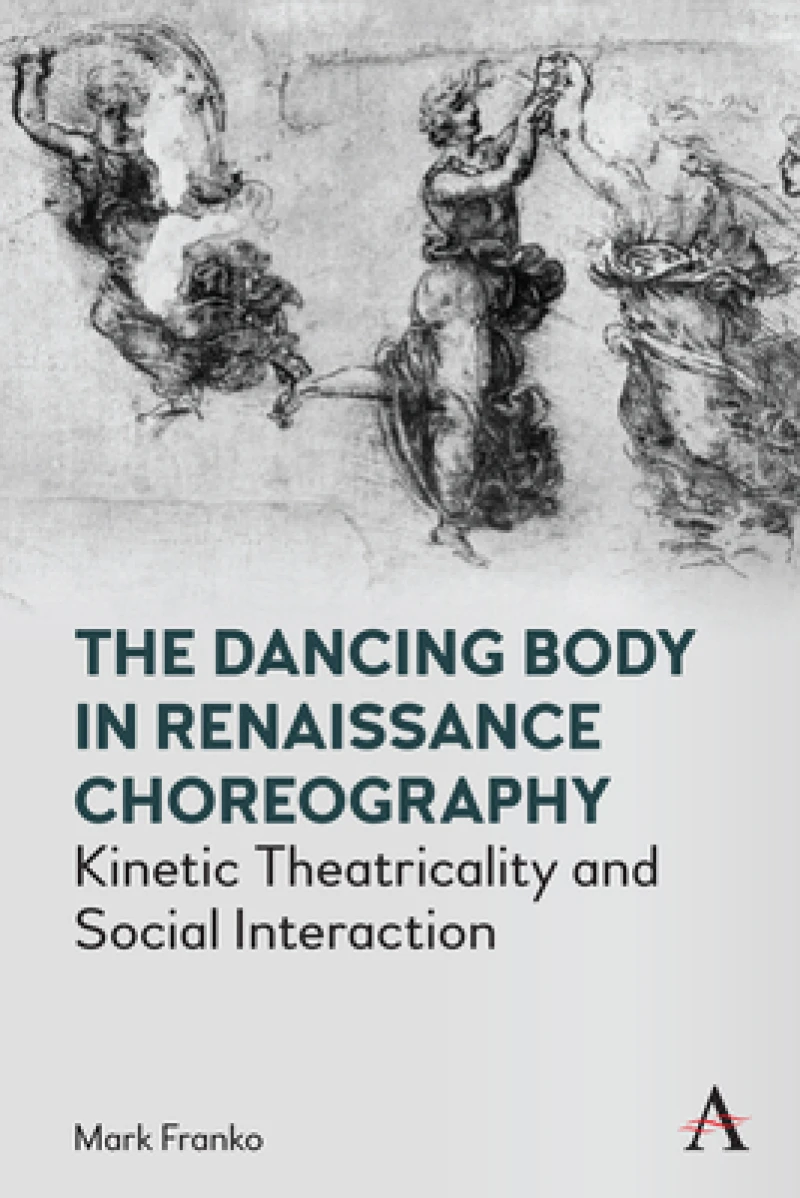
The Dancing Body in Renaissance Choreography : Kinetic Theatricality and Social Interaction
Book Details
Delivery Location
Delivery fee: Select location
The Dancing Body in Renaissance Choreography is a study of the theory of kinetic theatricality in the western European context. The dancing body of courtly social dance is analyzed in French and Italian dance treatises of the Renaissance through the intertexts of oratorical action, pedagogical discourses of civility and conceptions of value emanating from descriptions of social interaction in courtesy books.
The Dancing Body in Renaissance Choreography problematizes the absence of the dancing body in treatises in order to reconstruct it through a series of intertextual readings triggered by Thoinot Arbeaus definition of dance in his 1589 dance treatise, Orchesographie. The notion of the intertext as elaborated by Michael Riffaterre is used to understand a series of relationships between dance and other activities within which the historical dancing body emerges to the light of day. Arbeaus discussion of dance as a mute rhetoric in the demonstrative genre points to the intertext of Quintilians The Oratorical Institution where the genus demonstrativum is explained as epideixis, the goal of which is to inspire confidence and charm the audience. The second intertext explored is that of civility as found in courtesy books where the posture of the body and the parameters of movement are outlined, converging in the gesture of the révérence. The categories of pose and movement are then read into the structure of the basse danse, the quintessential courtly social dance of the period. The relation of pose to movement or of stillness to mobility is further theorized through the terms of earlier Italian treatises, specifically in terms of fantasmata as used by Domenico da Piacenza.
Renaissance dance treatises claim that the dance is a language but do not explain how or what dancing communicates. Since the body is the instrument of this hypothetical language, The Dancing Body in Renaissance Choreography problematizes the absence of the dancing body in treatises in order to reconstruct it through a series of intertextual readings triggered by Thoinot Arbeaus definition of dance as a mute rhetoric in Orchesographie. This book shows that the oratorical model for Arbeaus definition of the dance is epideictic and that although one cannot equate dance and oratorical action, the ends of oratorical action are those of dance: persuasion through charm and emotion.
The analysis of the rhetorical intertext opens the way to a sociological one. Through a reading of courtesy books as well as a chapter of Tuccaros LArt de Sauter et Voltiger en lair it is shown that dance and social behavior were not discontinuous in the Renaissance. Instructions for the body can be divided into the categories of the pose and movement. They are examined as a model for the most important and widely practiced dance of the Renaissance: the basse danse. The characteristic motion resides in an opposition as well as an interpenetration of stillness and mobility. This is developed through a reading of fifteenth-century dance theorists concept of misura and fantasmata. Stefano Guazzos La Civil Conversazione is used as a textual interpretant to ascertain the strategy of movement and the pose in the interaction between dancer and spectator.
Get The Dancing Body in Renaissance Choreography by at the best price and quality guaranteed only at Werezi Africa's largest book ecommerce store. The book was published by Anthem Press and it has pages.

